

TL;DR:
- Expressive clothing uses fashion to communicate personality, emotions, and social identity nonverbally.
- It influences mood, confidence, and social signals by aligning outer appearance with inner self.
Expressive clothing is the deliberate use of fashion to communicate personality, emotions, and social identity without words. Knowing why wear expressive clothing matters goes beyond aesthetics. First impressions form in as little as 0.1 seconds through visual cues like color, silhouette, and graphic choice. That speed means your outfit speaks before you do. Fashion psychology, the academic study of how clothing affects the mind, confirms that what you wear shapes how you feel, how others read you, and how confidently you move through the world.
How does expressive clothing impact personal identity and emotional well-being?
Expressive clothing directly shapes your mental state through a mechanism called enclothed cognition. Researchers use this term to describe how the symbolic meaning of a garment influences the wearer’s thoughts and behavior. Put on a graphic tee that reflects your sense of humor, and your brain registers that alignment. The result is a subtle but real shift in confidence and mood.
Dopamine dressing takes this further. Fashion psychologist Dawnn Karen defines it as choosing clothes based on how they make you feel rather than how they make you look to others. The practice turns getting dressed into a mood-enhancing ritual, not a performance for outside approval. That shift in intention changes everything about how you carry yourself.
Wearing clothing that aligns with your identity fosters emotional stability and a sense of control. When your outer presentation matches your inner self, the psychological friction of daily life decreases. You spend less mental energy second-guessing your appearance and more energy on what actually matters.
Researchers also connect intentional dressing to reduced decision fatigue. A wardrobe built around your actual identity requires fewer agonizing choices each morning. Curating clothes that reflect who you are builds psychological resilience over time. Each outfit becomes a small, repeatable act of self-affirmation.
Key benefits of expressive dressing for emotional well-being include:
- Mood regulation: Bright, bold colors or meaningful graphics can shift your emotional state before you leave the house.
- Confidence reinforcement: Clothes that match your identity signal to your brain that you belong in the space you are entering.
- Reduced anxiety: A wardrobe aligned with your values removes the daily stress of feeling like you are wearing a costume.
- Creative stimulation: Mixing patterns, textures, and silhouettes activates the same creative thinking you use in art, music, or writing.
Pro Tip: Start each morning by asking “How do I want to feel today?” before choosing an outfit. That single question shifts dressing from a chore into a deliberate act of self-care.
What social and cultural messages does expressive fashion convey?
Expressive fashion acts as a personal language, using bold colors, graphics, and silhouettes to communicate culture, subculture, and personality to everyone around you. This is not metaphor. Sociologists classify clothing as a nonverbal communication system, one that operates continuously whether you intend it or not. Choosing to dress expressively means taking authorship of that signal.
Subcultures have always used clothing as a declaration. Punk used safety pins and leather to reject mainstream values. Streetwear adopted oversized silhouettes and graphic prints to signal community and creative identity. These choices were never purely aesthetic. They were statements about who belonged, what was valued, and what norms were being challenged.
“Balancing the innate social desire to fit in with authentic self-expression leads to greater psychological strength and confidence. The goal is not to ignore social context but to find your place within it on your own terms.”
Cultural heritage also lives in clothing. Wearing garments that reference your background, whether through pattern, color, or craft tradition, communicates pride and continuity. Expressive fashion elements serve as intentional communicative tools for cultural identity and personal branding among creatives. That intentionality is what separates a meaningful wardrobe from a random one.
The social dynamics of expressive dressing include:
- Group signaling: Shared style choices create visible bonds between people with common values or interests.
- Norm challenging: Unconventional clothing choices open conversations about gender, class, and cultural expectations.
- Heritage representation: Patterns and textiles rooted in cultural tradition carry historical meaning that generic fashion cannot replicate.
- Individuality within community: You can belong to a group while still expressing what makes you distinct within it.
Just as music becomes a vehicle for identity, clothing carries the same power to signal who you are and what you stand for without a single spoken word.
Which elements of clothing shape expressive style choices?
Color is the most immediate expressive tool in fashion. Red and yellow energize; blue and green soothe. Color psychology research consistently links specific hues to predictable mood shifts in both the wearer and the observer. Choosing your palette is choosing your emotional broadcast.

Textures and silhouettes influence perceived personality traits just as powerfully as color. Soft, draped fabrics communicate ease and approachability. Structured, fitted garments signal authority and intentionality. A person in an oversized knit reads differently than the same person in a tailored blazer, even if everything else about them is identical.
| Style element | Expressive effect | Best used for |
|---|---|---|
| Bold color | Energizes and attracts attention | Making a confident first impression |
| Graphic print | Communicates humor, values, or subculture | Showing personality without speaking |
| Soft texture | Signals comfort and openness | Casual creative environments |
| Structured silhouette | Conveys authority and purpose | Professional or high-stakes settings |
| Layering | Demonstrates creativity and depth | Mixing identities or moods in one look |
Patterns and prints carry their own grammar. A geometric print reads as analytical and precise. Florals read as expressive and free. Bold graphics, the kind found across 3wizardclothing’s collections, communicate humor, attitude, and cultural fluency all at once. The print you choose is a sentence in the language of your wardrobe.
Layering is where expressive dressing becomes genuinely creative. Combining a graphic tee with an open flannel and a statement accessory creates visual complexity that a single garment cannot achieve. It also gives you flexibility. You can add or remove layers as your mood or context shifts throughout the day.
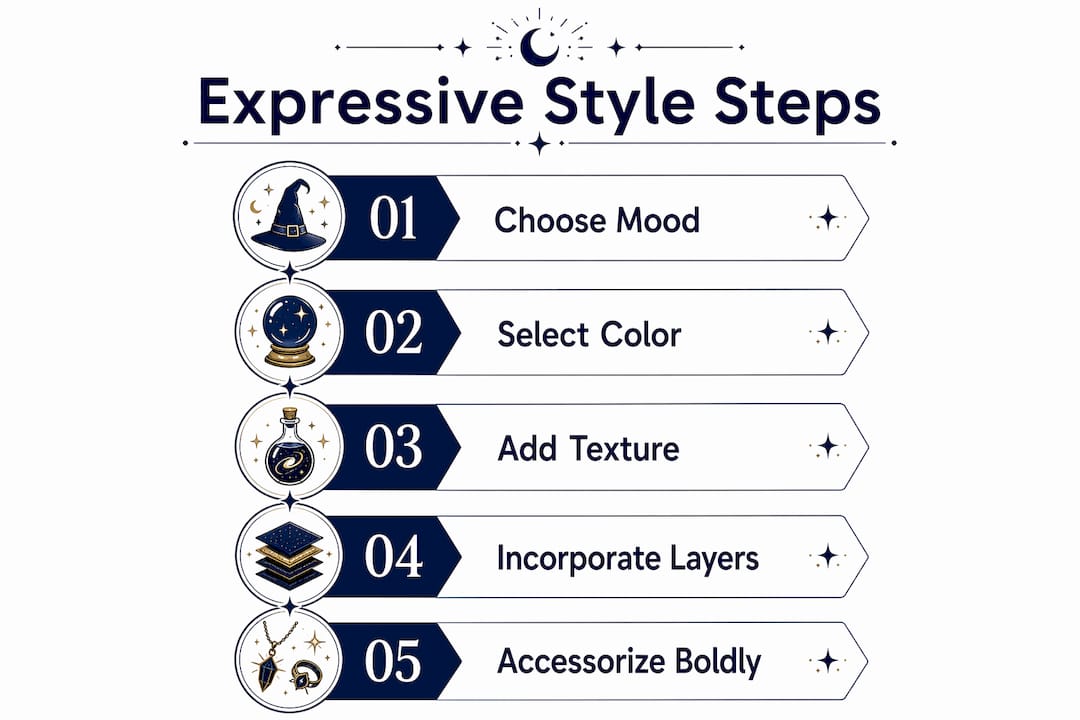
Pro Tip: If you are new to expressive dressing, start with one bold element per outfit. A graphic tee under a neutral jacket, or a patterned scarf with a plain outfit, lets you test the waters without committing to a full look.
How can young adults use expressive clothing to build confidence?
Building a genuinely expressive wardrobe starts with small, low-risk moves. Accessories are the easiest entry point. A pin, a hat, or a statement bag adds personality to any outfit without requiring a full wardrobe overhaul. These small choices build the habit of intentional dressing before you commit to bolder pieces.
Fear of judgment is the most common barrier to expressive style. The Spotlight Effect explains why: people consistently overestimate how much others notice and judge their appearance. The reality is that most people are far too focused on their own concerns to scrutinize yours. Knowing this does not eliminate the fear, but it does put it in proportion.
A practical approach to building confidence through clothing follows these steps:
- Audit your current wardrobe. Identify which pieces feel like you and which feel like a version of you that no longer fits. Remove the latter.
- Add one expressive piece at a time. Buy a graphic tee, a bold hoodie, or a patterned item that genuinely excites you. Wear it before buying more.
- Use social media as a reference, not a rulebook. Platforms like Instagram and Pinterest show what is possible, not what is required. Borrow ideas, then adapt them to your actual life.
- Prioritize meaning over trend. A piece that connects to something you care about will always feel more authentic than whatever is currently popular.
- Make sustainable and culturally respectful choices. Expressive fashion is most powerful when it reflects genuine identity, not borrowed aesthetics that belong to communities you are not part of.
The Proximity of Clothing to Self scale is a research tool that measures how closely a wardrobe aligns with a person’s identity. You do not need the formal scale to apply the concept. Simply ask yourself, after each purchase, whether this piece feels like you or like someone you are trying to impress. That question alone will sharpen your wardrobe over time. For more on building a wardrobe that reflects who you actually are, the 3wizardclothing guide on expressive clothing and personality is worth reading.
Key Takeaways
Expressive clothing works because it aligns your outer appearance with your inner identity, producing measurable gains in confidence, mood, and social communication.
| Point | Details |
|---|---|
| Clothing shapes mindset | Enclothed cognition shows that wearing identity-aligned clothes directly improves mood and confidence. |
| Dopamine dressing is self-care | Choosing clothes by how they make you feel turns dressing into a daily mood-enhancing ritual. |
| Style is nonverbal language | Bold colors, graphics, and silhouettes communicate personality and cultural identity instantly. |
| Fear of judgment is overblown | The Spotlight Effect causes people to overestimate social scrutiny; actual judgment is far milder. |
| Small steps build expressive confidence | Starting with accessories or one bold piece makes expressive dressing approachable and sustainable. |
What I have learned from dressing with intention
The most underrated thing about expressive clothing is that it forces you to know yourself. You cannot dress expressively on autopilot. You have to decide, every single day, what you want to say and how you want to feel. That daily decision is a form of self-knowledge most people skip entirely.
I have noticed that the days I dress with intention are the days I feel most like myself. Not because the clothes are expensive or on-trend, but because they are honest. A graphic tee that makes me laugh, a hoodie that references something I actually care about, these are not trivial choices. They are small acts of integrity.
The mistake most people make is waiting until they “figure out their style” before dressing expressively. Style is not something you find. It is something you build, one deliberate choice at a time. The experimentation is the point. Wear the bold print. Try the unexpected color. See what feels true and what feels like a costume. That process of trial and feedback is how you develop a wardrobe that genuinely reflects who you are, not who you think you should be.
Expressive fashion is not about standing out for its own sake. It is about showing up as yourself, consistently, in a world that constantly pressures you to blend in. That takes more courage than most people give it credit for.
— Josh
Bold apparel for people who have something to say
3wizardclothing was built for people who want their clothes to do more than cover them. The collections span graphic tees, hoodies, tank tops, and themed seasonal drops, all designed around humor, attitude, and genuine personality rather than generic trend-chasing.
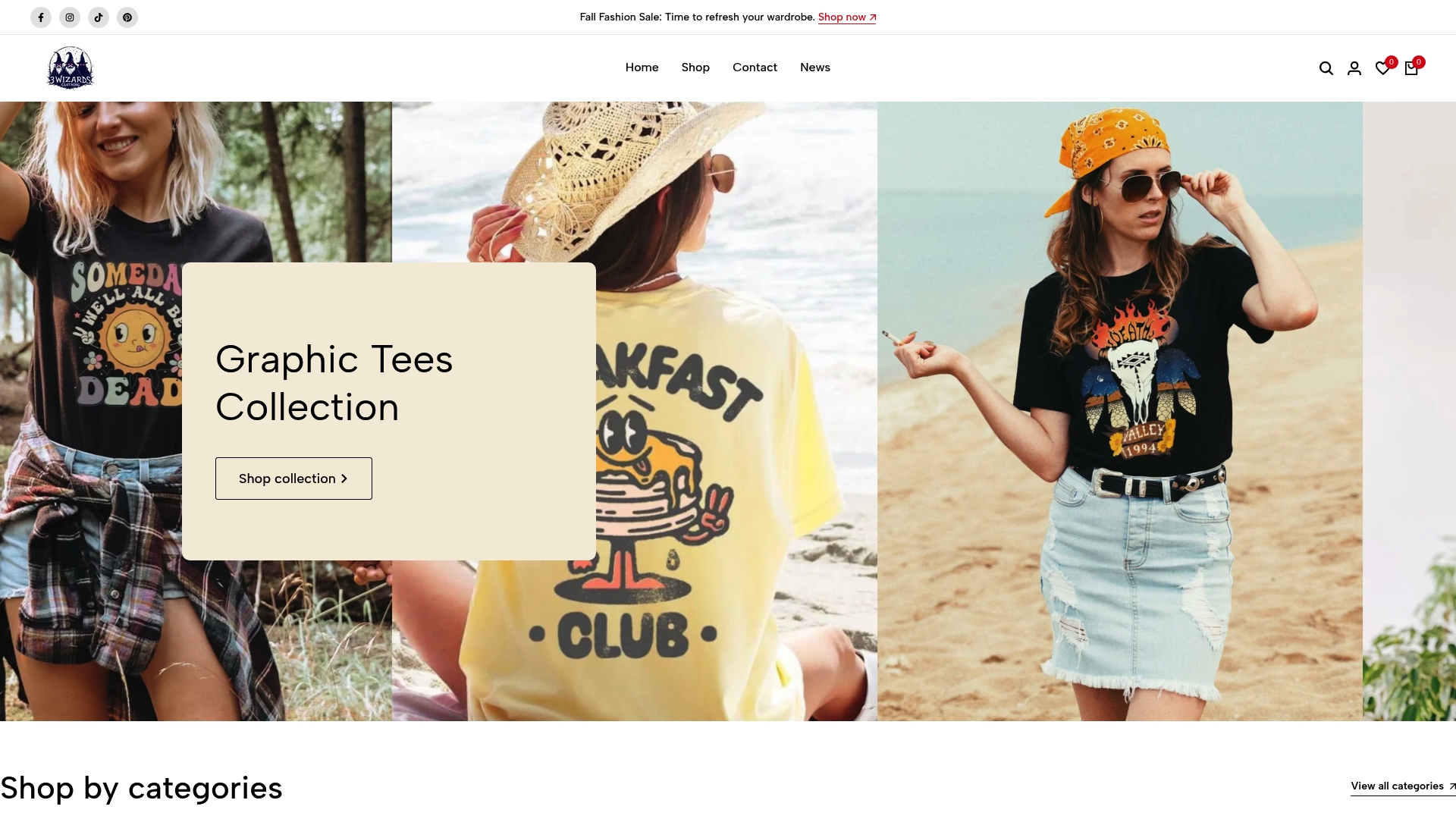
Whether you are looking for something nerdy, sassy, Halloween-ready, or just genuinely different from what everyone else is wearing, 3wizardclothing carries pieces that feel like a statement. Browse the full range of expressive graphic apparel and find the pieces that actually sound like you. New arrivals and bestsellers are updated regularly, so there is always something worth adding to a wardrobe built around who you actually are.
FAQ
What is expressive fashion, exactly?
Expressive fashion is the intentional use of clothing, color, texture, and graphics to communicate personality, emotions, and identity without words. It is a recognized concept in fashion psychology, closely tied to enclothed cognition and dopamine dressing.
Why does wearing expressive clothing boost confidence?
Clothing that aligns with your identity reduces psychological friction and reinforces your sense of self. Research shows that identity-aligned clothing fosters emotional stability and control, which directly supports confidence.
Does expressive dressing really affect how others see you?
Yes. First impressions based on clothing form in as little as 0.1 seconds, meaning your style communicates before you speak. Bold colors, graphic prints, and distinctive silhouettes all send specific social signals that others read immediately.
How do I start dressing more expressively without feeling self-conscious?
Start with one expressive element, like a graphic tee or a statement accessory, and build from there. The Spotlight Effect research confirms that others notice and judge your appearance far less than you expect, so the social risk is much smaller than it feels.
Is expressive clothing just a trend, or does it have lasting value?
Expressive clothing has been a core part of human communication across cultures for centuries. Its psychological benefits, including mood regulation, identity reinforcement, and reduced decision fatigue, are grounded in research, not trend cycles. The specific pieces change; the underlying value does not.


