

For small, full-color runs and mixed fabrics, choose DTF. For large, low-color bulk orders, screen printing wins on price per shirt. The split comes down to setup cost versus per-piece cost, and the crossover usually lands somewhere between 48 and 100 pieces; for a detailed comparison, see this Screen Printing vs DTG guide explaining method trade-offs. Both methods hold up fine when done right; the rest comes down to matching the job to the process.
TL;DR:
- DTF is more cost-effective for small batches of up to 48 shirts with complex designs or photo-realistic art, while screen printing becomes cheaper beyond 100 shirts.
- DTF handles full-color gradients and photo details in a single pass, but screen printing excels at solid colors and specialty inks such as metallics or puff.
- Properly applied DTF transfers typically last 50 to 100 wash cycles, while well-cured screen prints can often outlast the garment itself.
- DTF offers faster turnaround for small runs, whereas screen printing requires more setup time but is more suitable for larger, repetitive orders.
- Select DTF for quick, flexible small orders and screen printing for high-volume, bulk production to minimize per-piece costs.
Table of Contents
- DTF vs Screen Print: The Quick Comparison
- Cost and Run Size: Where the Crossover Actually Happens
- Print Quality and Color: Detail vs. Saturation
- Durability and Wash Care: What Actually Fails and Why
- Fabric Compatibility and Hand Feel
- Production Workflow and Lead Time
- How to Choose the Right Printing Method
- Who’s Behind This Guide
- How a Retail Brand Actually Splits Print Jobs
- See the Difference on Real Shirts
- Sources
DTF vs Screen Print: The Quick Comparison
Run size drives almost every other decision here, so start there. Screen printing needs a physical screen burned for every color in the design, which makes it expensive to set up but cheap per piece once you’re printing hundreds of identical shirts. DTF skips that setup entirely, printing full-color designs straight to film with no per-color tooling, which is why it dominates small and custom orders.
Here’s how the two stack up on the factors that actually matter to a shop or a hobbyist placing an order:
- Cost behavior: DTF stays flat per piece regardless of quantity; screen printing drops sharply per piece as volume climbs.
- Best run size: DTF fits 1 to roughly 48 pieces comfortably; screen printing pulls ahead past 100 to 200 pieces.
- Color and detail: DTF handles gradients and photo-realistic art in one pass; screen printing excels at solid spot colors and specialty inks.
- Durability: Both can last 50+ washes with correct process; screen print ink tends to soften and blend into the fabric over time.
- Fabric range: DTF works across cotton, polyester, and blends without much adjustment; screen printing needs different ink systems for different fibers.
- Hand feel: Screen printing (especially discharge or water-based ink) can feel softer; DTF can feel like a film on very large print areas.
- Lead time: DTF turns around faster for one-offs; screen printing needs screen prep time upfront but moves fast once running.
The core trade-off: DTF buys you speed and flexibility on small batches, screen printing buys you rock-bottom cost at scale.
Cost and Run Size: Where the Crossover Actually Happens
Screen printing’s costs are front-loaded. You pay for screens, setup, and ink mixing before a single shirt runs through the press, and that cost is the same whether you’re printing 20 shirts or 20,000. DTF flips that: there’s no screen to burn, so the printer, film, and powder cost stay roughly constant no matter how many colors are in the design.
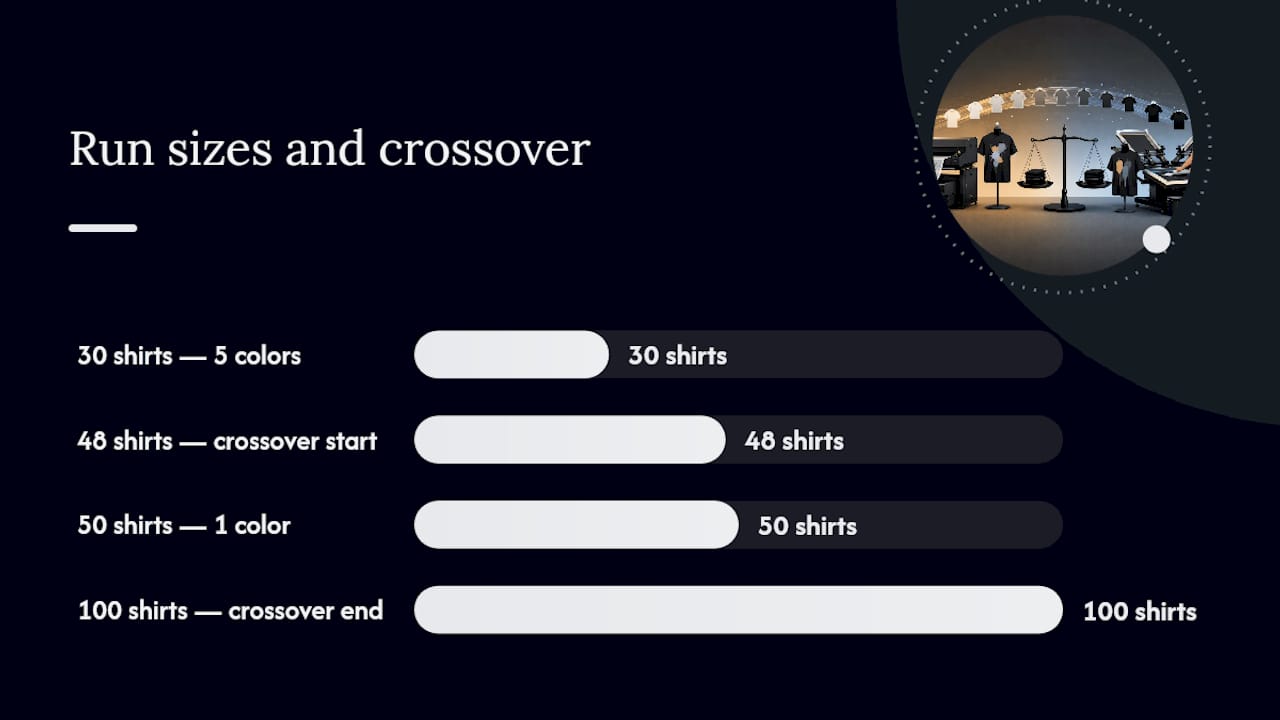
That’s why direct to film printing wins on complex, low-quantity jobs and screen printing wins on repetitive, high-quantity ones. A practical crossover point for many small operations sits around 48 to 100 pieces, though it moves based on color count and print size.
Two quick examples:
- 50 shirts, 1 color, small logo: Screen printing likely wins. One screen, minimal setup, low per-piece ink cost.
- 30 shirts, 5 color gradient design: DTF likely wins. Five screens would push setup costs past what the order can absorb.
Specialty inks (metallics, puff, glow) and larger print areas shift the math in both directions, so always price your actual order rather than trusting a rule of thumb blindly.
Pro Tip: Ask any printer for a per-piece quote at your exact quantity and color count. Round numbers like “under 50 = DTF” are a starting point, not a formula.
Print Quality and Color: Detail vs. Saturation
DTF printing on cotton or polyester handles full-color art, photographs, and smooth gradients in a single pass because it lays down CMYK plus a white underbase, with no limit on the number of colors. That’s a real edge for anything with shading, blends, or photo-realistic elements.
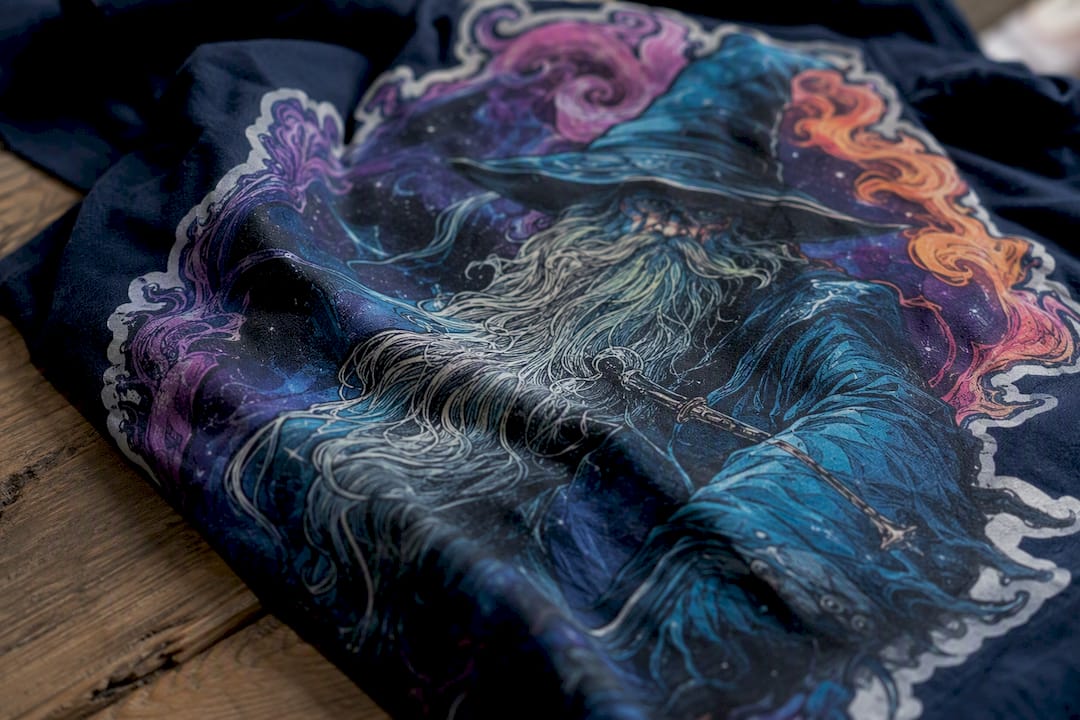
Screen printing plays a different game. Spot-color inks sit thick on the fabric, producing a saturation and opacity that DTF often can’t fully match, especially on dark garments. Specialty finishes, like puff ink or metallics, are also easier to execute through screens.
A few practical notes for getting good results either way:
- Send vector files (AI, EPS, PDF) whenever possible; raster files need enough resolution to survive scaling.
- For screen printing, ask your printer whether they need color separations done in advance or if they handle that step.
- Tell your printer the exact Pantone or hex codes if brand color accuracy matters.
Durability and Wash Care: What Actually Fails and Why
Wash count is the number everyone asks about, and the honest answer is that both methods can last a long time, or fail fast, depending entirely on execution. Properly applied DTF transfers typically hold up for 50 to 100 wash cycles before fading or cracking becomes visible. Well-cured screen prints, meanwhile, often outlast the garment itself.
By the numbers: Controlled testing using AATCC-style wash simulations found DTF transfers can maintain a grey-scale durability grade of 4 after roughly 50 simulated wash cycles when film, ink, and curing are all handled correctly.
What actually causes failure isn’t the method. It’s the bonding chain: film quality, ink adhesion, adhesive powder coverage, and heat press time, temperature, and pressure. Get any one of those wrong and the print cracks or peels regardless of whether it started as DTF or screen print.
Care steps that extend life on either method:
- Wash inside out in cold water.
- Skip the dryer, or use low heat.
- Avoid direct ironing over the design.
- Don’t use bleach or fabric softener directly on printed areas.
Our graphic t-shirt care guide walks through this in more detail. For printers, a quick finishing press, three to five seconds through parchment paper, smooths the surface and adds meaningful life to a DTF transfer.
Fabric Compatibility and Hand Feel
Cotton, polyester, and blends all take DTF transfers well, though polyester runs a slightly higher risk of dye migration if curing temperature isn’t controlled. A brief pre-press step to drive out trapped moisture before applying the transfer prevents micro-bubbling, a common and avoidable failure on humid days or with pre-washed garments.
Screen printing needs different ink chemistry depending on fiber content. Plastisol works broadly, but water-based and discharge inks perform better on 100% cotton and can feel noticeably softer.
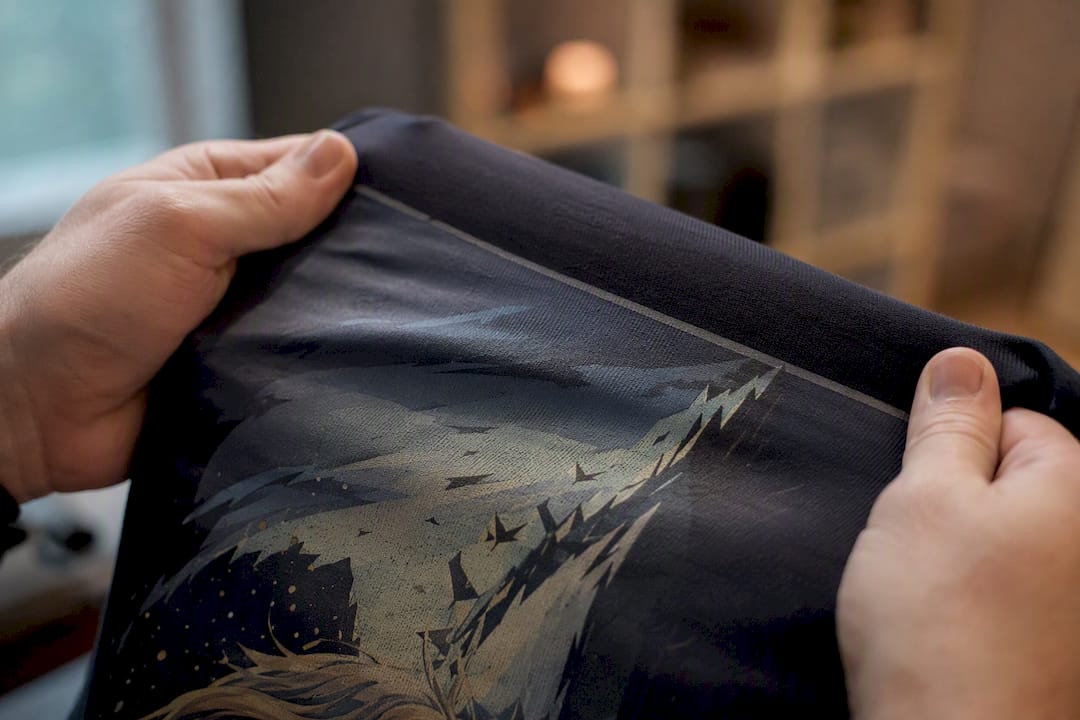
On hand feel: DTF can sit slightly on top of the fabric, especially across large print areas, while screen printing ink tends to penetrate the fibers and soften with washing. To identify which method made a shirt you’re holding, stretch the fabric slightly. DTF transfers usually show a visible film edge and don’t stretch with the shirt as smoothly; screen print ink flexes with the fabric and rarely shows a hard edge.
Production Workflow and Lead Time
Setup time is where the two methods diverge most sharply. Here’s what a shop or hobbyist can expect from order to shipment:
- Screen printing: Art separation, screen burning (roughly 15 to 30 minutes per screen), press setup, and a test print before the full run starts. Once dialed in, output per hour is high.
- DTF: Art file sent straight to print, then a cure and powder cycle, then heat-press application per garment. No screen burning, but each shirt still requires individual pressing.
- Turnaround: Small DTF orders can ship in one to three days from a well-equipped shop. Screen printing on a fresh design often needs three to seven days to account for screen prep, though repeat orders using existing screens move faster.
Screen printing needs more floor space (screens, exposure unit, drying racks) and periodic screen reclaiming. DTF needs a dedicated printer, powder shaker, and curing oven, with less physical storage overall.
How to Choose the Right Printing Method
Run through this checklist before committing to either method or handing the job to a printer:
- Run size: Under 48 to 100 pieces generally favors DTF; above that, screen printing usually costs less per shirt.
- Art complexity: Photo-realistic or gradient designs favor DTF; solid spot colors favor screen printing.
- Fabric: Confirm the printer has tested your specific fabric, especially performance blends.
- Hand feel tolerance: If a soft feel matters most, ask about water-based or discharge screen inks.
- Delivery window: DTF is usually faster for one-offs; screen printing needs lead time for screen prep.
- Budget band: Get a real per-piece quote at your actual quantity, not a generic average.
When outsourcing, ask any printer for a physical sample swatch, their documented wash-test results, cure temperature and dwell time, and what happens if a print fails early. Red flags include a printer who won’t provide a sample, gives vague specs when asked about curing, or offers inconsistent finishing instructions between orders. Vet a print shop the same way you’d vet a supplier: on documentation, not promises.
Pro Tip: A printer who can’t tell you their cure temperature and dwell time in seconds probably isn’t tracking quality control closely enough to trust with a bulk order.
Who’s Behind This Guide
This guide comes from Josh at 3wizardclothing, where print method decisions get made across dozens of seasonal drops every year. For more on choosing between decoration methods by quantity and design complexity, see our DTG vs screen printing breakdown, and for design-ready artwork tips, check step-by-step t-shirt design guidance.
For care routines, our step-by-step wash guide covers the basics: cold wash inside out, skip the dryer, and avoid ironing directly over any printed design. Simple habits, but they’re the difference between a shirt that looks new after 50 washes and one that’s peeling after ten.
How a Retail Brand Actually Splits Print Jobs
We lean on DTF for one-off and small-batch designs, anything limited-run, novelty, or testing a new concept before committing to a full production order. Screen printing takes over for seasonal bulk drops where we already know demand, like a Halloween collection reordered every fall. A one-off sassy graphic tee gets DTF. A holiday bestseller reprinted by the hundreds gets screens. The decision isn’t emotional, it’s just math on quantity.
— Josh
See the Difference on Real Shirts
3wizardclothing prints across both methods depending on the design, so what you see on the site reflects real production decisions, not theory. Whether you’re comparing DTF durability on a graphic tee or checking how a screen-printed design holds saturation on a dark hoodie, our current collections show finished results rather than proofs.
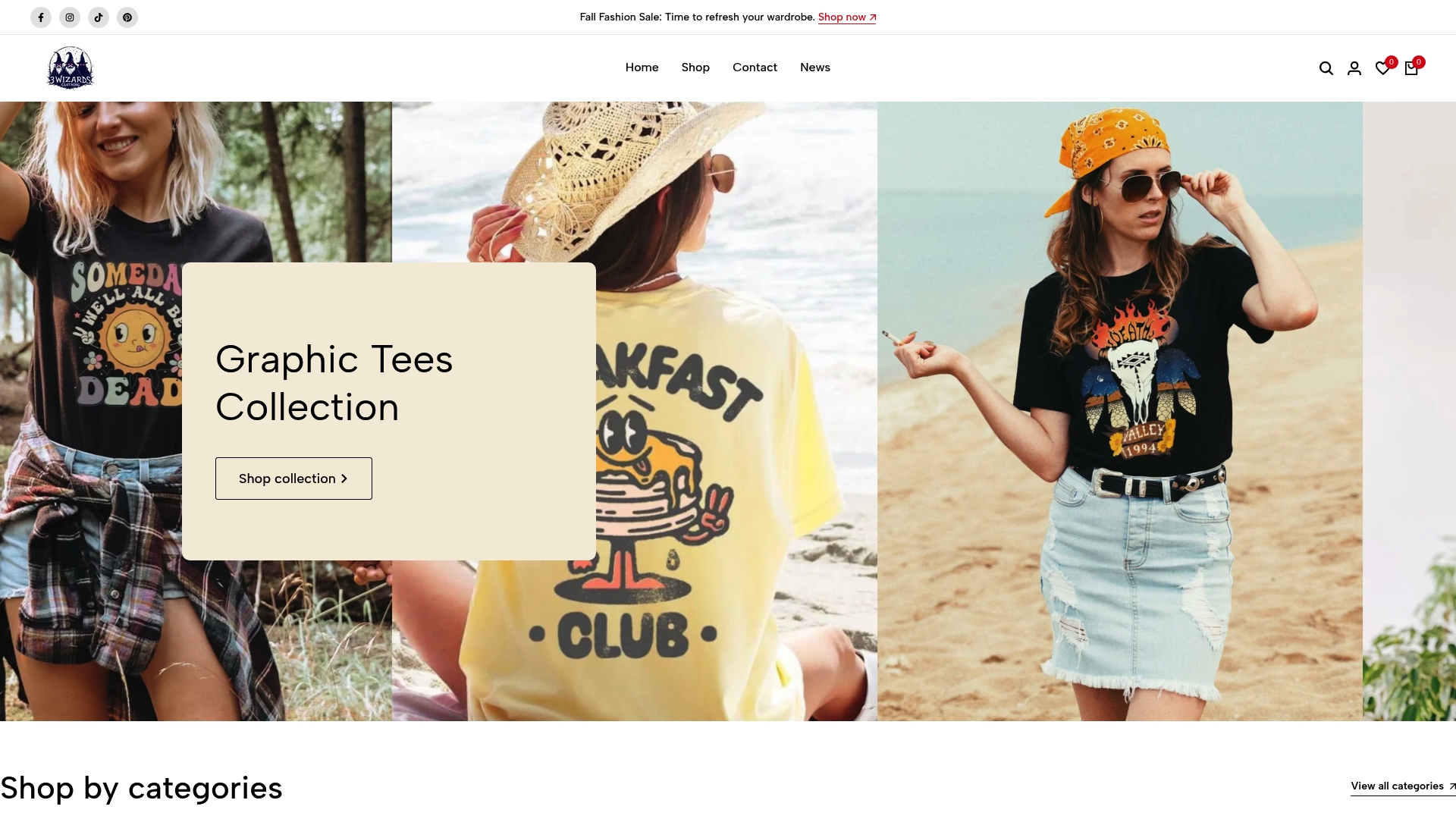
Browse the full collection at 3wizardclothing to see finished prints up close, and use our care guides to keep whatever you buy looking sharp for as many washes as possible. If you’re outfitting a group order or just want a shirt that’ll survive a season of wear, start there and judge the print quality for yourself.
Sources
- How Long Does a DTF Transfer Last? - Winnerjet
- DTF vs screen printing - Heart & Hook
- DTF transfer durability explained - Bostoniandtf


