

Why comparing apparel items before buying actually matters
Comparing apparel items before purchase is the single most effective way to avoid wasted money, poor fit, and the frustration of a return. Clothing comparison shopping means evaluating multiple options side by side, weighing fit, fabric, price, and quality before committing to one. It sounds obvious, but most shoppers skip it and pay for that shortcut later.
The core reasons to compare are practical:
- Fit accuracy: Sizing varies wildly between brands, so the same labeled size can fit completely differently depending on the manufacturer.
- Return reduction: A wrong-size or poor-quality purchase almost always ends in a return, costing you time and sometimes money.
- Cost savings: Comparing reveals when a lower-priced item offers the same quality as a pricier one, or when paying more is genuinely worth it.
- Purchase confidence: Shoppers who compare feel more certain about their final choice and report higher satisfaction after the purchase.
- Impulse control: Seeing options side by side slows down the snap decision and forces a more honest evaluation.
Sizing inconsistency alone makes comparison non-negotiable. There is no universal sizing standard in the fashion industry, which means a Medium in one brand can fit like a Small or a Large in another. That gap drives a significant share of apparel returns every year.
Key benefits of comparison shopping for clothing
Comparison shopping does more than help you pick the cheaper option. It surfaces differences that a single product page will never show you.
- Better fit accuracy: Comparing size charts, cut descriptions, and customer fit notes across multiple items gives you a much clearer picture of what will actually fit your body.
- Fabric and quality differences: Two hoodies at the same price point can use completely different fleece weights, stitching quality, and care requirements. You only spot that when you look at them together.
- Reduced returns: Fewer wrong-size or wrong-quality purchases means fewer returns, which saves both money and the hassle of repackaging and shipping.
- Broader options: Comparison forces you to look at more than the first result, which regularly surfaces better choices you would have missed.
- Aligned priorities: When you compare deliberately, you decide upfront what matters most to you, whether that is durability, softness, or a specific silhouette, and you shop toward that instead of reacting to marketing.
The Baymard Institute’s 2025 UX benchmark, covering 14 apparel websites with over 7,000 performance scores, found that 83% of apparel sites provide insufficient sizing information. That statistic explains why independent comparison is not optional. If the site itself cannot tell you whether the item will fit, you need to do the work yourself by cross-referencing size charts, reading reviews, and comparing fit notes across similar items.
Pro Tip: When comparing two items at similar price points, check the care instructions first. A piece that requires dry cleaning or hand washing has a hidden ongoing cost that changes the real value equation.
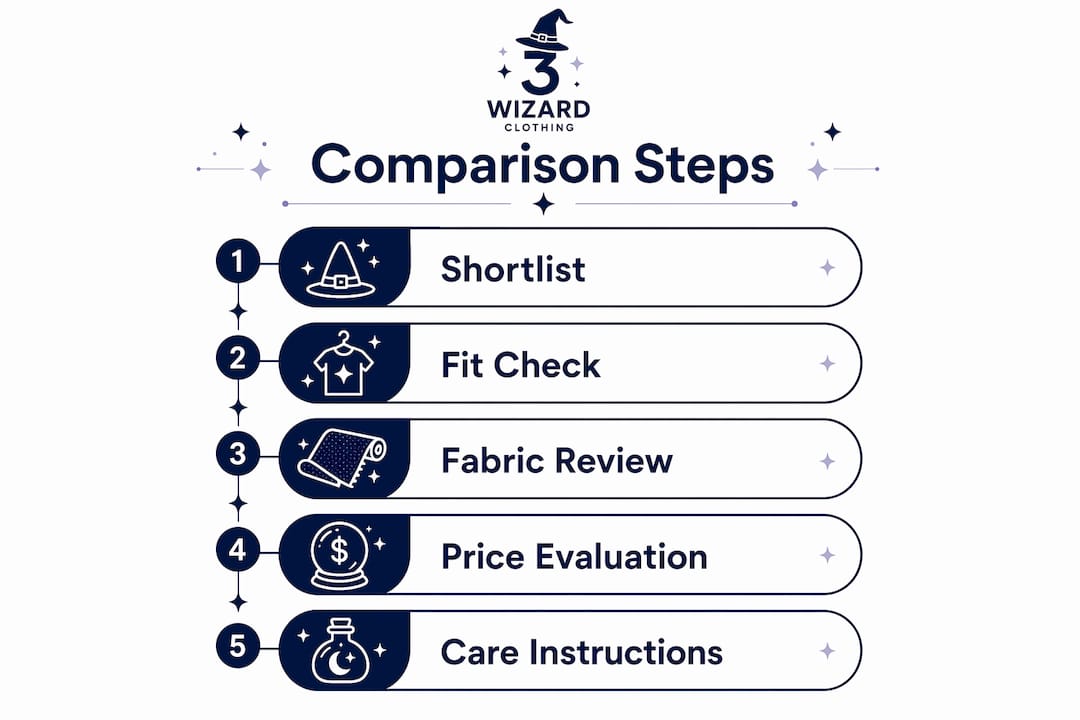
How to effectively compare apparel items before buying
Effective comparison has a structure. Without one, you end up with twelve browser tabs and no decision.
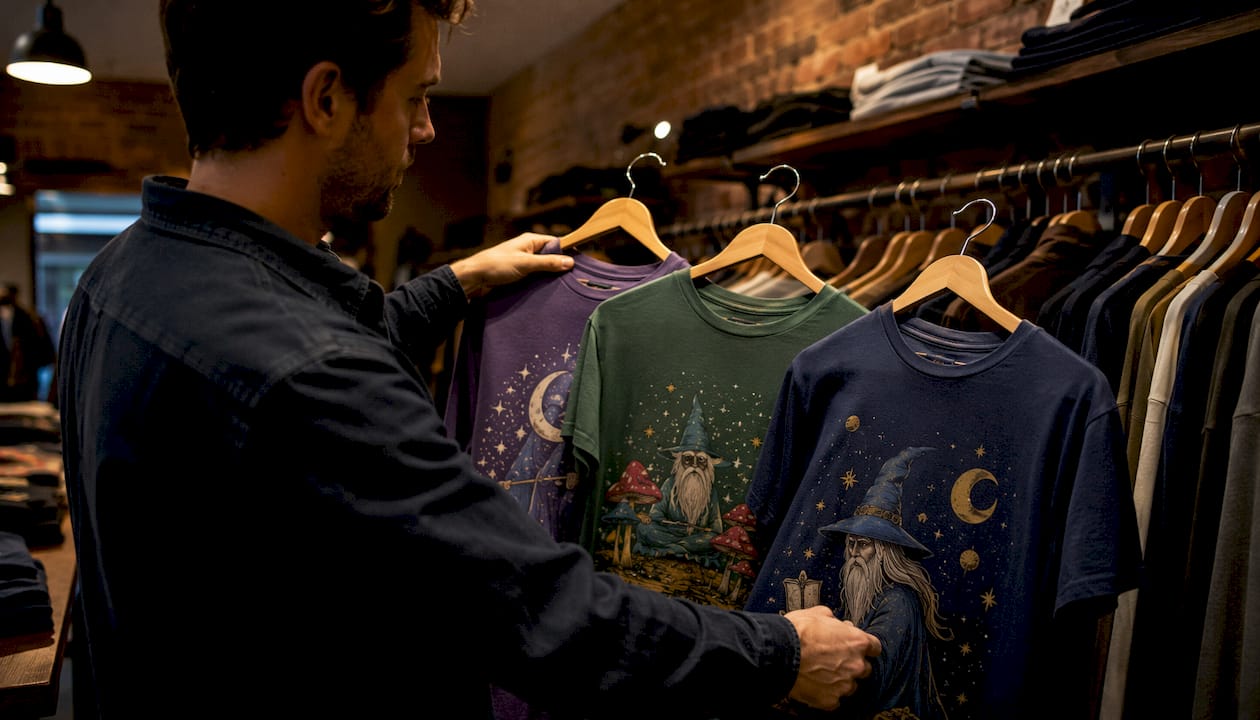
Limit your shortlist to three items
Research from an NYU Stern study on choice overload confirms that limiting your comparison to three apparel options prevents decision fatigue and keeps your evaluation grounded in facts rather than impressions. More than three, and you stop comparing details and start comparing feelings.
Compare in the right order
Not all criteria carry equal weight. Work through them in this sequence:
- Fit and sizing — Does the size chart match your measurements? Does the brand run small or large?
- Fabric and material — What is the composition? How does it feel, stretch, and hold up after washing?
- Design details — Seam construction, stitching quality, hardware, and silhouette.
- Care instructions — Machine washable versus hand wash versus dry clean only.
- Brand reputation and return policy — How easy is it to return if the fit is off?
- Price — Only after the above, because price without context is meaningless.
If an item fails on fit or fabric, no price point rescues it.
Use photos and visual comparisons
Side-by-side outfit photos reveal fit, proportion, and silhouette in ways that mirror checks and mental recall cannot. A photo freezes the details your brain tends to rationalize away. For online shopping, pull up product images from multiple items in separate tabs and compare them directly. For in-store shopping, take a photo of yourself in each option before deciding.

Pro Tip: Read reviews for patterns, not star averages. Repeated mentions of “runs small,” “fabric pills after two washes,” or “color looks different in person” are far more useful than a 4.2-star aggregate. Review patterns reveal what the product description glosses over.
Online vs. in-store comparison
Online comparison gives you access to more options, detailed specs, and customer reviews, but you cannot feel the fabric or try it on. In-store comparison lets you assess fit and texture directly, but selection is limited. The strongest approach combines both: research and shortlist online, then confirm fit in-store when possible. For online apparel shopping, always check the return policy before buying, since that is your safety net when the fit does not translate from screen to body.
What research says about apparel comparison challenges
The challenges shoppers face when comparing clothing are well-documented, and understanding them helps you work around them.
Sizing inconsistency is the biggest structural problem. Clothing sizes vary widely between brands because there is no single industry standard. Every brand sets its own sizing based on target demographics, regional standards, design style, and fabric stretch. Tools like Tellar address this directly by analyzing fit data across 1,500+ brands to recommend the right size in an unfamiliar brand based on your known size elsewhere.
The Baymard Institute’s research adds another layer: most apparel sites fail to give shoppers the sizing information they need to make a confident decision. That gap forces consumers to do independent comparison work, cross-referencing size charts, reading fit-focused reviews, and sometimes ordering two sizes to try.
Key strategies that research and industry experts consistently recommend:
- Prioritize fit data over star ratings when evaluating apparel. A 4.5-star item that consistently runs two sizes small is a worse purchase than a 4.1-star item with accurate sizing.
- Look beyond price to fabric feel, stretch, coverage, and care requirements, as industry experts emphasize these factors drive long-term satisfaction far more than cost.
- Use outfit photos for proportion assessment. Side-by-side photos capture fit details that mirrors and memory both miss.
- Limit your shortlist to three items to maintain focus on factual differences rather than subjective impressions.
At 3wizardclothing, the clothing comparison shopping feature built into the site lets you evaluate graphic tees, hoodies, and themed collections side by side, so you can assess design, sizing options, and style differences before adding anything to your cart.
How fabric type and material quality shape your comparison
Fabric is where most apparel comparisons get decided, and it is also where product pages are most likely to mislead you.
Two items described as “soft cotton hoodies” can feel completely different in person. One might use a heavyweight French terry that holds its shape after fifty washes. The other might use a thin jersey that pills within a month. The fiber content label tells you the composition, but not the construction quality, the weight, or how the fabric behaves under stress.
When comparing materials, focus on these specifics:
- Fiber composition: 100% cotton breathes well but shrinks. A cotton-polyester blend holds shape better and resists shrinkage. Rayon drapes beautifully but often requires careful washing.
- Fabric weight: Measured in grams per square meter (GSM), heavier fabrics generally feel more substantial and last longer. A 280 GSM hoodie will outlast a 180 GSM version in most cases.
- Stretch and recovery: For activewear or fitted styles, check whether the fabric contains elastane or spandex, and whether reviews mention the item losing its shape over time.
- Care requirements: A fabric that demands hand washing or dry cleaning is a commitment. Compare care labels the same way you compare price tags.
Understanding why designs and materials matter goes beyond aesthetics. The right fabric for your lifestyle, your climate, and your care habits is the difference between a piece you wear constantly and one that sits in the back of your closet. Getting accurate measurements before you buy, including chest, waist, and hip, also helps you match fabric stretch and cut to your actual body rather than relying on a size label alone. A guide on measuring shirt size accurately walks through the key measurements worth taking before you compare fitted styles.
Key Takeaways
Comparing apparel items before buying reduces returns, improves fit accuracy, and leads to more satisfying purchases by grounding decisions in fabric, sizing, and quality evidence rather than impulse.
| Point | Details |
|---|---|
| Limit your shortlist | Compare no more than three items to avoid decision fatigue and keep evaluations fact-based. |
| Sizing has no standard | Brands set their own sizing, so the same label fits differently across manufacturers. |
| Fabric weight and composition matter | Check fiber content, GSM, and stretch behavior, not just the product name or price. |
| Read review patterns, not star averages | Recurring complaints about fit or fabric quality are more reliable than aggregate ratings. |
| Most apparel sites fall short on sizing info | 83% of apparel sites provide insufficient sizing information, making independent comparison necessary. |
Recommended
- Clothing comparison shopping explained: find trendy styles fast – 3 Wizard Clothing
- Ultimate 2026 buying guide for trendy graphic apparel – 3 Wizard Clothing
- Trendy Apparel Ideas 2026: Bold Styles Worth Wearing – 3 Wizard Clothing
- Online apparel shopping: benefits, pitfalls, and smart tips – 3 Wizard Clothing


