

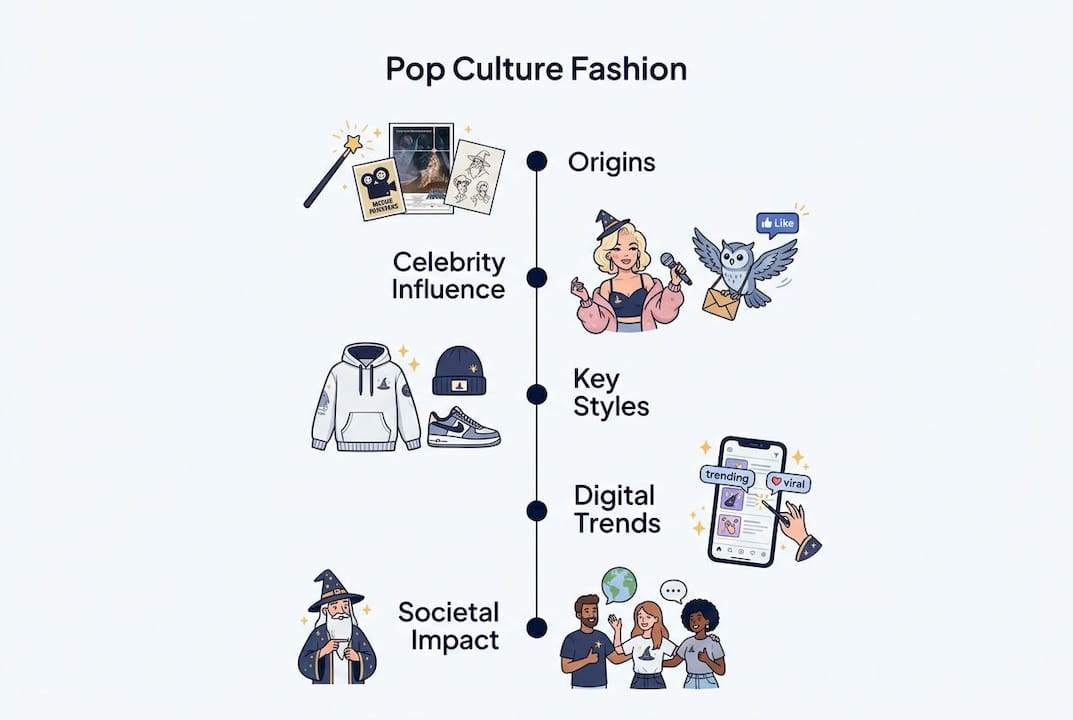
Pop culture fashion is clothing, accessories, and aesthetic choices popularized by celebrities, musicians, and influencers that act as a primary driver of modern fashion trends. More than just style, it functions as a visual language for identity. People adopt these looks to signal belonging, emulate icons, or communicate who they are without saying a word. Think of it as the intersection where entertainment, music, and everyday dress collide to shape what fills store racks and social feeds.
What makes pop culture style distinct from general fashion is its speed and cultural weight. A single music video, red carpet moment, or viral TikTok can launch a trend overnight. The looks you see on stage, on screen, and in your feed are not just outfits. They are statements about values, moods, and group identity.
- Clothing and accessories made famous by public figures, musicians, and digital creators
- A tool for identity expression, signaling group membership or admiration for an icon
- A driver of lifestyle preferences, consumer behavior, and societal communication
- A force that shapes everything from runway collections to graphic tees at your favorite online shop
How pop culture fashion entered the mainstream
Pop culture clothing did not appear overnight. Its roots stretch back to the early 20th century, when print media, Hollywood films, and movie posters gave ordinary people their first real window into how celebrities dressed. Seeing Audrey Hepburn’s minimalist elegance in Breakfast at Tiffany’s or Marilyn Monroe’s iconic white dress in The Seven Year Itch made those looks aspirational and widely copied.
The key shift was accessibility. When people could see what stars wore, they gained a reference point for their own style choices. Copying or interpreting a celebrity’s look provided confidence and a sense of social acceptance.
| Era | Key Driver | Fashion Impact |
|---|---|---|
| Early 20th century | Print media and film | Hollywood glamour enters everyday wardrobes |
| 1950s–1970s | Television and rock music | Elvis, Bowie, and androgynous styles go mainstream |
| 1980s–1990s | MTV and music videos | Pop star aesthetics reach global youth audiences |
| 2000s | Internet and celebrity blogs | Fast fashion accelerates trend cycles |
| 2010s–present | Social media and streaming | Overnight viral trends, TikTok-driven style launches |
Each technological shift compressed the time between a celebrity wearing something and fans buying it. What once took years to trickle down from a runway now takes hours.
How celebrities and music drive pop culture style
Music has always been one of the most direct pipelines from pop culture into wardrobes. From Elvis Presley’s rock rebellion to Madonna’s provocative layering to Lady Gaga’s avant-garde couture, musicians use fashion as a form of cultural commentary, not just costume.
The stage uniform itself is evolving. Pop stars are moving away from the bedazzled bodysuit that defined performers from Madonna and Janet Jackson through Beyoncé and Taylor Swift. Ariana Grande’s Eternal Sunshine Tour made the shift explicit, with every look built around bespoke designer dresses from Alexander McQueen, Givenchy, and Vivienne Westwood rather than the expected leotard. As one fashion observer put it:
This shift matters because it signals that pop star fashion is becoming more personal and intimate, pulling fans closer to the artist’s actual personality rather than a theatrical stage persona.
Fandoms play an active role too. Fans do not just copy artists. They reinterpret, remix, and sometimes originate the aesthetics that artists later adopt. Styles like “sad girl” and “coquette” emerged from fan communities before celebrities amplified them to global audiences.
Pro Tip: If you want to tap into a pop culture aesthetic without overspending, focus on one or two signature pieces from an artist’s look rather than a full outfit recreation. A pair of platform boots or a graphic baby tee carries the vibe without the price tag.
What defines the key styles and archetypes in pop culture fashion
Pop culture aesthetics work as archetypes. Consumers do not want an exact copy of a celebrity’s $4,000 gown. They want the vibe, the silhouette, the mood. Brands that understand this succeed by curating stylized interpretations rather than direct replicas.
The most recognizable archetypes right now include:
- Coquette: Soft femininity, bows, lace, pastel tones, and a deliberately delicate aesthetic
- Edgy rock: Leather, fishnets, Doc Martens, plaid, and punk-era nostalgia
- Soft glam: Satin, subtle shimmer, polished hair, and a quietly luxurious feel
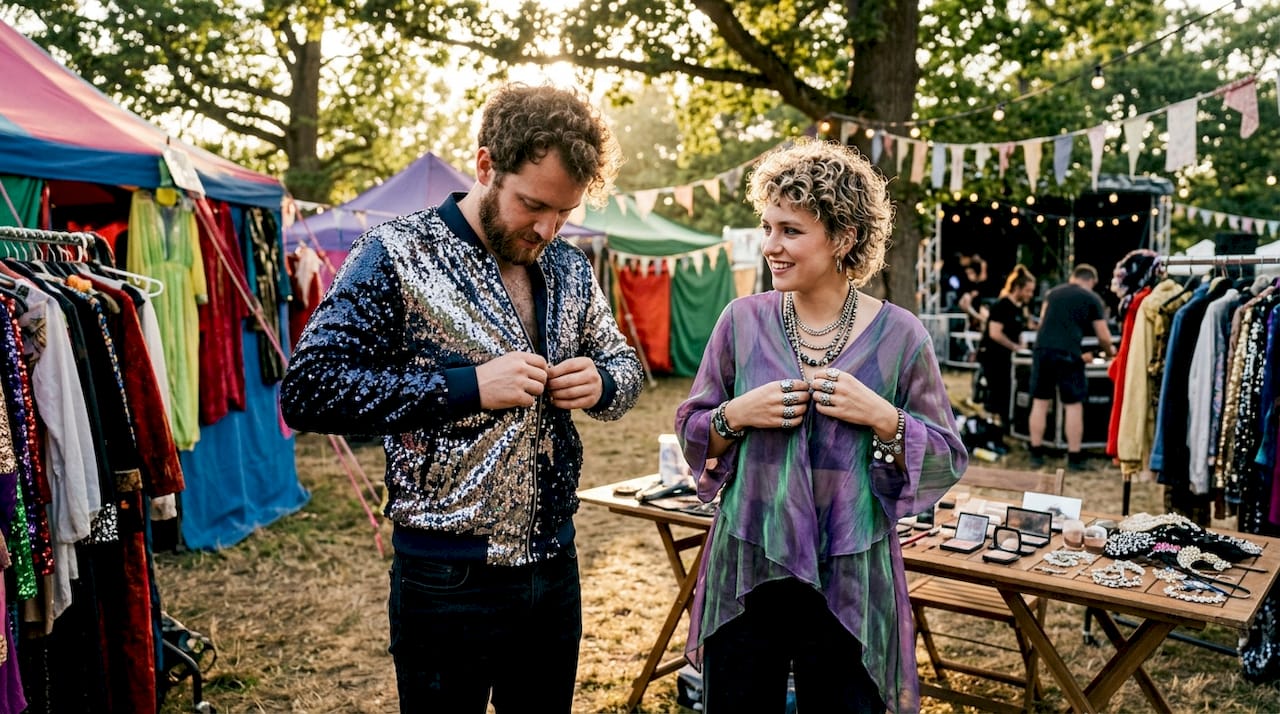
- Maximalist pop: Sequined tops, glitter heels, liquid metallics, and layered statement pieces
- Sporty streetwear: Baggy silhouettes, basketball shorts, vintage tees, and broken-in sneakers
- Gender-fluid tailoring: Structured blazers, neutral fits, and pieces that work across any body or identity
| Archetype | Signature Pieces | Mood |
|---|---|---|
| Coquette | Bows, lace, pastels | Soft, romantic, feminine |
| Edgy rock | Leather, fishnets, platforms | Rebellious, raw, nostalgic |
| Maximalist pop | Sequins, metallics, glitter | Bold, expressive, unapologetic |
| Gender-fluid tailoring | Blazers, neutral cuts | Inclusive, modern, confident |
| Sporty streetwear | Oversized fits, sneakers | Casual, authentic, youth-driven |
The personality-driven nature of these archetypes is what keeps pop culture clothing relevant. Trends that convey a specific humor, attitude, or emotional energy outlast purely aesthetic ones because they give wearers something to say about themselves.
Pro Tip: Mix archetypes deliberately. Pairing a coquette lace top with edgy platform boots is exactly the kind of contrast that reads as intentional and current rather than costume-y.
Style icons who shaped pop culture fashion
Certain figures do not just follow trends. They generate them, and their influence echoes through entire fashion cycles.
- Billie Eilish: Her anti-fashion approach, built on oversized fits, layered tees, and comfort-first dressing, gave nonconformist fans a blueprint that challenged the hyper-sexualized pop aesthetic entirely.
- Olivia Rodrigo: Doc Martens, fishnet tights, baby tees, and plaid minis brought early 2000s pop-punk back with genuine emotional weight, not just nostalgia.
- Sabrina Carpenter: Bedazzled lingerie-style miniskirts, sky-high platforms, and couture moments like her Louis Vuitton Met Gala bodysuit made her one of the most watched style figures of the current era.
- Harry Styles and Jaden Smith: Both carried forward the androgynous fashion tradition that David Bowie and Freddie Mercury established decades earlier, normalizing gender-neutral dressing for a new generation.
- Addison Rae: Her pivot from “valley girl” to “messy pop star energy” with Versace sets and Y2K micro-miniskirts shows how quickly a public figure can redefine their own aesthetic and pull fans along with them.
| Icon | Signature Style | Cultural Impact |
|---|---|---|
| Billie Eilish | Oversized, anti-fashion, comfort-first | Normalized nonconformist dressing |
| Olivia Rodrigo | Pop-punk, babydoll dresses, plaid | Revived Y2K angst for Gen Z |
| Sabrina Carpenter | Bedazzled minis, couture, platforms | Defined hyper-feminine maximalism |
| Harry Styles | Gender-fluid tailoring, bold prints | Mainstreamed androgynous fashion |
| Addison Rae | Y2K micro-trends, Versace, streetwear | Embodied “messy pop star” aesthetic |
Current trends and digital influence on pop culture fashion in 2026
In 2026, pop culture fashion has pivoted hard toward personality-based maximalism. Liquid metallic fabrics, modular tech-wear, and gender-fluid tailoring dominate, with sequined T-shirts, glitter heels, and eco-futurism led by K-Pop influences shaping global retail. The cultural shift away from quiet luxury is real and accelerating.
TikTok and similar platforms have turned trend adoption into a direct response loop rather than a slow trickle-down process. Brands now use AI tools to monitor cultural signals and respond within days, not seasons. The influence between fans and celebrities is genuinely cyclical: fans create niche aesthetics on TikTok, artists adopt them, and the loop accelerates.
Gender-fluid tailoring is less a trend and more a structural shift. Male K-Pop idols in lace and pearls, female artists in power suits and masculine silhouettes. The binary has dissolved in the most influential corners of pop culture, and mainstream retail is following.
| 2026 Trend | Origin | Key Pieces |
|---|---|---|
| Liquid Metallics | K-Pop / Cyber-Noir | Chrome fabrics, iridescent tops |
| Modular Tech-wear | K-Pop / Streetwear | Detachable jackets, convertible cargo pants |
| Balloon Silhouette | K-Pop runway | Structured oversized pants, cinched ankles |
| Eco-Futurism | Sustainability movement | Lab-grown leather, ocean-plastic polyester |
| Y2K Maximalism | Gen Z nostalgia | Low-rise jeans, bedazzled baby tees, glitter |
Pro Tip: Tech-forward accessories are an easy entry point into 2026’s modular aesthetic. Pieces like customizable watch bands let you shift your look without rebuilding an entire outfit.
How pop culture fashion reflects and shapes societal identity
Pop culture fashion does not just reflect society. It actively shapes it. When Harry Styles wore a dress on the cover of Vogue or when Billie Eilish built a career on rejecting the sexualized pop star uniform, those were not just style choices. They were cultural arguments about who gets to define beauty, gender, and belonging.
The fashion archetypes people gravitate toward provide a safe framework for identity exploration, especially for younger audiences navigating complex social contexts. Dressing like your favorite artist is a way of trying on a version of yourself. It is low-stakes identity experimentation with high social visibility. Understanding how apparel trends shape self-expression helps explain why people feel so personally connected to their style choices.
Pop culture also pushes inclusivity forward. The normalization of gender-neutral clothing, the growing representation of diverse body types in campaigns, and the celebrity-driven push for sustainable fashion all started as pop culture moments before becoming industry standards.
Pop culture fashion trends across the decades
Each decade produced a distinct pop culture fashion signature, usually tied to a dominant medium or cultural movement.
The 1950s gave us rock rebellion through Elvis Presley’s pompadour, leather jackets, and blue jeans. The 1960s and 1970s brought Woodstock’s bohemian aesthetic and David Bowie’s androgynous glam rock. By the 1980s, MTV turned musicians into walking billboards, and Madonna’s layered lace, crucifixes, and fingerless gloves became a uniform for an entire generation of fans.
The 1990s split into grunge (flannel, Doc Martens, thrift-store layers) and hip-hop streetwear (oversized hoodies, Timberlands, gold chains), both of which are currently being revived by Gen Z. The 2000s delivered Y2K maximalism: low-rise jeans, Von Dutch trucker hats, and velour tracksuits. The 2010s saw the rise of normcore and athleisure, driven by Instagram’s clean aesthetic. Now, in the mid-2020s, all of these eras are cycling back simultaneously, filtered through TikTok nostalgia and remixed into something new. You can explore how trending apparel shapes style across these cycles to understand why certain looks keep returning.
The role of streetwear and youth culture in pop culture fashion
Streetwear is where pop culture fashion gets its most democratic expression. Born from skateboarding, hip-hop, and surf culture in the 1980s and 1990s, it became the dominant youth fashion language of the 21st century. Brands like Supreme built entire cultural ecosystems around scarcity, community, and subcultural identity long before “drop culture” became a marketing term.
Youth culture drives pop culture fashion forward because young people are the ones most actively constructing identity through clothing. They are also the fastest adopters and the most willing to experiment. Gen Z in particular treats fashion as a mood board rather than a dress code, mixing high and low, vintage and new, feminine and masculine without apology. The result is a themed and expressive apparel culture where graphic tees, statement hoodies, and character-driven designs carry real cultural weight.
Streetwear’s influence on pop culture fashion is now total. Every major pop star incorporates streetwear elements, luxury houses collaborate with streetwear brands, and the aesthetic vocabulary of skate culture shows up on red carpets. The line between street and stage has effectively disappeared.
Key Takeaways
Pop culture fashion is a cyclical, identity-driven system where celebrities, fans, and digital platforms continuously reshape what people wear and why.
| Point | Details |
|---|---|
| Definition and function | Pop culture fashion uses clothing as a visual language for identity, group belonging, and cultural communication. |
| Digital acceleration | TikTok and AI tools have turned trend adoption into a direct response loop, compressing cycles from seasons to days. |
| Archetype over imitation | Consumers want the vibe of an icon, not an exact copy; brands succeed by curating mood-driven interpretations. |
| 2026 dominant trends | Personality-based maximalism, liquid metallics, modular tech-wear, and eco-futurism lead the current cycle. |
| Societal impact | Pop culture fashion normalizes gender fluidity, drives inclusivity, and shapes identity for younger audiences. |


