

Planning Halloween outfits effectively starts with one honest question: how much do you actually want to do this year? Personal stylist Sophie Strauss puts it plainly in NPR’s Halloween guide: “If you’re one kind of Halloween person but trying to be the other, you’re going to be sad.” That single insight cuts through more costume stress than any shopping list. Know your persona first, then build everything else around it.
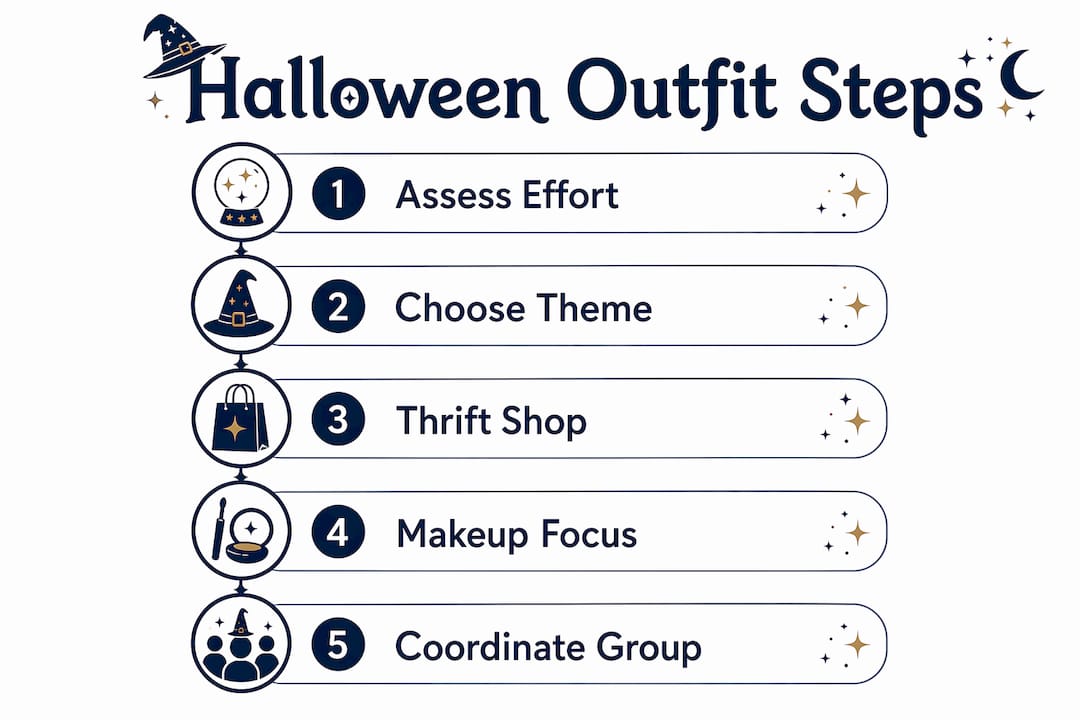
How to plan Halloween outfits in five clear steps
Getting your costume right is less about inspiration and more about sequencing. Follow these steps and the whole process gets easier.
- Define your Halloween persona. Are you going all-out or just adding cat ears? Neither is wrong, but pretending you’re the other type wastes time and money.
- Audit your closet first. A denim jumpsuit with a red bandana becomes Rosie the Riveter. A black dress becomes three different characters depending on which accessories you grab.
- Set a realistic budget. The average American spends about $37 per Halloween costume. You can beat that with thrift sourcing and one targeted accessory purchase.
- Consider your event and weather. An outdoor trick-or-treat run in late October calls for layering. A crowded indoor party means you need to think about how much space your costume takes up.
- Build a component checklist. List every piece: base outfit, accessories, makeup, props. Check them off as you source them so nothing gets forgotten the night before.
Pro Tip: Start shopping thrift stores in september, not october. Goodwill and Salvation Army are picked clean of blazers, gowns, and formal wear by October 10th. The people who look like they spent $200 and actually spent $22 shopped a month early.
1. Classic witch or vampire with a fashion-forward twist
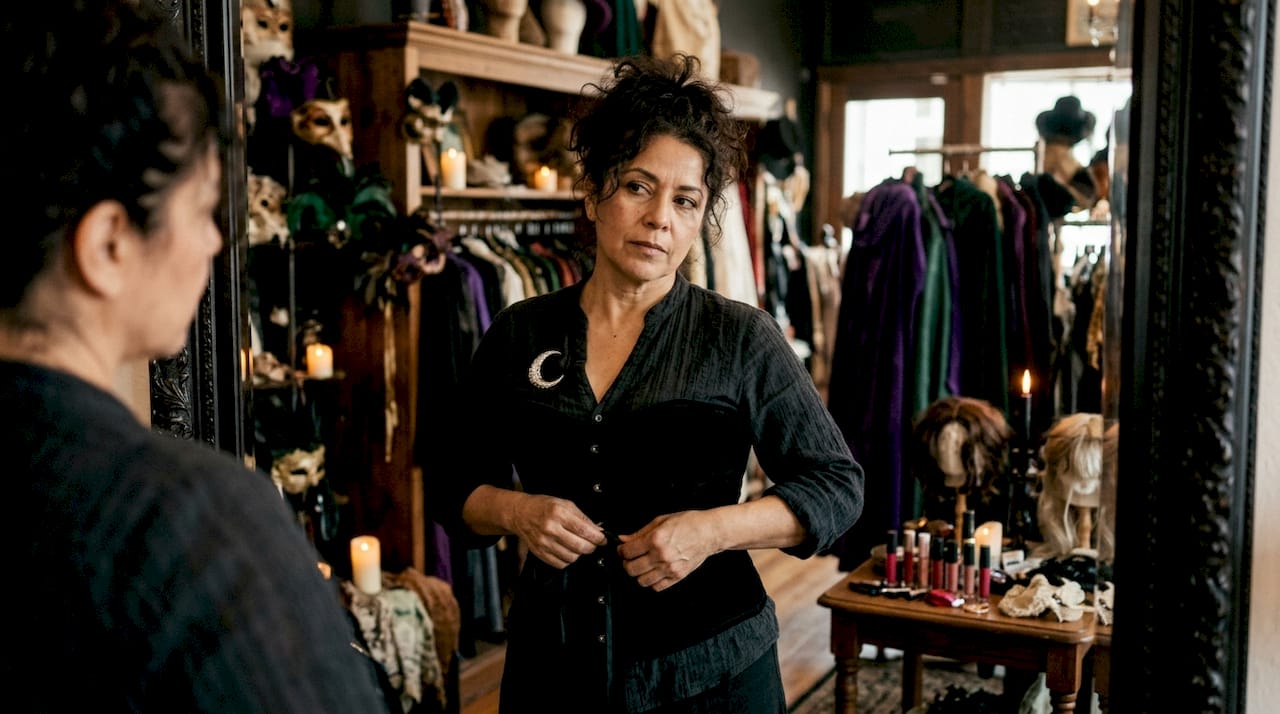
The witch and vampire archetypes never go out of style because they give you total creative freedom. Skip the cheap polyester cape and instead build from real clothing: a velvet slip dress, combat boots, and crystal jewelry for a “dark witch” vibe, or a fitted black turtleneck with theatrical fangs for a vampire that reads instantly across a crowded room. Distressing high-quality everyday clothes creates far more authentic results than anything in a plastic bag at a pop-up store. A little tea-staining on a white blouse, some frayed hems, and dark contouring makeup does more than a $45 synthetic set ever will.
2. Pop culture costumes built around one specific accessory
The best pop culture costumes in 2026 work because they need zero explanation. Two women walking in, one in green and one in pink, and the whole room gets it immediately. The trick is picking a character with a clear visual hook that reads across the room without a name tag. One specific accessory anchors the whole look: a firetruck red wig for Chappell Roan, a plaid blazer and matching plaid skirt for Cher from Clueless, or a blue apron and white tee for Carmy from The Bear. You don’t need to recreate every detail. Nail the one element that makes the character unmistakable.
Pro Tip: For couples costumes, both people need to be genuinely excited about their character. Before locking anything in, ask each person to name three visual elements of the character they’re playing. If someone can’t do it, that’s the wrong costume for them.
3. Thrift-smart DIY with a hybrid approach
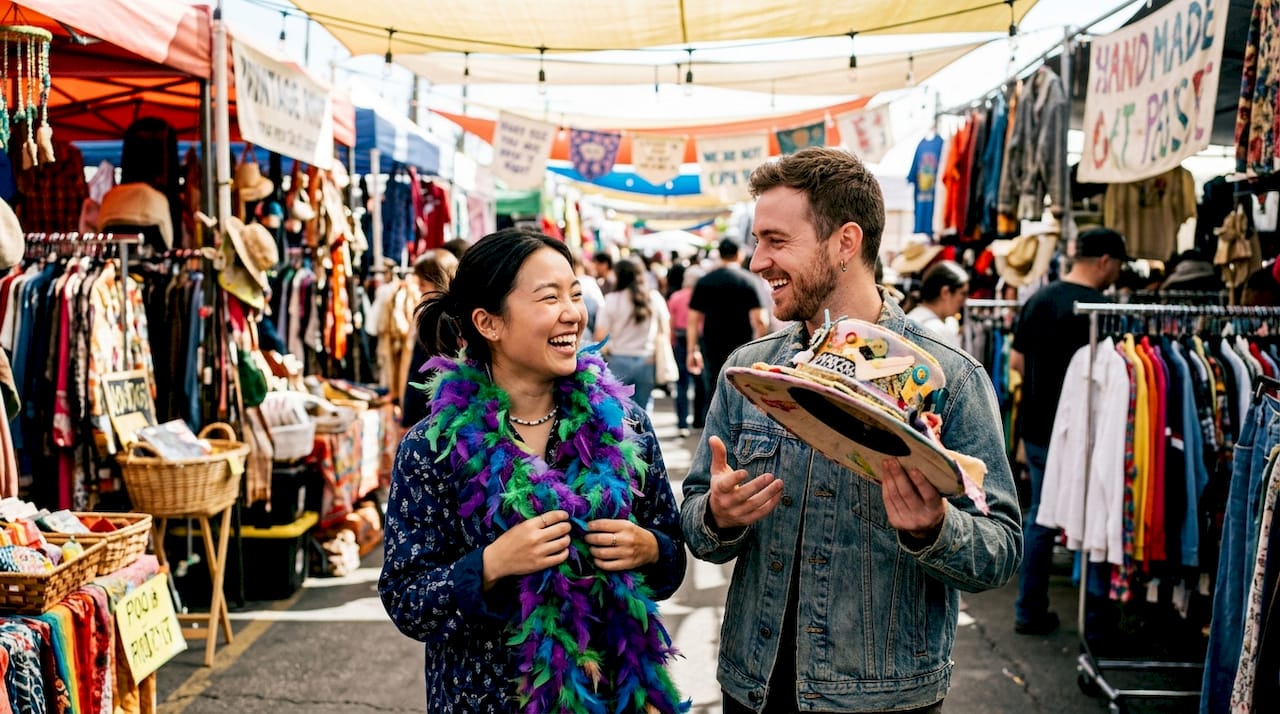
The hybrid approach is the most practical strategy for anyone who wants a great costume without a crafting marathon: invest in one quality reusable base piece, then add inexpensive DIY details for character specificity. A corset or structured jacket from a thrift store becomes the foundation. Hot glue, fabric paint, or a few targeted Amazon purchases handle the rest. This method keeps costs low, produces a better fit than packaged costumes, and gives you pieces you can actually wear again. Real DIY is closet plus two specific accessories plus 45 minutes, not a six-hour project that still looks unfinished at 10 PM.
4. Skeleton and skull looks driven by makeup
A skeleton costume lives or dies by the face paint, not the outfit. Wear all black, then focus your effort on an intricate skull makeup look using water-activated face paints, which are safer than acrylics and wash off cleanly. A printed skeleton jumpsuit works too, but the version that gets compliments all night is always the one where someone committed to the makeup. YouTube has hundreds of free tutorials at every skill level. Spend $12 on a quality face paint kit and you’ve got a costume that costs less than a store-bought set and looks twice as good.
5. Group costumes with coordinated color palettes
Group costumes succeed when each character has a distinct visual identity that reads individually and cohesively as a set. The Mystery Gang works because Fred, Daphne, Velma, Shaggy, and Scooby each have a locked-in color palette. A coven of witches in coordinated jewel tones, one in deep emerald, one in midnight purple, one in rich burgundy, produces the best group photo result of almost any costume concept. The logistical key: designate a costume captain. One person manages character assignments, confirmed in a group message, at least two weeks before Halloween. Without that, three people show up as the same character and nobody agreed to be the difficult one.
| Group Theme | Color Palette | Key Prop |
|---|---|---|
| Coven of witches | Jewel tones (emerald, purple, burgundy) | Crystal jewelry, dramatic cloaks |
| Mystery Gang | Orange, purple, green, brown | Magnifying glass, Scooby snacks |
| Crayons | Solid matching colors per person | Cardboard cone hat in matching color |
| Wizard of Oz cast | Blue gingham, silver, yellow, green | Ruby slippers, tin funnel hat |
6. Makeup-first costumes for maximum impact at minimum cost
Sometimes the outfit is secondary. A simple black base and a committed makeup look can outperform a $60 packaged costume every time. Contouring creates skeletal effects. Colored contacts transform your entire appearance. Temporary tattoos add character details without any sewing. For a tattooed lady costume, cover yourself in temporary tattoos and fill gaps with a fine-tip marker. For a Day of the Dead skull, a $10 face paint kit and a YouTube tutorial are all you need. The single highest-impact upgrade available for under $15 is theatrical fangs for a vampire or scale face gems for a mermaid. One specific detail at the right price point transforms a costume into a character.
7. Kids’ costumes built from household items
Fun Halloween outfits for kids don’t require a trip to a costume store. A farmer needs overalls, a straw hat, and toy animals. A chef needs an apron, a wooden spoon, and some flour on the face. A robot comes together from cardboard boxes covered in aluminum foil. The key with kids is comfort and practicality: costumes that are easy to move in, don’t obstruct vision, and can layer over warm clothes for cold October nights. Check the Halloween fashion tips for families at 3wizardclothing for age-appropriate ideas that hold up through a full evening of trick-or-treating.
Pro Tip: For young kids, skip masks entirely. They restrict vision and become uncomfortable fast. Face paint or a simple headband accessory does the same job and keeps the night running smoothly.
8. Weather-adapted costumes that still look great
Layering for cold outdoor events and planning for dark indoor parties are two completely different problems. For outdoor trick-or-treating in colder climates, build the costume around a warm base: a witch or vampire look works perfectly over a black turtleneck and leggings. For dark indoor parties, reflective or high-contrast makeup keeps your look visible and photogenic under low lighting. The practical rule is to stress-test your costume in the actual conditions you’ll face. Wear it around the house for an hour. Sit down, walk up stairs, use the bathroom. If something fails at home, you have time to fix it.
How to pull off last-minute Halloween costumes
The cardinal rule of last-minute costumes is clarity. You do not want to spend the entire night explaining what you are. If you’re throwing something together the day of, pick a concept so obvious it needs no introduction.
- Raid your closet for a recognizable base. A black suit, white shirt, and black sunglasses is Men in Black. A denim shirt with sleeves rolled up, jeans, and a red polka-dot bandana is Rosie the Riveter. Both take under five minutes.
- Let makeup carry the costume. Wear all black and do a skull face, cat whiskers, or zombie contouring. Simple, cheap, and consistently impressive.
- Use one prop to lock in the character. A silver pen becomes a neuralyzer. A broomstick makes a witch. A toy stethoscope makes a doctor. The prop does the explaining so you don’t have to.
- Lean on DIY embellishments. Hot glue, fabric paint, and temporary tattoos can transform a plain outfit in under 30 minutes. A white t-shirt with “Error 404: Costume Not Found” written in marker is a legitimate last-minute option that always lands.
- Avoid anything that requires constant adjustment. Capes that drag, masks that fog up, and props that break by 9 PM will ruin your night faster than a bad costume idea.
For quick, wearable ideas that work straight out of the package, the Halloween outfit ideas for families at 3wizardclothing cover options that look intentional even when you’re short on time.
How to build a costume plot that matches your real commitment level
A costume plot is the framework stylists use to align effort with genuine enthusiasm, and it prevents the most common Halloween mistake: over-investing in a costume you were never truly excited about. Aligning project intensity with your authentic excitement is what separates a fun Halloween from a stressful one.
Answer these five questions before you buy or make anything:
- What kind of Halloween person am I this year, really?
- Do I want pop culture recognition or atmospheric spookiness?
- What do I already own that could anchor this costume?
- What are the venue requirements: indoor, outdoor, crowded, formal?
- What is my actual DIY budget and time budget?
“There’s a sort of delicious wickedness that the spooky season gives us the right to tap into without actually needing to be a bad person. Think of someone kind of dangerous, someone whose energy you’d like to embrace for the evening. It doesn’t take very much effort to nail that costume.” — Sophie Strauss, personal stylist, via NPR
Stress-testing your costume days before the event catches problems you won’t notice until it’s too late: a wig that shifts after an hour, shoes that destroy your feet by 10 PM, or a prop that won’t fit through a doorway. Put the full costume on, move around in it, and make adjustments while you still have time. The best costumes tell a story and are memorable, especially when they incorporate one standout accessory or makeup element that makes the whole look unmistakably intentional. For styling ideas that translate retail pieces into costume-ready looks, the Halloween apparel trends guide at 3wizardclothing is worth a look before you finalize your plan.
Ready to build your Halloween look?
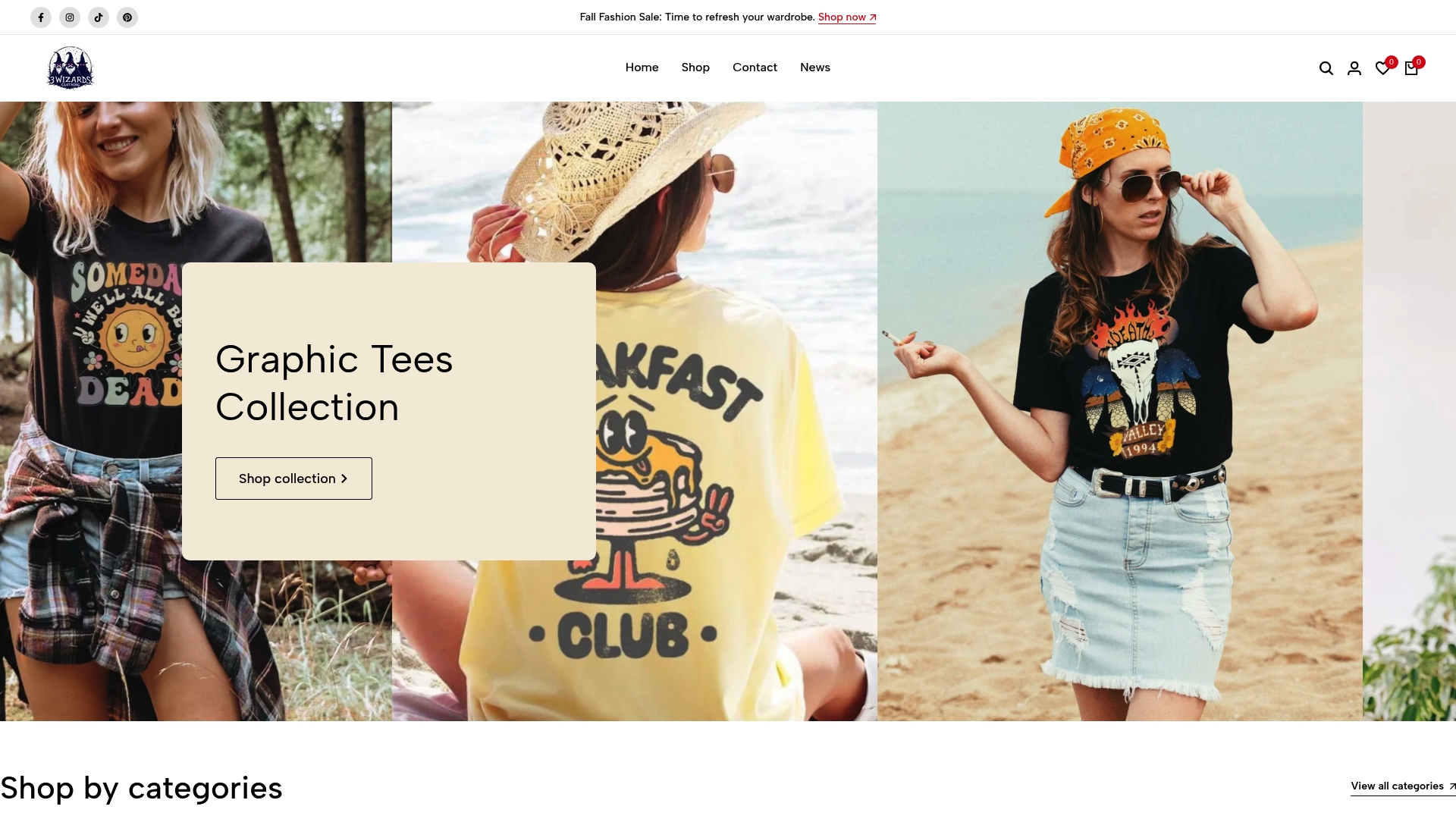
3wizardclothing carries Halloween-themed graphic tees, hoodies, and seasonal collections that work as costume foundations or standalone festive pieces. Whether you’re building a full DIY costume or just want something that reads “Halloween” without a full production, the Halloween collection at 3wizardclothing has options for adults, kids, and families. Pair any graphic piece with accessories and makeup from the tips above, and you’ve got a look that’s both comfortable and completely yours.
Key Takeaways
The most effective Halloween costume planning combines an honest self-assessment of your effort level, a closet-first sourcing approach, and one standout accessory or makeup element that makes the character unmistakable.
| Point | Details |
|---|---|
| Know your persona first | Decide how much effort you genuinely want to invest before choosing any costume concept. |
| Shop thrift stores in september | Formal wear and blazers at secondhand stores are gone by october 10th; early shoppers get the best selection. |
| Budget around $37 per costume | The average American spends about $37 per Halloween costume; targeted thrift and accessory purchases can reduce that amount. |
| One standout element wins | A single specific accessory or makeup detail, like theatrical fangs or scale face gems, transforms a costume into a character. |
| Stress-test days before | Wear the full costume at home before the event to catch fit issues, comfort problems, and prop failures while you can still fix them. |
Recommended
- Best essential Halloween outfits: Trendy picks for 2026 – 3 Wizard Clothing
- Halloween Fashion Tips for Adults and Families in 2026 – 3 Wizard Clothing
- Top Halloween Apparel Trends for a Stylish 2026 – 3 Wizard Clothing
- Creative Halloween Clothing Ideas for Trendy Adults & Families – 3 Wizard Clothing


