

Five typical outfits cover the majority of theme park days: a performance tee with biker shorts and low top sneakers for hot, high-walk days; an oversized graphic tee with a skort and platform sneakers for photo day; a fitted polo with a tennis skirt and slip-on sneakers for a dining reservation; a romper with built-in shorts for pure grab-and-go ease; and a linen button-down worn open over a tank with denim cutoffs for resort-style parks where the photo backdrops matter as much as the rides. Each one is built around a shirt you can actually move in, not a look that just photographs well standing still.
Two things matter more than any specific outfit choice. First, wear shoes you’ve already broken in. Theme park guides consistently point to breathable shirts, supportive sneakers, and hands-free bags as the baseline for surviving a full park day, and sneakers are the piece that ends a trip early if you get it wrong. Second, carry a hands-free bag. Fumbling with a shoulder tote at a ride locker, or holding it against your body through a loop, is the fastest way to wreck an outfit’s silhouette and your patience.
Here’s the quick-reference version:
- Hot, high-mileage day: performance tee, high-waist biker shorts, low-top sneakers, belt bag.
- Photo day / castle backdrop: oversized graphic tee (tucked or front-knotted), skort, platform sneakers.
- Dining reservation or dressier stroll: fitted polo or tee, chino or tennis skirt, slip-on supportive sneakers.
- Maximum ease, minimal decisions: romper or jumpsuit with built-in shorts, low-top sneakers.
- Resort-style park, warm evenings: linen button-down open over a tank, denim cutoffs, supportive sandals.
Weather and ride type push you between these. Water rides call for the performance tee formula since it dries fast. A day built around photo ops points you toward the graphic tee and skort combo. The common thread: every formula above starts with the shirt, because a shirt that traps heat or won’t move with you undoes everything else you packed.
Key Takeaways
A repeatable, shirt-first outfit formula paired with broken-in sneakers and a hands-free bag solves most theme park comfort and style problems at once.
| Point | Details |
|---|---|
| Start with the shirt | Choose a breathable, quick-dry, or cotton-blend graphic tee before picking bottoms or shoes. |
| Two non-negotiables | Broken-in low-top sneakers and a hands-free bag prevent the most common outfit failures. |
| Pack for weather swings | Bring one packable layer and a poncho; quick-dry fabrics recover faster after water rides. |
| Color hides wear | Dark tones and busy graphic prints mask sunscreen, sweat, and food stains better than white. |
| Keep theming to one piece | A single themed accessory or graphic tee reads better than a full costume on ride-heavy days. |
| Shop shirt-first formulas | 3wizardclothing’s graphic tee collections are cut for the exact knot, tuck, and layering styles covered here. |
Where This Guide’s Outfit Advice Came From
- 30 Theme Park Outfit Ideas for Cute Comfort All Day — breathable shirt, sneaker, and bag baseline recommendations.
- What to Wear to Disney World: 29 Cute Outfits — repeatable formula examples like the tee-and-skort pairing.
- 20+ Cool Universal Studios Outfit Ideas — quick-dry fabric guidance for water-ride-heavy parks.
- Casual Beach-Ready Attire Guide — breathable shirt silhouettes suited to hot, outdoor days.
- Examples of Themed Apparel: Fresh Ideas for 2026 — themed graphic tee styling that avoids full costumes.
Table of Contents
- 2. Full Outfit Formulas You Can Copy Shirt First
- 3. Shoes, Socks, and Foot Care That Actually Hold Up
- 4. Hands-Free Bags and What Actually Belongs In Them
- 5. Fabric, Layers, and Staying Ride-Ready Through Weather Swings
- 6. Themed Styling Without Wearing a Costume
- 7. A Packing Checklist and the 3-3-3 Rule for Multi-Day Trips
- 8. Color Coordination That Hides the Day’s Wear and Tear
- 9. Sun Protection That Doesn’t Feel Like a Costume
- 10. Ride Safety: What Not to Wear on Coasters and Drop Rides
- What the Conventional Advice Gets Wrong
- Frequently Asked Questions
- Sources
2. Full Outfit Formulas You Can Copy Shirt First
Building a park outfit works backward from the shirt. Pick the shirt, then let it dictate the fabric weight, the fit of everything under it, and how much layering you’ll need for temperature swings later in the day.
1. The athleisure formula
A performance tee, high-waist biker shorts, cushioned sneakers, and a belt bag. This is the formula for parks with heavy walking mileage and long lines in direct sun. Performance fabrics wick sweat instead of holding it, which matters most between 11 a.m. and 4 p.m. when asphalt radiates heat back up at you. Biker shorts eliminate thigh chafing on long walks, something a flowy skirt can’t promise once you’ve covered eight miles. The belt bag keeps your hands free for stroller handles, snack bags, or a kid’s hand, and it sits flat enough not to interfere with ride restraints.
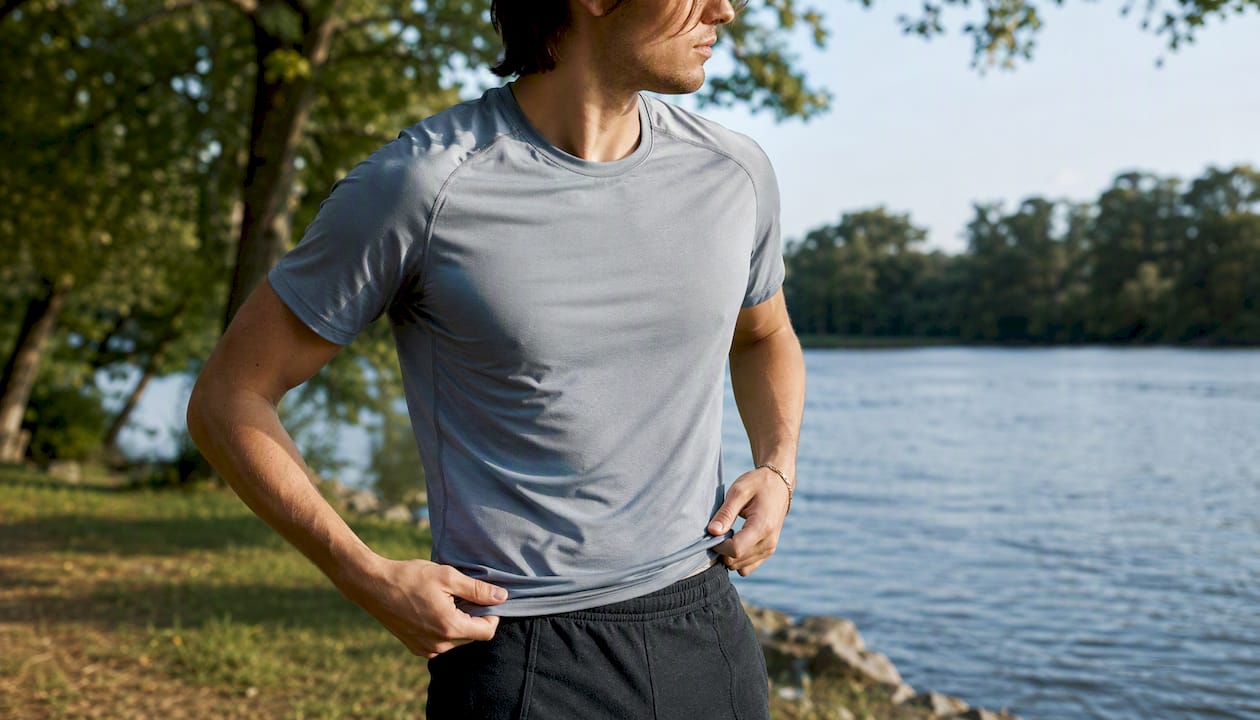
Swap for coverage: if biker shorts feel too fitted, swap in a lightweight jogger short with a similar rise. The performance tee still does the heavy lifting.
2. The casual-cute formula
An oversized graphic tee, denim cutoffs or a skort, and white sneakers. Front-knot the tee at the waist for a fitted photo silhouette, then release the knot for the walk between attractions. A half-tuck works too, and it’s faster to adjust one-handed while you’re holding a churro.
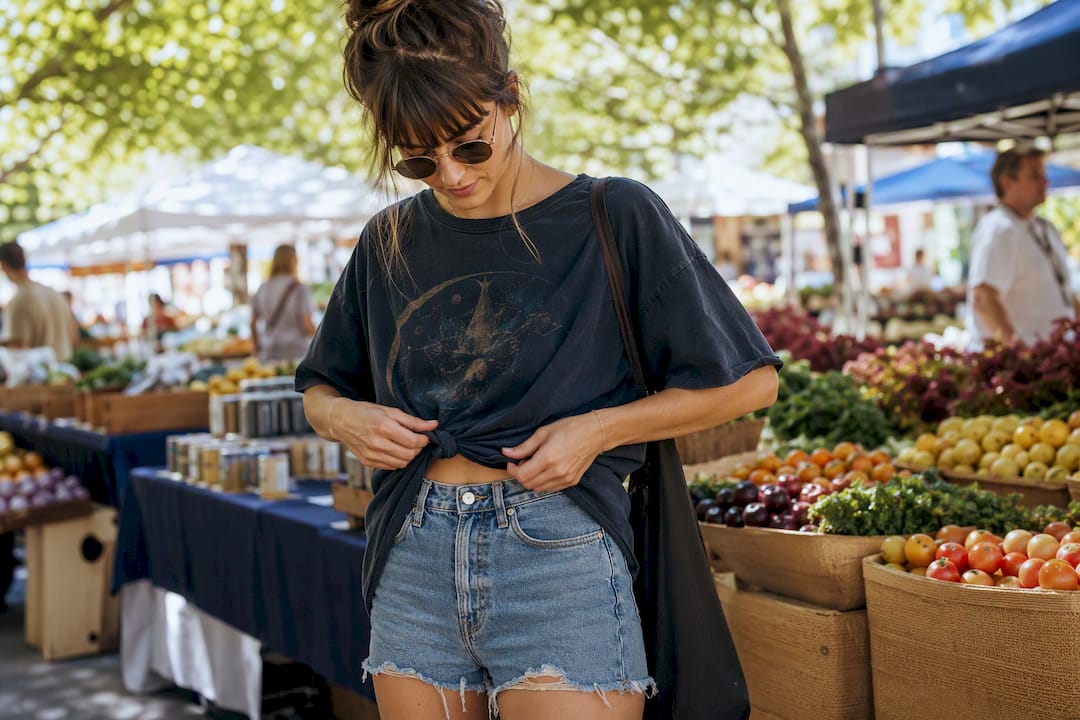
Pro Tip: Knot the tee on the side rather than dead center. It sits flatter under a crossbody strap and photographs less bulky in ride photos and candid shots alike.
3. The preppy, put-together formula
A polo or fitted tee, a chino short or tennis skirt, and slip-on supportive sneakers. This look earns its keep at parks with sit-down dining reservations or evening entertainment, where you want to look intentional without sacrificing comfort. Style roundups covering Disney World outfit formulas repeatedly point to this fitted-but-relaxed pairing as the one that transitions cleanest from rides to a restaurant table. A pique or jersey knit polo holds its shape through a humid afternoon better than a woven button-down would.
4. The romper or jumpsuit formula
One piece, built-in shorts, zero decisions about what matches what. The upside is obvious: you get dressed once and you’re done. The downside is real too. Bathroom breaks take longer, and if you’re wrangling a toddler mid-outfit-change, a romper adds friction you don’t want. Reserve this formula for days without small kids in tow, or choose a romper with a full-length side zipper, which cuts the bathroom-break time roughly in half compared to a snap-front style.
5. The linen layer formula
A breathable linen or linen-blend button-down worn open over a tank top, paired with denim cutoffs or lightweight shorts. This formula fits resort-style parks and golden-hour photo sessions best. Linen has a texture that photographs beautifully against greenery and pastel park backdrops, and wearing it open rather than buttoned lets it double as sun coverage on your shoulders without trapping heat against your skin. Tie it around your waist once the sun peaks, then put it back on as temperatures drop in the evening.
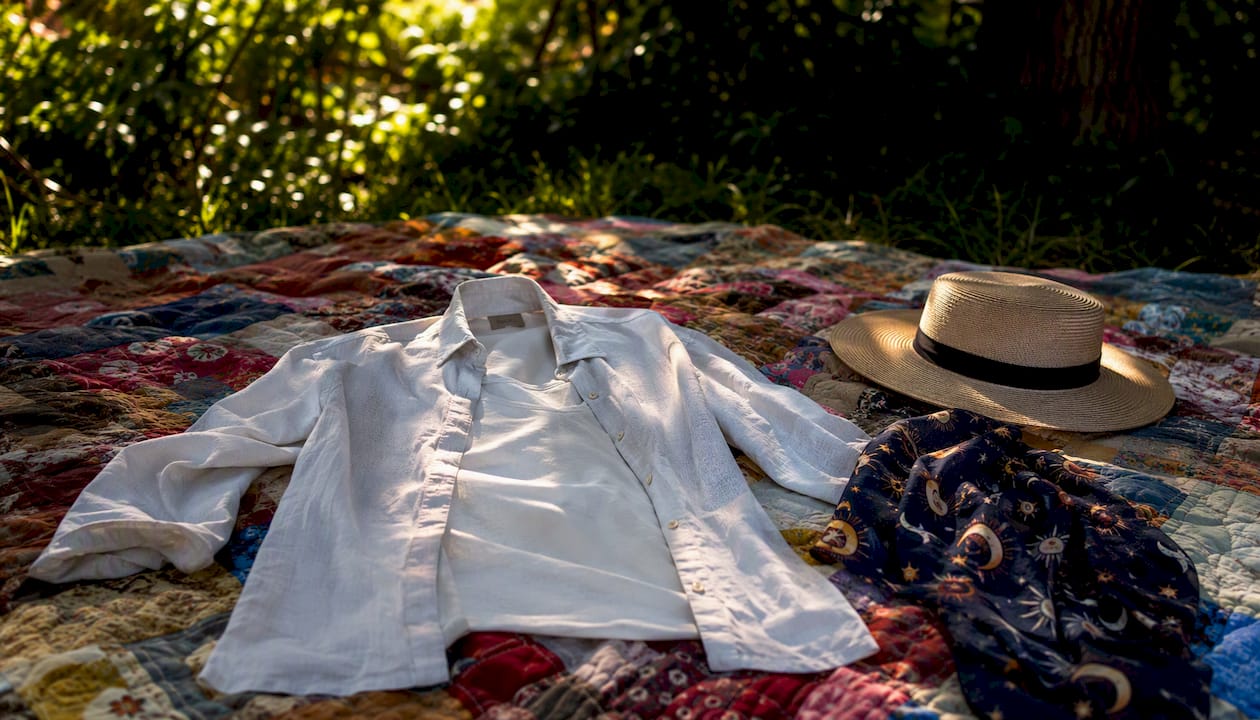
Across all five formulas, fit cues matter more than fabric brand. A tee that’s oversized in the body but has a fitted shoulder seam photographs better than one that’s oversized everywhere and reads as sloppy in group shots. For modesty swaps, layer a fitted tank under an oversized tee, or add bike shorts under a skirt so ride harnesses and stairs never become a wardrobe malfunction.
3. Shoes, Socks, and Foot Care That Actually Hold Up
Broken-in low-top sneakers are the single safest daily choice for a theme park, full stop. New shoes, even expensive ones, cause more mid-day outfit abandonment than any clothing decision you’ll make, because blisters change how you walk within an hour and how you feel for the rest of the day.
Sandals work in narrow situations: resort pool days, evening dining, or parks with minimal walking mileage. They fail on days with 15,000+ steps, on wet ride platforms where wet sandal straps slip, and on any ride with a strict footwear requirement (several water and roller coasters require closed-toe shoes). If you’re unsure, pack sneakers as the primary and sandals as the evening swap.
Socks matter almost as much as the shoe itself:
- Choose moisture-wicking or cushioned athletic socks over plain cotton, which holds sweat against your skin and increases friction.
- Crew-length socks reduce ankle rubbing inside sneakers better than no-show liners, especially on brand-new shoes.
- Double-layer socks (a thin liner under a cushioned crew) work well if you already know you’re blister-prone.
Pro Tip: Pack a small blister kit: moleskin, a roll of athletic tape, and two adhesive bandages. Apply tape to hot spots the moment you feel friction, not after the blister forms. Once skin breaks, the tape stops working as well and the pain compounds fast.
If you’re doing multiple park days, pack a second pair of broken-in shoes and rotate them daily. Letting shoes fully dry and decompress overnight extends their cushioning life and gives your feet a genuinely different pressure pattern the next day, which matters more than most people expect.
4. Hands-Free Bags and What Actually Belongs In Them
A hands-free bag isn’t optional if you want your outfit to survive contact with a ride locker, a stroller basket, and a lunch table without getting crushed, forgotten, or in your way.
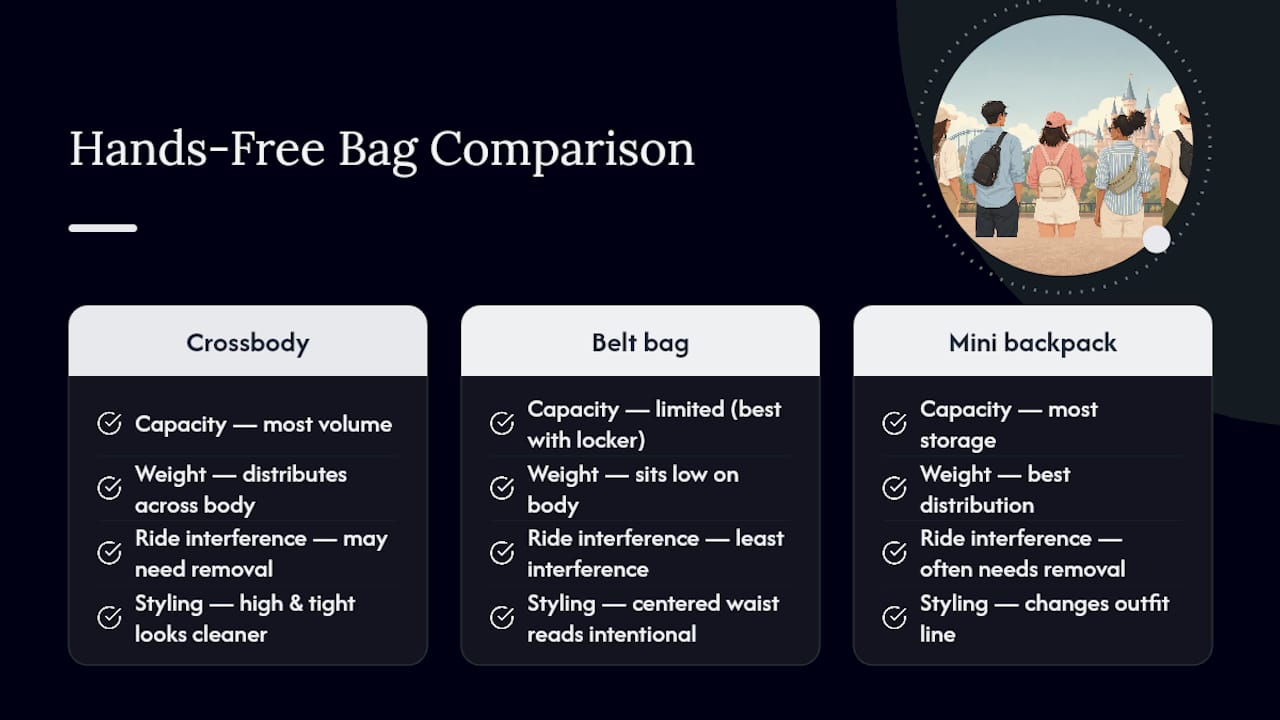
Crossbody bags carry the most volume of the three main options and distribute weight across your body, which matters on long walking days. The downside: the strap can dig into a bare shoulder in warm weather and sometimes needs to come off for ride restraints.
Belt bags sit lowest on the body and interfere least with most ride harnesses, which makes them the safest pick for coaster-heavy parks. Capacity is limited, so they work best paired with a locker for anything bulky.
Mini backpacks offer the most storage and the best weight distribution for a full day, but they’re the one most likely to need removal before boarding a ride, which slows down the loading line behind you.
What actually needs to be on your body at all times: phone, a slim charger or battery pack, sunscreen, lip balm with SPF, a couple of adhesive bandages, and a small folded poncho. Everything else, park map printouts, extra snacks, a bulky camera, can live in a stroller or locker.
Bag placement changes your outfit’s line in photos more than people expect. A crossbody worn high and tight sits cleaner in pictures than one left loose and swinging at hip level, and a belt bag centered at the natural waist reads as intentional styling rather than an afterthought.
5. Fabric, Layers, and Staying Ride-Ready Through Weather Swings
Fabric choice decides whether your shirt outfit survives a water ride or gets ruined by it. Cotton blends breathe reasonably well and feel soft against skin, but they hold onto moisture once soaked, which becomes uncomfortable fast on a humid afternoon. True performance fabrics, polyester or nylon blends built for wicking, dry considerably faster and resist that clammy, heavy feeling cotton develops after a splash zone or an unexpected downpour.
Guides built around water-ride-heavy parks like Universal Studios consistently point toward quick-dry fabrics and light layers as the practical baseline, precisely because conditions change block by block, from splash zones to shaded queues to open sun.
- Pack one layer that folds small: a light zip jacket, a linen button-down, or a packable rain shell.
- Style a layer by tying it around your waist rather than stuffing it in a bag; it doubles as sun coverage when the sun peaks, and warmth when it drops at night.
- On water-ride days, choose a quick-dry shirt over a heavier cotton graphic tee, and skip anything with a large front print that traps water against the chest.
- Skip dark denim on splash-ride days. It gets heavy when wet and takes far longer to dry than shorts or leggings.
Quick-dry fabric guides built for travel and activity wear note the same pattern: fabrics engineered to shed moisture cut down recovery time after a soaking, which on a theme park day means you’re not walking around damp for the next two hours. A poncho stuffed into a belt bag takes up almost no room and saves an entire outfit on days when the forecast is anyone’s guess.
6. Themed Styling Without Wearing a Costume
Pick one themed element and let everything else stay neutral. A pair of character ears, a themed graphic tee, or a set of novelty socks reads as playful and intentional. Trying to layer three or four themed pieces at once usually reads as costume, and costumes get uncomfortable fast on rides with headrests, harnesses, and long lines in the sun.
For families or groups, coordinate a color palette instead of matching shirts exactly. One person in a navy graphic tee, another in navy shorts, a third in a navy-and-white striped top reads as put-together in photos without anyone feeling like they’re in a uniform. This “color bounding” approach also means everyone can wear a shirt they actually like.
Small accessories change how comfortable a ride feels more than people expect:
- Ears and headbands should have a secure grip clip, not just a plastic comb, or they’ll come off on drop rides.
- Pins and buttons on a bag or lanyard are fine, but skip anything pinned directly to a shirt near ride restraints.
- Store loose accessories (sunglasses, small pins, hair clips) in a zipped bag pocket before boarding anything with an inversion.
A single well-chosen graphic tee often carries the whole theme on its own, without needing ears, a costume, or matching accessories to back it up.
7. A Packing Checklist and the 3-3-3 Rule for Multi-Day Trips
Multi-day park trips get simpler with one shorthand: the 3-3-3 rule. Pack 3 shirts, 3 bottoms, and 2 pairs of shoes, one for daily wear and one backup, then mix and match rather than planning a distinct outfit for every single day.
- 3 shirts: one performance tee, one graphic tee, one button-down or polo, so you’re covered for hot days, photo days, and dinner reservations.
- 3 bottoms: biker shorts, denim shorts or a skort, and one skirt or chino short for dressier moments.
- 2 pairs of shoes: your primary broken-in sneakers, plus a backup pair to rotate if the first pair gets soaked or starts causing hot spots.
- One packable layer: a light jacket or button-down that folds small and handles both sun and evening cool-down.
- One poncho and a small first-aid kit: blister tape, bandages, and travel-size sunscreen, packed together so you’re not searching for them mid-park.
Rotate rather than launder on short trips. On trips of four days or fewer, rotation usually beats doing laundry, especially with quick-dry fabrics that air out overnight on a hotel chair back. Longer trips are where a quick hotel laundry cycle around day four makes sense.
The night-before routine matters more than most packing advice admits. Lay out tomorrow’s full outfit, including socks and the bag you’re using, the night before. Mornings in a hotel room with a park opening deadline are not the time to discover your only clean sneakers are still damp from yesterday’s splash zone.
Why Trust These Outfit Rules
Josh, who covers casual and themed apparel styling for 3wizardclothing, built these formulas around what actually survives an eight-hour walking day, not just what looks good in a flat-lay photo. The recommendations line up with what independent theme park outfit guides already advise: breathable tops, easy-moving bottoms, and shoes you’ve already broken in.
3 Wizard Clothing’s themed graphic tee collections are built with these exact formulas in mind, favoring breathable cotton-blend fabrics and relaxed cuts that knot, tuck, or layer without added bulk.
A shirt that fights your movement or traps heat undoes every other smart packing decision you made. Start with the shirt, then build the rest of the outfit around what it needs.
- Fit guidance leans toward true-to-size for a fitted photo silhouette, one size up for the oversized-tee look.
- Cotton-poly blends are the most requested fabric across the brand’s seasonal drops, according to customer feedback patterns the brand tracks internally.
8. Color Coordination That Hides the Day’s Wear and Tear
Dark, mid-tone colors like navy, forest green, charcoal, and maroon hide sunscreen smudges, ketchup drips, and sweat marks far better than white or pastel does. A white graphic tee looks incredible for the first two hours and shows every stain by lunchtime.
Patterned shirts, especially busy graphic prints or all-over patterns, mask minor wear even better than solid dark colors. A print naturally breaks up a sunscreen smear or a small food stain in a way a solid color can’t. This is one reason graphic tees consistently outperform plain tees for full-day wear: the design itself is doing double duty as camouflage.
If you’re set on a lighter shirt for photos, save it for the first hour or two of the day, then change into a darker or patterned shirt after lunch. Packing a shirt swap partway through the day sounds like overkill until you’ve tried it once on a hot, crowded park day. Bottoms benefit from the same logic. Medium-wash denim and dark shorts hide grass stains and bench dust better than white shorts ever will, and they photograph just as well against most park backdrops.
Coordinate the family’s palette around two or three colors that all hide wear well, rather than picking one “cute” color scheme that happens to be all pastels. You’ll get the coordinated photo look without anyone looking rumpled by 3 p.m.
9. Sun Protection That Doesn’t Feel Like a Costume
A wide-brim hat with UPF 50 protection does more real work than sunscreen reapplied twice a day, because it shades your face, neck, and shoulders continuously instead of needing reapplication every two hours. Baseball caps protect less surface area but pair better with the casual-cute and athleisure formulas if a wide brim feels impractical on rides.
UV-rated sun sleeves are worth packing even on a day you don’t expect to need them. They slide on over a short-sleeve tee in seconds, protect forearms that get forgotten in a sunscreen routine, and roll down small enough to fit in a belt bag. They’re especially useful on the linen button-down formula, since sleeves let you skip buttoning the shirt fully closed in the heat.
A few practical notes on making sun protection part of the outfit instead of an afterthought:
- Light-colored, tightly woven fabrics block more UV than dark, loosely woven ones, despite the staining logic above, so a tightly-woven navy tee often beats a loose white one on both fronts.
- Polarized sunglasses reduce glare on reflective ride surfaces and water rides, not just comfort.
- A neck gaiter or bandana does double duty as sun protection and as a quick sweat wipe, and it tucks into a bag pocket when not needed.
None of this needs to look like sun-protection gear from a hiking catalog. A structured straw hat or a simple ball cap fits into every one of the outfit formulas above without reading as gear rather than style.
10. Ride Safety: What Not to Wear on Coasters and Drop Rides
Loose or dangling items are the most common reason ride attendants ask guests to stow belongings before a coaster: hats without a strap, oversized statement jewelry, scarves, and long lanyards can come loose during inversions or sudden stops. Anything with a long cord, a phone on a wrist strap included, needs to be secured or removed before boarding most thrill rides.
Open-toe sandals and flip-flops are restricted on many roller coasters and water rides specifically because they can slip off during a drop or a sudden stop, and a loose shoe becomes a hazard for the people behind you. Closed-toe sneakers avoid this problem entirely, which is one more reason they’re the safer daily default across nearly every formula in this guide.
Baggy pockets and loose drawstrings on shorts deserve a second look too. Anything that can shift or catch on a harness bar is worth tightening or removing before you get in line, not after the ride operator points it out. A cinched or elastic waistband sits more securely under a lap bar than a loose drawstring tie.
Bags and accessories follow the same logic covered earlier: a belt bag worn low and centered rarely triggers a “please remove your bag” moment, while a crossbody or backpack usually does on major coasters. Planning your outfit around what stays on your body through a restraint check saves time in line and keeps your belongings where you left them.
What the Conventional Advice Gets Wrong
Most theme park outfit content treats style and comfort as a tradeoff, as if looking good in photos means suffering through the walk between rides. That framing is backward. The formulas that photograph best in these guides, the oversized tee knotted at the waist, the linen layer tied around the hips, are the same ones built around breathable fabric and unrestricted movement. Comfort and photo-readiness aren’t competing goals here; they come from the same fabric and fit decisions.
The bigger gap in typical advice is the obsession with matching every piece perfectly instead of building a repeatable uniform. Pack three shirts you’d actually wear on their own, not three shirts chosen because they match a Pinterest board, and you’ll make faster decisions every morning of a multi-day trip. Prioritize the shirt first: a breathable, well-cut graphic tee does more work than any accessory you could add on top of it, and it’s the one piece worth spending real attention on before you even think about shorts or shoes.
Shop the Shirts Behind These Formulas
3wizardclothing built its graphic tee lineup around exactly the problem this guide solves: shirts that hold their shape through an eight-hour walking day and still look intentional in every photo. The oversized-tee formula pairs naturally with the brand’s relaxed-fit graphic tees, cut with a fitted shoulder line so the front-knot styling from Section 2 sits clean instead of bunching.
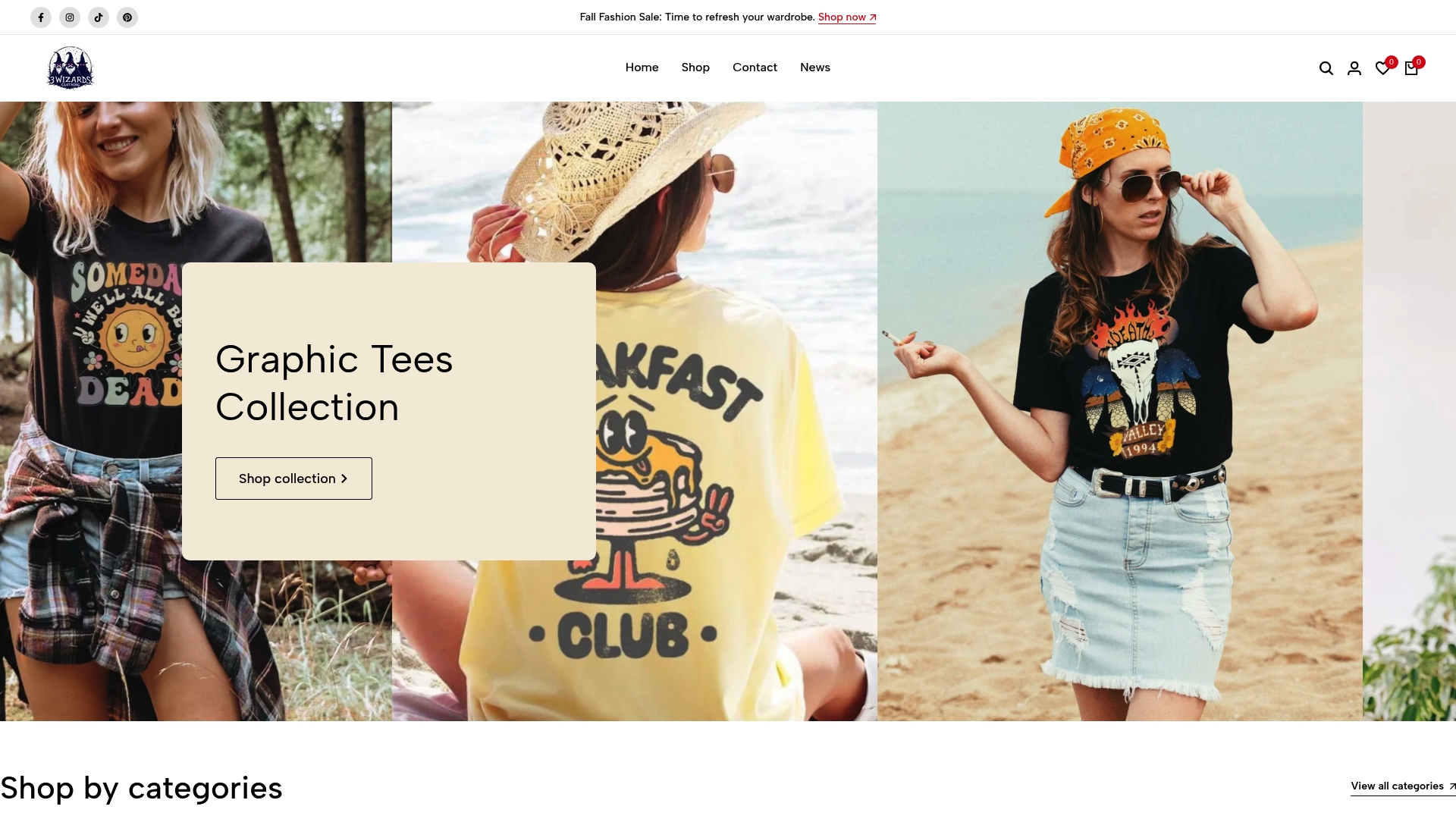
For the athleisure and casual-cute formulas, look at the brand’s breathable cotton-blend tee styles, which come in boxy, fitted, and cropped cuts so you can match whichever silhouette a given outfit formula calls for. Fans of the subtle themed approach from Section 6 will want the seasonal themed collections, designed to carry park flair on the shirt itself without needing a costume or a pile of accessories. Browse the full lineup at 3wizardclothing and build your park-day uniform around a shirt that’s already doing the hard work.
Frequently Asked Questions
What should I wear for a theme park shirt outfit on a hot day? A moisture-wicking performance tee paired with biker shorts and low-top sneakers handles heat and long walking distances better than cotton graphic tees, which hold sweat once they’re damp.
What is the best fabric for theme park shirts? Quick-dry performance fabrics recover fastest after water rides or humidity, while breathable cotton blends work well for shaded, lower-mileage park days. Avoid heavy cotton graphic tees on splash-ride-heavy itineraries.
Do I need a themed outfit to visit a theme park? No. One themed detail, a graphic tee, character ears, or themed socks, reads as intentional styling without the discomfort of a full costume on rides with harnesses and headrests.
What bag works best for hands-free theme park style? Belt bags sit lowest on the body and clear most ride restraints without removal, making them the safest pick for coaster-heavy days. Crossbody bags carry more but sometimes need to come off before boarding.
How many outfits should I pack for a multi-day theme park trip? The 3-3-3 rule works well: three shirts, three bottoms, and two pairs of shoes, mixed and matched rather than planned as separate daily outfits.
Sources
- 30 Theme Park Outfit Ideas for Cute Comfort All Day
- What to Wear to Disney World: 29 Cute Outfits for Rides, Heat, and Castle Pics - BoldnStylish
- 20+ Cool Universal Studios Outfit Ideas You’ll Love to Wear
Recommended
- How to Wear Themed Collections Without Looking Costumey – 3 Wizard Clothing
- Themed shirts in personal expression: discover their role – 3 Wizard Clothing
- Guide to themed apparel for families and trendsetters – 3 Wizard Clothing
- Why families choose themed shirts: Connection, fun, and expression – 3 Wizard Clothing


