

Trendy graphic designs matter because they communicate who you are in seconds, increase the social value of a purchase, and trigger real psychological responses that drive buying decisions. A graphic hoodie with the right motif can signal your humor, your fandom, or your values before you say a word. For gift buyers, that instant readability is the whole point. For social-media moments, it’s the difference between a photo that gets shared and one that gets scrolled past.
Before you shop, run this quick check:
- Message fit: Does the graphic say something true about the person wearing it?
- Print durability: Is it screen-printed or DTG, not a cheap heat transfer?
- Fit and sizing: Does the brand publish a real size chart with measurements?
Pro Tip: Check the inside neck label or product page for fabric weight. A 6 oz. cotton tee holds its shape and print far longer than a 4.5 oz. budget blank.
Key Takeaways
Trendy graphic designs matter most when they communicate something true about the wearer, are built to last through regular wear, and serve a specific social or emotional purpose.
| Point | Details |
|---|---|
| Identity signals drive purchases | Garments with symbolic meaning boost self-esteem and social value, per Psychology Today research. |
| Perceived quality predicts repeat buying | PMC research found perceived quality correlates with purchase intention (r = 0.164–0.731) in fast fashion. |
| Exclusivity increases appeal | Frontiers research (~900 participants) found lower-availability designs raise purchase intention for self-expressive items. |
| Sustainability tradeoffs are real | POD and customization reduce overproduction and increase buyer attachment versus fast-fashion churn. |
| 3wizardclothing | Offers themed, on-trend graphic apparel with clear sizing, durable prints, and organized collections for gifts and personal wear. |
Table of Contents
- 1. Why trendy designs trigger buying — the psychology behind it
- 2. How trendy designs change what you’re willing to pay
- 3. When trendy graphic designs are actually worth buying
- 4. How to pick trendy graphic apparel that actually holds up
- 5. Environmental and ethical tradeoffs of chasing every trend
- 6. How brands use trendy graphics and merchandising to drive demand
- 7. How 3wizardclothing helps you get the benefits without the downsides
- 8. How graphic apparel trends evolved over the decades
- 9. How culture shapes what becomes trendy across regions and demographics
- 10. How a trend emerges, peaks, and fades
- 11. How social media accelerated graphic design trends
- 12. When following every trend costs you more than it’s worth
- The real reason we design the way we do at 3wizardclothing
- On-trend graphic apparel, ready to shop at 3wizardclothing
- Sources
1. Why trendy designs trigger buying — the psychology behind it
Clothing is one of the fastest identity signals humans use. Research published in Psychology Today confirms that intentional wardrobe selection, especially garments with symbolic meaning, can boost state self-esteem and perceived social value. A graphic tee with a message you identify with doesn’t just look good. It changes how you feel wearing it.
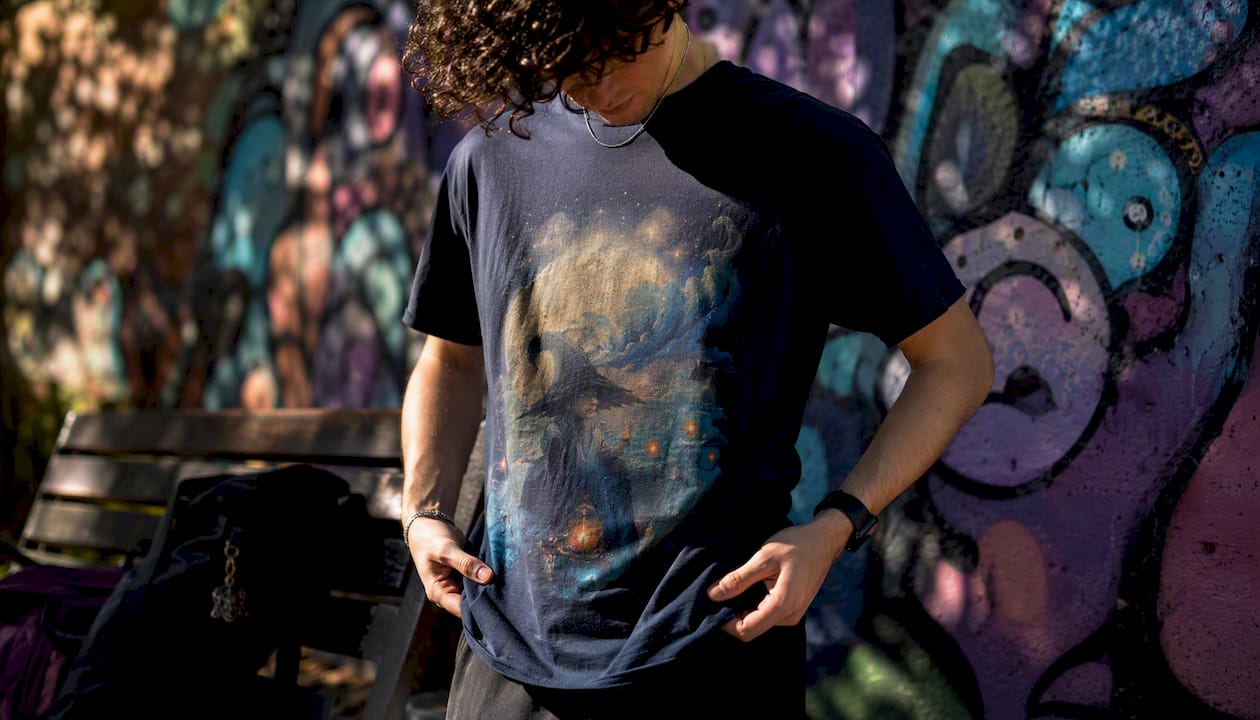
Social proof amplifies this. When a design appears across feeds, on influencers, and in group photos, it signals belonging. Wearing it places you inside a cultural moment. Novelty adds another layer: the brain’s reward circuitry responds to new stimuli, and a fresh graphic print delivers a small but real dopamine hit at purchase. Add temporal scarcity — a limited drop, a seasonal design, a “selling fast” badge — and FOMO accelerates the decision.
A 2023 consumer survey found that roughly 94.4% of respondents had already purchased a graphic T-shirt, and strong majorities agreed that graphic tees express unique personality and social messages. That’s not a niche category. That’s a mainstream communication tool.
2. How trendy designs change what you’re willing to pay
Trendiness directly affects perceived product quality, and perceived quality predicts whether you buy again. A PMC literature synthesis on fast fashion found that perceived quality correlates with purchase intention across multiple markets, with reported correlations ranging from r = 0.164 to r = 0.731. In plain terms: when a piece looks and feels current, shoppers rate it as better made, even before inspecting the stitching.
Exclusivity shifts the math further. A Frontiers in Psychology study using roughly 900 young participants found that consumers preferred self-expressive products with lower sales levels. Why? Lower availability reduced perceived “face threat” — the social risk of showing up in the same shirt as everyone else — and raised purchase intention. For graphic apparel, that means a less-common design often feels worth more than a bestseller.
Two practical takeaways:
- Pay more when the design is genuinely limited, the print method is durable, and the piece signals something specific about you.
- Price matters less when you’re buying a seasonal novelty or a one-event gift where longevity isn’t the goal.
Pro Tip: If a graphic tee is marked as a “bestseller,” check whether the design is also available in a less-common colorway. You get the same quality with more perceived exclusivity.
3. When trendy graphic designs are actually worth buying
Not every trend is worth chasing. Here’s where following a graphic design trend pays off, and where it doesn’t.
Worth it:
- Gifts — a graphic tee tied to someone’s fandom, humor, or hobby lands better than a generic gift card.
- Social moments — group photos, concerts, and events where the shirt is part of the memory.
- Seasonal pieces — Halloween, fall, holiday designs have a natural shelf life and are priced accordingly.
- Event merch — a themed hoodie for a family reunion or a birthday trip creates a shared identity.
Skip the trend when:
- You’re building core wardrobe basics (plain tees, neutral hoodies) where longevity beats novelty.
- The piece is expensive and bespoke, where a trend-driven motif will date it fast.
The expressive clothing angle matters most in social contexts. A graphic that sparks a conversation or signals group membership earns its price. A graphic that just fills a drawer doesn’t.
4. How to pick trendy graphic apparel that actually holds up
The checklist that saves you a return:
- Fabric weight and composition: Look for 100% cotton or a cotton-poly blend at 5.5–6 oz. Lighter blanks pill and fade faster.
- Printing method: Screen printing lasts longest for bold, simple graphics. Direct-to-garment (DTG) handles photo-quality and multicolor designs well. Heat transfers are the weakest option for wash durability.
- Colorfastness: Check care instructions. “Wash inside out in cold water” is a sign the brand knows the print needs protection.
- Seams and construction: Double-stitched side seams and a reinforced collar mean the shirt survives regular wear, not just one Instagram post.
- Sizing: Always cross-reference the brand’s size chart against your actual chest and length measurements, not just S/M/L labels.
- Returns policy: A clear, no-hassle return window signals the brand stands behind its fit and quality.
Where to compromise: price versus design uniqueness is a real tradeoff, and a slightly higher price for a limited or custom print is often worth it. Where not to compromise: fit and print durability. A graphic that cracks after three washes defeats the whole point.
Pro Tip: Turn new graphic tees inside out before the first wash and use cold water. This single habit extends print life significantly, especially for DTG pieces.
5. Environmental and ethical tradeoffs of chasing every trend
Trend-chasing at high volume has real costs. Faster trend cycles mean faster product turnover, more discarded clothing, and more pressure on production systems. The graphic apparel market has grown into a $200B+ fashion category, partly because print-on-demand (POD) platforms lowered production barriers. That accessibility is good for shoppers but creates overproduction risks when brands chase every micro-trend.
Customization and POD options can reduce overproduction and increase buyer attachment, making them a more sustainable path for trend-driven pieces.
| Option | Pros | Cons |
|---|---|---|
| Low-cost fast fashion | Affordable, current, easy to replace | Short lifespan, higher waste, lower print quality |
| POD / custom print | Reduced overproduction, unique design, higher attachment | Slightly higher price, longer lead time |
| Higher-quality graphic tee | Durable, better print longevity, lower cost-per-wear | Higher upfront cost |
Practical actions to reduce your impact: buy fewer pieces you’ll actually wear repeatedly, favor brands that use durable printing methods, and donate or resell pieces when you’re done with them.
6. How brands use trendy graphics and merchandising to drive demand
Retailers don’t just sell graphic tees. They engineer urgency. A 2025 MDPI study measured product layout at β = 0.570 and window displays at β = 0.510 as significant drivers of in-store purchase behavior. Online, the same principles apply through homepage hero images, “limited stock” badges, and curated collection pages.
Tactics to recognize:
- Limited drops: Artificial scarcity increases perceived value. A design “available for 48 hours” triggers the same FOMO as a sold-out concert.
- Influencer seeding: When multiple creators wear the same graphic in the same week, it reads as organic trend adoption. It usually isn’t.
- UGC visual density: Brands that flood feeds with customer photos create social proof at scale. The more you see a design worn by real people, the safer the purchase feels.
- Algorithmic amplification: Social media platforms accelerate trend adoption by surfacing high-engagement visual content repeatedly, compressing what used to be a season-long trend into weeks.
Spot manufactured scarcity by checking whether “limited” items restock regularly. If they do, the urgency is a tactic, not a fact.
7. How 3wizardclothing helps you get the benefits without the downsides
3wizardclothing offers on-trend graphic apparel — tees, hoodies, and tank tops across men’s, women’s, and kids’ categories — with a focus on designs that signal identity clearly: nerdy, sassy, seasonal, and themed collections that say something specific rather than something generic.
Trust signals to look for when shopping the site:
- Clear product descriptions with fabric composition and care instructions
- Print method information on product pages
- Customer reviews that speak to wash durability and fit accuracy
- A transparent returns policy before you check out
- Themed collections (Halloween, fall, coffee lovers) that make gift-buying straightforward
Pro Tip: For gifts, shop the themed collections first. A Halloween hoodie or a nerdy graphic tee tied to someone’s specific interest lands better than a general “funny” shirt because it shows you paid attention.
Browse the full graphic apparel collection to find designs organized by category and occasion.
8. How graphic apparel trends evolved over the decades
Graphic tees started as promotional objects — band merch, political slogans, brand logos — and became a full fashion category by the 1980s when streetwear brands recognized their cultural currency. Screen printing made mass production viable. The 1990s added irony and pop-culture references. By the 2010s, limited-edition drops from streetwear labels turned graphic hoodies into collectibles with resale markets.
POD technology in the 2010s democratized the category further, letting independent designers reach buyers without minimum order quantities. That shift moved graphic apparel from a brand-controlled category to a creator-driven one, which is why the range of available designs today is broader than at any prior point.
9. How culture shapes what becomes trendy across regions and demographics
A graphic that resonates in one region can read as obscure or tone-deaf in another. Regional sports teams, local slang, and cultural references create micro-trend pockets that national brands often miss. Demographics add another layer: Gen Z shoppers tend to favor irony, niche references, and cause-aligned messaging, while family buyers often prioritize humor and seasonal themes.
Trending apparel in the U.S. also reflects political and social currents. Graphic tees have functioned as wearable protest signs and community markers for decades, a role the psychology of T-shirts research documents clearly.
10. How a trend emerges, peaks, and fades
Trends follow a recognizable arc: a niche community adopts a motif, early adopters amplify it on social media, mainstream brands replicate it, saturation sets in, and the original adopters move on. The whole cycle has compressed. What once took two to three years now moves in months, driven by algorithmic feeds that surface trending visuals to millions of users simultaneously.
For shoppers, the practical implication is timing. Buying a graphic at peak saturation means wearing something everyone else is wearing. Buying slightly ahead of peak, or in a niche variant, preserves the exclusivity effect the Frontiers research identified.
11. How social media accelerated graphic design trends
Platforms like Instagram, TikTok, and Pinterest function as real-time trend accelerators. A single viral post can move a graphic motif from unknown to ubiquitous in days. Algorithmic amplification rewards high-engagement visual content, which means bold, legible graphic designs outperform subtle ones in feed environments. The psychology behind viral fashion trends documents how social proof and visual repetition lower the perceived risk of a purchase.
For shoppers, this means the designs you see most on your feed are there partly because the algorithm decided they perform well, not purely because they’re the best designs available.
12. When following every trend costs you more than it’s worth
Chasing every graphic trend has two real costs: financial and stylistic. Buying a new tee every time a motif goes viral adds up fast, and a closet full of trend-specific pieces often means nothing feels like “you” anymore. The significance of design trends is real, but so is the risk of losing a coherent personal style to trend noise.
The fix isn’t avoiding trends. It’s being selective. Buy the graphic that genuinely fits your identity or serves a specific moment. Skip the one you’re buying only because it’s everywhere right now.
The real reason we design the way we do at 3wizardclothing
Every design decision at 3wizardclothing starts with a question: does this graphic say something worth wearing? Trends matter, but a motif that’s only current for six weeks isn’t worth putting on a quality blank. The collections we build — nerdy, seasonal, sassy, themed — are chosen because they connect to real interests and real moments, not because an algorithm flagged them as trending this week. Josh, who shapes the brand’s editorial direction, puts it simply: the best graphic tee is one you’d still reach for a year from now because it still feels like you. That’s the balance between trend, quality, and fun that drives every piece on the site.
On-trend graphic apparel, ready to shop at 3wizardclothing
3wizardclothing curates graphic tees, hoodies, and tank tops designed to signal identity clearly, hold up through regular washing, and make gift-buying genuinely easy. Every collection is organized by occasion and interest — Halloween, fall, nerdy, coffee lovers, and more — so you spend less time searching and more time finding the right piece.
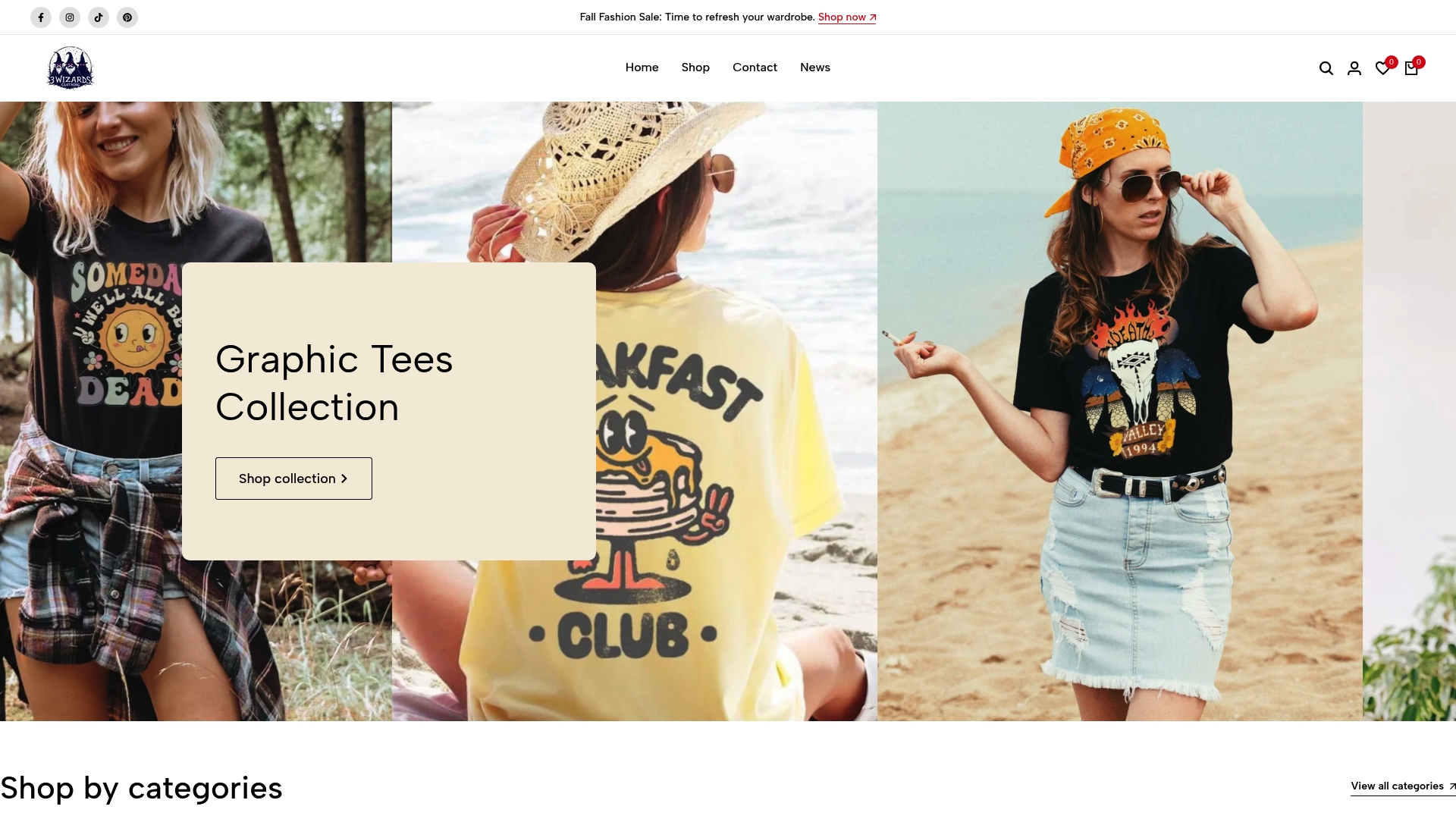
Shop with confidence: clear size charts, transparent returns, and designs built for more than one season. Browse the full collection and find the graphic that actually fits who you are.
Sources
Key sources used for this article:
- How What You Wear Can Determine How You Feel | Psychology Today
- Perceived quality and purchase intentions in fast fashion (PMC)
- Sales level and exclusivity effects on self-expressive products | Frontiers in Psychology


