

Wear one clear hero piece, ground everything else in neutrals, and control volume with one or two accents. That’s the whole system. Pick a graphic tee or themed hoodie as your anchor, build around it with solid-color basics, and let fit and tailoring do the finishing work. The 3-3-3 rule (three bases, three accents, three footwear options) is a strategy to increase outfit combinations from a small collection. 3wizardclothing’s themed pieces are designed to work exactly this way, as hero items that slot into an everyday wardrobe rather than stand apart from it.
- Pick one hero piece that carries the theme.
- Choose a neutral base (black, white, navy, tan, or grey).
- Add one or two accents, no more.
- Check fit and silhouette before you leave the house.
- Adjust volume up or down with accessories to match the occasion.
Thematic dressing emphasizes atmosphere over literal copying. The moment you start replicating a character head-to-toe, you’ve crossed from fashion into costume.
Key Takeaways
Wear one hero piece, keep the base neutral, and limit accents to two. That single rule prevents themed dressing from crossing into costume territory in almost every situation.
| Point | Details |
|---|---|
| One hero piece rule | Choose one themed item to anchor the look; keep everything else neutral and quiet. |
| Neutral base always | A solid-color base (black, white, navy, tan) lets the hero piece lead without competition. |
| Two accents maximum | More than two accent pieces cancel each other out and tip the look toward costume. |
| Fit finishes the look | A well-fitted outfit in any theme reads as intentional; poor fit reads as costume regardless of the pieces. |
| 3wizardclothing as hero | 3wizardclothing graphic tees, hoodies, and seasonal pieces are built to function as the hero item in the base-hero-accent system. |
Table of Contents
- How do you wear themed collections without picking the wrong theme?
- How do you assemble a themed outfit step by step?
- What styling techniques help you adapt one themed piece to any occasion?
- Ready-to-wear outfit templates by theme and occasion
- How do you avoid looking like you’re in costume?
- What is the 3-3-3 rule for building multiple looks from one themed collection?
- Three real looks using 3wizardclothing pieces
- 3wizardclothing’s themed collections are built for this system
- Sources
How do you wear themed collections without picking the wrong theme?
Start with your actual life, not a mood board. A theme that looks great on Pinterest but clashes with your commute, your climate, or your social calendar will sit in your closet unworn.
Test any theme against three filters before you commit:
- Event frequency: Will you wear this more than twice? If the theme only fits one annual party, it’s a costume budget, not a wardrobe investment.
- Climate fit: A velvet Old Money blazer is miserable in July in Phoenix. Match fabric weight to your local seasons.
- Closet overlap: Count how many items you already own that work with the theme. Three or more means you can build looks without buying everything new.
Inspiration sources worth exploring:
- Aesthetic references: Old Money (tailored neutrals, heritage fabrics), Secret Agent (sharp cuts, monochrome, minimal hardware), Celestial (deep blues, metallics, star motifs)
- Color stories: Pull a palette from a film still, a painting, or a season’s color report and let that palette be the theme
- Fabric families: Linen and cotton for casual themes, velvet and silk for evening references, sequins and tulle for festival looks
- Pop-culture touchstones: A character’s silhouette, not their literal outfit, is the right extraction point
Pro Tip: Before buying a single new piece, check whether the theme maps to at least three items already in your closet. If it does, the theme is wearable. If it doesn’t, you’re buying a costume.
Broad themes adapt better than narrow ones. “Old Money” gives you dozens of outfit directions. “1920s Gatsby party guest” gives you one. Choose the broader frame and let specific pieces add precision.
How do you assemble a themed outfit step by step?
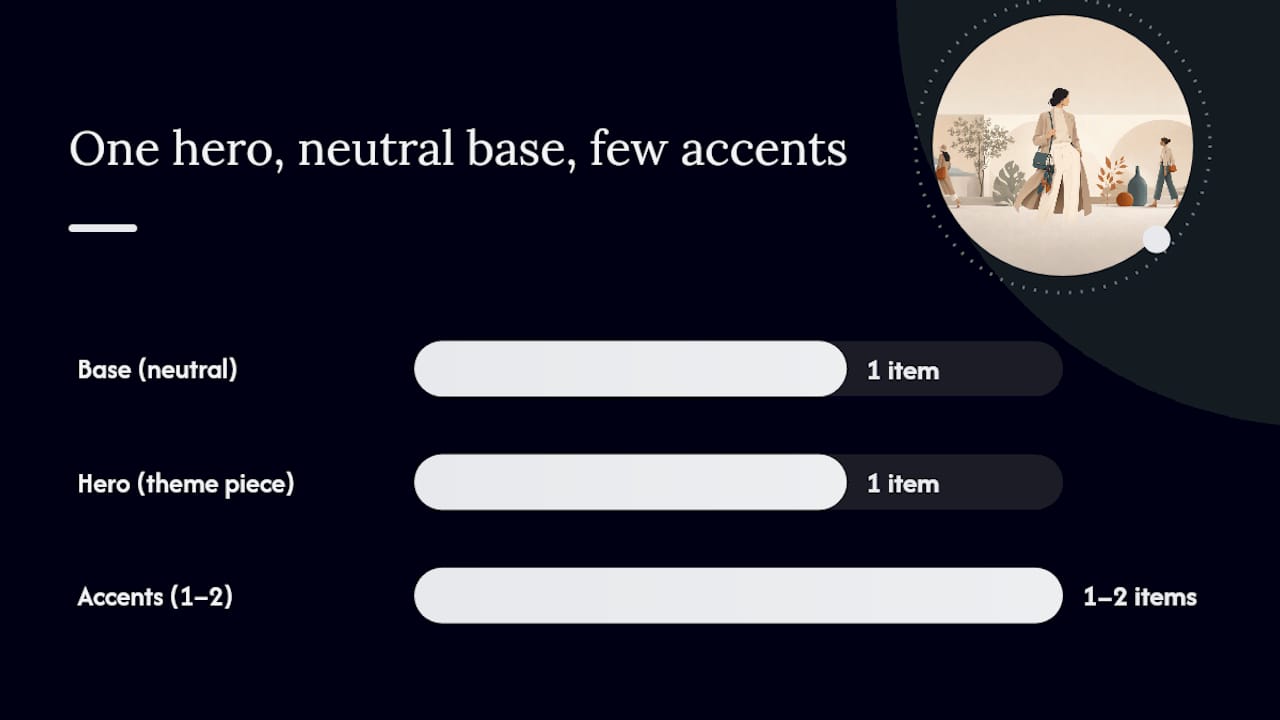
The base-hero-accent system is the repeatable method stylists use to keep themed looks from tipping into costume territory. Stylists advise choosing one hero piece, grounding the rest in neutrals, and limiting accents to one or two so the theme reads as fashion rather than costume.
The three-layer system:
- Base: A neutral foundation piece (solid trousers, a clean white tee, dark jeans, a simple slip skirt). The base should disappear visually so the hero can lead.
- Hero: One clear reference piece that carries the theme. A graphic tee, a printed blazer, a sequined top, a themed hoodie. One item, not three.
- Accents: One or two items that reinforce the theme without repeating it literally. A belt, a bag, a single piece of jewelry, a hat.
Step-by-step assembly:
- Choose your base first. Lay out two or three neutral options and pick the one that best complements the hero’s color palette.
- Place the hero. Try it against each base option and choose the combination with the cleanest contrast or the most cohesive tone.
- Pick accents. Select one or two items that echo the theme’s color, texture, or motif without duplicating the hero piece.
- Check silhouette and proportion. Stand back. If the top is voluminous, the bottom should be slim. If the hero piece is a bold print, the accents should be solid or subtle.
- Finalize footwear and outerwear. Shoes and a jacket are the last decisions, but they carry enormous weight. A chunky boot reads casual; a pointed flat reads polished.
Outfit examples by dress code:
- Casual: Celestial graphic tee (hero) + black slim jeans (base) + silver hoop earrings and a crossbody bag (accents) + white sneakers
- Date night: Sequined top (hero) + wide-leg black trousers (base) + gold cuff bracelet (accent) + strappy heeled sandals
- Festival: Printed co-ord set (hero) + neutral bodysuit underneath (base) + layered necklaces (accents) + ankle boots
Pro Tip: When an outfit feels like too much, swap the loudest bottom for a neutral one first. Nine times out of ten, that single change fixes the proportion problem.
What styling techniques help you adapt one themed piece to any occasion?
The same hero piece can work for brunch, a work event, and a night out. The variable isn’t the piece itself; it’s everything around it.
Layering strategies:
- A blazer or structured jacket over a graphic tee quiets the print and adds formality without hiding it.
- An open cardigan softens a bold hero piece for casual settings.
- A vest layered over a themed blouse adds dimension and shifts the silhouette toward smart-casual.
- Remove the layer for evening or festival settings to let the hero breathe.
Accessory swaps that change formality:
- Swap stud earrings for chandelier drops to move from day to evening.
- Replace a canvas tote with a structured clutch or mini bag.
- Add a belt to define the waist and shift a relaxed look toward polished.
- Swap a baseball cap for a silk scarf tied at the neck for a smart-casual read.
Swapping jewelry and footwear often turns a daytime co-ord into an evening look. Well-crafted pieces adapt more easily across occasions because the construction holds up to repeated restyling.
Footwear and proportion rules:
- Chunky sneakers or boots: casual and festival settings
- Clean leather sneakers or loafers: smart-casual and office-adjacent
- Heeled mules, pointed flats, or strappy sandals: evening and event settings
- Match shoe weight to the silhouette’s overall volume
Seasonal adjustments:
- Summer: swap velvet and wool for cotton, linen, or lightweight jersey; keep the hero piece but change the base fabric
- Fall/winter: layer a turtleneck under a themed blouse or add a longline coat over the full look
- For festival-themed occasions, sequins, tulle, and feather accents define the look, but layering and balanced volume keep the outfit wearable across changing temperatures and venues
Ready-to-wear outfit templates by theme and occasion
These eight templates follow the base-hero-accent system. Copy them directly or swap one element to fit your closet.
| Theme | Hero piece | Base neutrals | Accents (max 2) | Footwear | Best occasion |
|---|---|---|---|---|---|
| Secret Agent | Black turtleneck | Slim charcoal trousers | Silver watch, leather belt | Oxford shoes or ankle boots | Date night, gallery opening |
| Old Money | Camel blazer | Cream wide-leg trousers | Pearl earrings | Loafers | Brunch, smart-casual event |
| Celestial | Star-print blouse | Black slim jeans | Silver hoops, dark crossbody | White sneakers or block heels | Casual, birthday dinner |
| Subtle Fantasy | Velvet midi skirt | Fitted white turtleneck | Delicate chain necklace | Pointed flats | Date night, holiday party |
| Matching set | Printed co-ord top | Co-ord bottom (same set) | Gold hoops, mini bag | Strappy sandals | Brunch, summer event |
| Colorful statement | Bold graphic tee | Straight black jeans | One tonal accessory | Clean white sneakers | Casual, weekend outing |
| Vintage-inspired | Floral wrap dress | Neutral cardigan | Tortoiseshell clip, small bag | Block-heel mules | Farmers market, day date |
| Festival-ready | Sequined top | High-waist shorts or jeans | Layered necklaces | Ankle boots | Festival, themed party |
Fabric and material notes:
- Velvet and silk: Evening and holiday looks; they photograph well but wrinkle easily, so pack carefully
- Cotton and linen: Casual and warm-weather themes; breathable and forgiving across long days
- Sequins and tulle: Festival and fanfare looks; color palettes and fabric choices define the look, but balance volume carefully to stay wearable
- Jersey and ponte: Everyday graphic pieces; hold shape through movement and wash well
Matching sets are versatile because accessories and footwear change the occasion-read, and each piece in a coordinated set can be repurposed into other looks to increase outfit options.
How do you avoid looking like you’re in costume?
The line between themed dressing and costuming is usually one item. Themed dressing extracts an aesthetic through fabrics, cuts, and accessories. Costuming attempts literal replication.
Dos:
- Wear one clear reference piece and let the rest of the outfit stay quiet
- Choose fit over theme-accuracy every time
- Let texture and color carry the theme rather than literal motifs
- Remove the most literal item if the look still feels like a costume
Don’ts:
- Match head-to-toe themed prints
- Stack more than two accent pieces
- Ignore fabric weight relative to the occasion (sequins at a daytime picnic, velvet in July)
- Sacrifice fit for theme-completeness
Common mistakes:
- Over-accessorizing: Three themed accessories cancel each other out. Pick one.
- Ignoring fit: A perfectly themed outfit in the wrong size reads as a costume because it looks like something you put on, not something you wear.
- Fabric mismatch: A sequined top at a casual brunch signals “wrong event” before anyone reads the print.
Pro Tip: Try the one-item swap test. Remove the newest or most literal piece from the outfit. If the look still reads intentional and stylish, you’re in the right zone. If removing it makes the outfit feel incomplete, that item was carrying too much weight.
The classic stylist rule applies here too: if an outfit still feels like a costume, removing the most literal item usually restores balance.
What is the 3-3-3 rule for building multiple looks from one themed collection?
The 3-3-3 rule is a planning tool using three base pieces, three accent options, and three footwear choices along with one hero piece to generate multiple outfit combinations, enabling a range of themed looks from a limited collection.
Single-outfit checklist:
- Hero piece confirmed and pressed
- Base piece chosen (neutral, clean, fits well)
- Two accents selected and set aside
- Footwear chosen to match the occasion’s formality
- Outerwear or layer ready if the weather requires it
Multi-day event checklist:
- Pack the hero piece plus two backup options
- Three base pieces (two bottoms, one top, or vice versa)
- Three accent sets (jewelry, belts, scarves) that can rotate
- Three footwear options (casual, smart-casual, evening)
- Small repair kit: clear thread, a needle, spare buttons, and double-sided fashion tape
For multi-day events, pack adaptable pieces and small repair kit items such as clear thread and spare sequins, and plan outfit variations in advance to avoid last-minute purchases.
Weather and travel notes:
- Roll knits instead of folding to prevent creasing
- Pack a lightweight layer (a linen blazer or a silk scarf) that works across temperature shifts
- Bring a stain-removal pen for festival or outdoor events
- Check the venue’s dress code before finalizing the hero piece
Think of your themed collection the way a curator thinks about a display: rotating pieces prevents any single item from overwhelming the overall look. Editing is the skill.
Three real looks using 3wizardclothing pieces
These three outfit variations show how a single 3wizardclothing piece functions as a hero item across different settings.
Look 1: Graphic tee, three ways
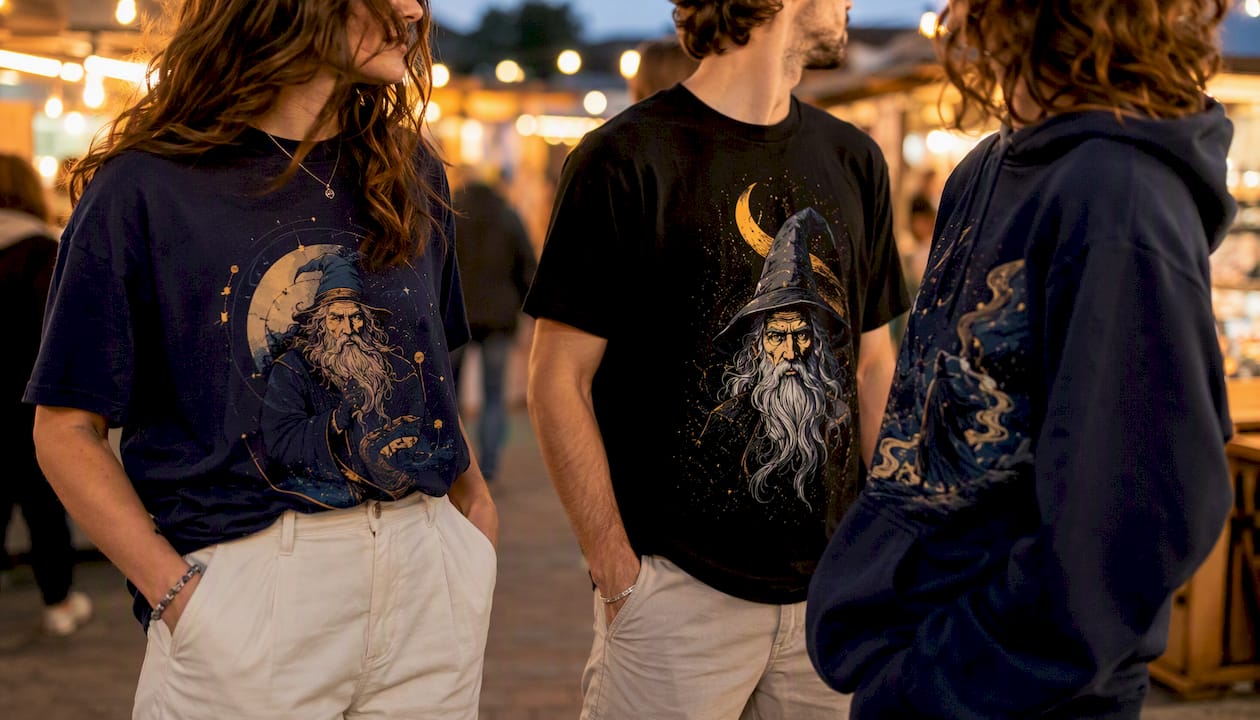
A 3wizardclothing graphic tee (the hero) works across three distinct occasions with base and accent swaps:
- Casual: Tee + straight black jeans + white sneakers + no accessories. Clean, direct, done.
- Smart-casual: Tee tucked into tailored chinos + a clean leather belt + loafers. The tuck and the shoe change the entire register.
- Evening: Tee layered under a sharp blazer + slim trousers + pointed ankle boots. The blazer quiets the graphic and adds structure.
For selecting graphic tees as hero pieces, fit and print scale matter as much as the design itself. A well-fitted tee with a centered, medium-scale graphic is the most versatile starting point.
Look 2: Themed hoodie, adapted
A 3wizardclothing seasonal or Halloween hoodie reads very differently depending on what surrounds it:
- Weekend casual: Hoodie + joggers + chunky sneakers. Comfortable and intentional.
- Layered smart-casual: Hoodie under a longline coat + dark slim jeans + clean boots. The coat frames the hoodie and elevates the silhouette.
- Festival: Hoodie tied at the waist over a bodysuit + high-waist shorts + ankle boots + layered necklaces. The hoodie becomes an accent rather than the hero.
Pro Tip: A hoodie tied at the waist is one of the fastest ways to shift a themed piece from “wearing it” to “styling it.” The graphic stays visible, but the silhouette changes completely.
Look 3: Seasonal or themed blouse
A 3wizardclothing fall or themed blouse as the hero:
- Casual: Blouse tucked loosely into wide-leg jeans + flat sandals + one simple necklace.
- Event: Blouse fully tucked into a midi skirt + block-heel mules + a structured bag.
- Layered: Blouse worn open over a fitted tank + slim trousers + loafers. The open layer softens the theme and adds dimension.
Themed shirts function as self-expression anchors that communicate personality before you say a word. That’s the point of wearing them intentionally.
Why thematic dressing works better than most people expect
Most people underestimate how much of a themed look’s success comes from confidence rather than the pieces themselves. The outfit is the easy part. Wearing it like it belongs on you is the skill.
Thematic dressing gave me a framework I didn’t know I needed. Before I started thinking in hero pieces and neutral bases, I’d either go too safe (nothing reads as intentional) or too literal (everything reads as costume). The middle path, one clear reference plus a quiet supporting cast, is where personal style actually lives. It’s also where 3wizardclothing’s graphic and themed pieces slot in most naturally: they’re designed to be the hero, not the whole story.
3wizardclothing’s themed collections are built for this system
The hero-piece method works best when the hero piece is worth building around. 3wizardclothing’s graphic tees, themed hoodies, and seasonal collections are designed with that role in mind: bold enough to carry a look, versatile enough to pair with the neutrals already in your closet.
A 3wizardclothing graphic tee or Halloween hoodie drops directly into the base-hero-accent system. Pair it with black jeans and clean sneakers for a casual look, or layer it under a blazer for an evening read. The pieces are built for everyday wear, not a single occasion. Browse the themed collections at 3wizardclothing and pick one hero piece to start. Add two neutrals from your closet, and you have your first outfit ready before checkout.
Sources
- Thematic Dressing: How To Build Classic Outfits With A Theme | Gentleman’s Gazette
- Celestial Outfit Guide: How Stylists Actually Wear The Trend
- How to style a matching set | Glamour
- What to Wear to a Mardi Gras Party | High Latitude Style
- How to Style Our New “A Floral Story” Collection for Spring | RAIN by Tintu Thomas


