

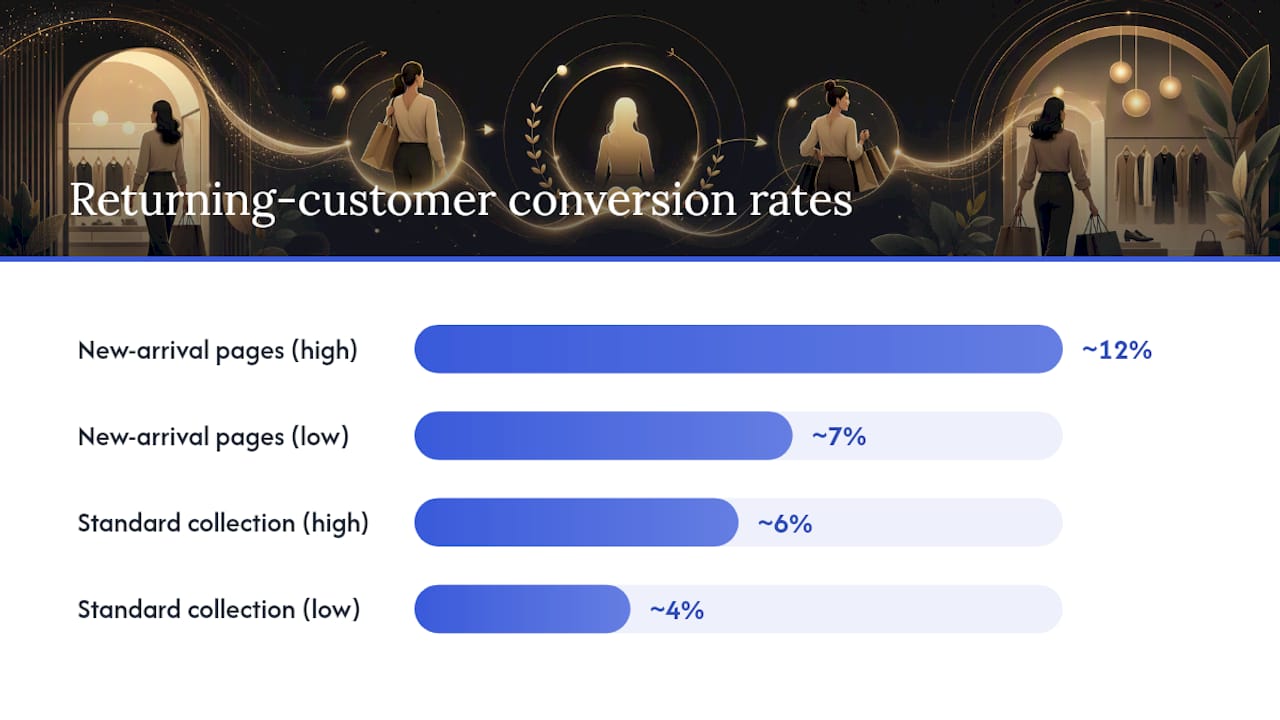
New arrivals drive repeat visits, protect retailer margins, and satisfy shoppers’ hard-wired pull toward novelty. Stores that refresh their collections regularly see ~34% more repeat visits and ~28% higher returning-customer conversion than stores that don’t, and shoppers who buy early get the widest size selection and the best shot at limited-run pieces.
The core reasons break down quickly:
- Shoppers: novelty satisfaction, full size availability, seasonal relevance, exclusivity on limited runs
- Retailers: higher repeat traffic, stronger full-price sell-through, social content fuel, competitive differentiation
- Both: early buyers leave reviews faster, which reduces return risk for everyone who shops later
A quick rule of thumb on cadence: weekly drops suit fast-fashion and high-volume stores; biweekly works for most small-to-mid boutiques; monthly or seasonal fits small-batch and permanent-collection brands.
Key Takeaways
Frequent, well-curated new arrivals increase repeat visits, protect full-price margins, and satisfy shoppers’ genuine preference for novelty and fit availability.
| Point | Details |
|---|---|
| Repeat visit uplift | Stores with active new arrivals see ~34% more repeat visits and ~28% higher returning-customer conversion. |
| Shopper timing | Buy immediately for limited-run or seasonal pieces; wait for reviews on large-inventory drops. |
| Cadence by model | Weekly suits high-volume stores; biweekly fits most boutiques; monthly or seasonal works for small-batch brands. |
| Sell-through benchmark | Track sell-through within 30 days; below 50% signals a product selection or timing issue. |
| 3wizardclothing approach | Themed seasonal collections, wishlist features, and organized category pages drive repeat visits without markdown dependence. |
Table of Contents
- Why do shoppers buy new arrivals?
- Why stores add new arrivals regularly — and what the numbers say
- How often should you add new arrivals?
- How to shop new arrivals without regret
- How retailers should present new arrivals to maximize sell-through
- How 3wizardclothing uses new arrivals to build repeat business
- The case for restraint in a world obsessed with constant newness
- Fresh graphic apparel drops at 3wizardclothing
- Sources
Why do shoppers buy new arrivals?
The short answer: novelty feels good, and buying early is genuinely practical. Shoppers aren’t just chasing trends for the sake of it. There’s real psychology behind the pull.
Novelty bias is the brain’s tendency to assign higher value to things it hasn’t seen before. A fresh graphic tee or a new hoodie colorway triggers the same dopamine response as any other novel stimulus. That’s not a weakness in shoppers; it’s a feature retailers can serve honestly by offering genuinely new designs rather than recycled SKUs with new tags.
Beyond the psychological pull, there are practical reasons to buy early. Sizes sell out fastest in the first 48–72 hours of a drop. Limited-run or seasonal pieces, like a Halloween collection or a fall-themed graphic set, often don’t restock. Shoppers who wait for reviews or a sale sometimes find their size gone. Early access is a real advantage, not just a marketing line.
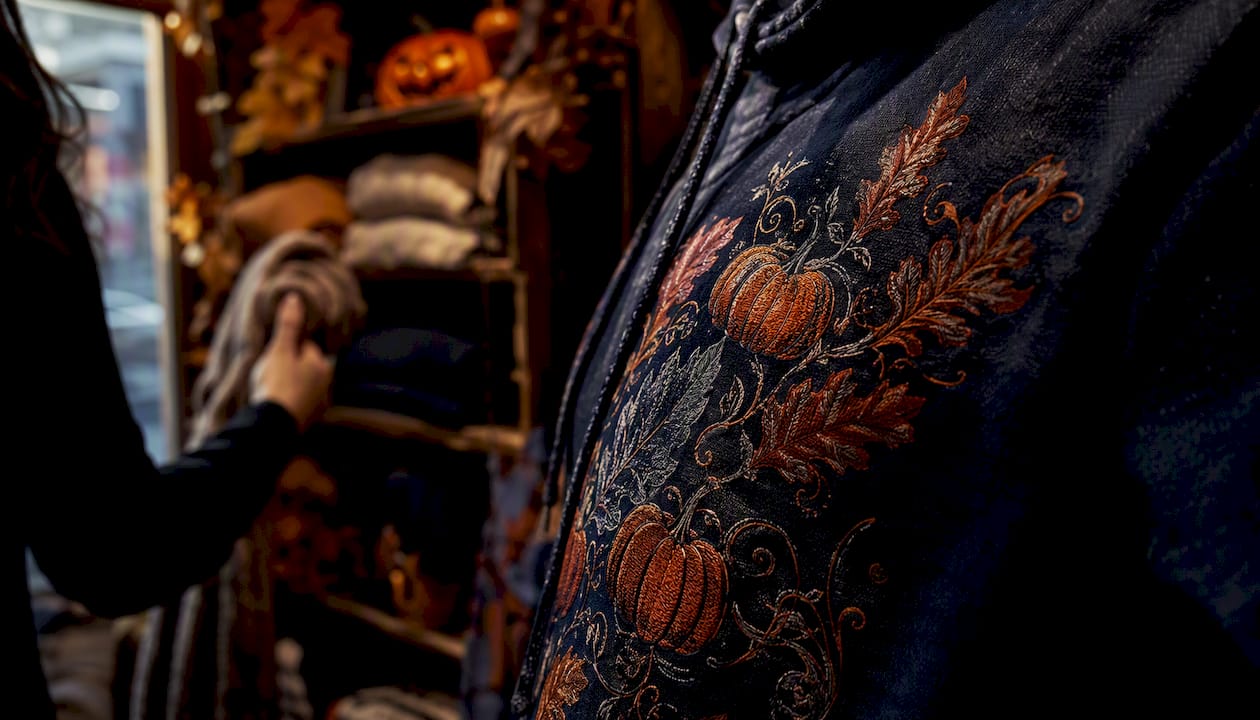
Social signaling matters too, as seen in Developer Clothing - Expressing Code Through Fashion | DevHero, where apparel serves as identity expression and niche themes engage shoppers deeply. Wearing something before it’s everywhere carries its own satisfaction, especially for shoppers who use clothing to express identity. That’s the expressive dimension of apparel that makes new arrivals feel different from restocked basics.
That said, novelty can tip into impulse buying. The fix is simple: before clicking “add to cart,” ask whether the piece works with at least three things already in your closet. If it doesn’t, it’s probably a one-wear purchase.
Pro Tip: Set up restock alerts and wishlists before a drop goes live. That way you’re shopping with intent rather than reacting to urgency signals, and you can cross-check measurements before the size you need disappears.
Why stores add new arrivals regularly — and what the numbers say
Regular new arrivals are one of the highest-leverage moves a fashion retailer can make. The business case is straightforward: returning customers convert at ~7–12% on new-arrival pages versus ~4–6% on standard collection pages. That gap compounds fast when you’re running email campaigns or social drops that send traffic directly to a “What’s New” section.
The U.S. clothing retail market is large enough that even a small share shift matters for independent retailers. And with global eCommerce fashion continuing to grow, digital discovery through new-arrival drops scales in ways that a static catalog simply can’t match.
Here’s what consistent new arrivals actually do for a store’s operations:
- Protect margins: Fresh product sells at full price. Stores that rely on markdowns to move stale inventory train customers to wait for sales, which erodes margin over time.
- Generate social content: Every new drop is a post, a reel, a story. That’s organic reach without paid media spend.
- Accelerate reviews: Early buyers leave feedback quickly, which builds social proof for later shoppers and reduces return rates over the product’s lifecycle.
- Create first-mover advantage: Stocking a trending theme before competitors do means capturing search and social traffic at peak interest.
The contrast between update frequencies is stark. A boutique that refreshes weekly gives customers a reason to check back every Monday. One that updates quarterly is essentially invisible between drops, and when it does restock, it’s competing against whatever else launched that season.
| Metric | Weekly updates | Quarterly updates |
|---|---|---|
| Repeat visit frequency | High — customers return weekly | Low — customers drift between drops |
| Full-price sell-through | Strong — novelty drives urgency | Weaker — customers wait for markdowns |
| Social content volume | Consistent weekly posts | Sporadic, hard to build momentum |
| Inventory risk | Higher — more SKUs to manage | Lower — fewer lines, but higher markdown exposure |
Retention-focused brands don’t always need constant newness. As Invesp CRO’s retention research shows, customer lifetime value and acquisition costs should shape how aggressively a store chases novelty. A brand with a loyal, repeat-buying base can afford a slower cadence. One still building its audience usually can’t.
How often should you add new arrivals?
The honest answer: as often as your supply chain and marketing team can sustain without sacrificing quality or burning out.
Weekly drops work best for stores with fast, flexible sourcing, a consistent social presence, and enough SKU volume to keep drops feeling fresh rather than thin. Biweekly is the sweet spot for most small-to-mid boutiques. It’s frequent enough to drive return visits but slow enough to give each drop proper marketing attention. Monthly or seasonal cadences fit small-batch brands and permanent-collection retailers where scarcity is part of the brand identity.
The trade-offs are real:
- Weekly: High marketing momentum, but higher holding costs, more SKUs to photograph and list, and greater markdown risk if a drop underperforms.
- Biweekly: Balanced. Enough frequency to stay top-of-mind; enough breathing room to measure sell-through before the next drop.
- Monthly/seasonal: Lower operational load, but you’re relying on each drop to carry more weight. One miss hurts more.
Cost categories follow the same logic. Weekly drops require a medium-to-high inventory budget and consistent creative production. Biweekly drops sit in the medium range. Seasonal drops are lower cost per cycle but concentrate risk. The role of seasonal sales in fashion is worth understanding before committing to a cadence, because sale events and new-arrival drops need to be sequenced, not stacked on top of each other.
Pro Tip: Before committing to a cadence, run a four-week pilot. Drop one small collection, track sell-through rate and repeat visit lift, then compare the marketing spend against the revenue. That single data point tells you more than any benchmark.
How to shop new arrivals without regret
The goal is confident buying, not fast buying. New-arrival pages are designed to create urgency, and that urgency is sometimes legitimate (limited sizes, limited runs) and sometimes just merchandising pressure.
Start with fit and versatility. Before buying, ask: does this work with at least three pieces already in your closet? If the answer is no, the item is a novelty purchase, not a wardrobe addition. That’s fine occasionally, but it’s worth knowing the difference before checkout.
A practical checklist for shopping new arrivals:
- Check measurements, not just size labels. Sizing varies by brand and cut. Most product pages include a size guide; use it.
- Read the earliest reviews. Early buyers often flag fit issues, fabric weight, or color accuracy within the first week of a drop.
- Use the wishlist. Adding to a wishlist instead of the cart gives you 24–48 hours to decide without losing track of the item.
- Confirm the return policy before buying. Some seasonal or limited-run items are final sale. Know that before you commit.
- Compare with similar items you own. Comparing apparel before buying reduces the chance of duplicating something already in your drawer.
Timing matters too. If a piece is part of a large drop with plenty of inventory, waiting a week for reviews to accumulate is low-risk. If it’s a limited seasonal design, waiting usually means missing your size. Avoiding panic buying comes down to knowing which situation you’re in before you open the product page.
Pro Tip: Use size filters and quick view to narrow your options before committing to a full product page. It keeps the browsing experience efficient and reduces the chance of decision fatigue pushing you toward an impulse pick.
How retailers should present new arrivals to maximize sell-through
Presentation and channel mix matter as much as the product itself. A great new drop buried on page three of a collection converts poorly. The same drop featured on the homepage with a hero banner and an email preview to VIP subscribers can sell through in days.
A practical merchandising checklist:
- Homepage placement: New arrivals belong above the fold on launch day. A hero banner or featured collection module signals freshness immediately.
- Dedicated “New Arrivals” collection page: Returning customers often navigate directly here. Keep it current and clearly dated.
- Themed groupings: Organizing by theme (Halloween, fall, fitness, coffee lovers) helps shoppers find relevant pieces faster and increases average order value through natural cross-sells.
- Size-first images: Show the product on multiple body types where possible. It reduces size-related returns and builds trust.
- Quick view: Lets shoppers evaluate multiple items without losing their place in a collection. Lower friction means higher conversion.
On the marketing side, the sequence matters. Email previews to your VIP or subscriber list should go out 24–48 hours before a drop goes public. That window rewards loyalty and generates early sales data before the broader launch. Social drops work best when timed to peak engagement windows for your audience, typically mid-morning or early evening on weekdays.
Google Trends is an underused pre-launch tool. Before scheduling a themed drop, check whether search interest in that theme is rising or peaking. A Halloween collection launched in early October rides a rising trend. The same collection launched in late October is fighting a declining one.
New mover marketing is worth noting for local or regionally targeted retailers. People who’ve recently relocated are actively building new brand relationships and tend to respond well to targeted outreach, making them a high-value audience for a new-arrival campaign.
Key metrics to watch after each drop: sell-through rate within 30 days, conversion rate on the new-arrival page, and returning-customer lift. Sell-through below 50% in 30 days is a signal to revisit either the product selection or the marketing timing.
How 3wizardclothing uses new arrivals to build repeat business
3wizardclothing’s approach centers on themed, seasonal collections that give shoppers a clear reason to return at specific times of year. The Halloween collection, fall apparel, and fitness-themed drops each serve a distinct moment in the customer calendar, which means the store isn’t competing against itself across categories.
The tactics that make this work:
- Themed collections create natural urgency without manufactured scarcity. A Halloween graphic tee has a real deadline; shoppers know it.
- Wishlists and quick view reduce friction at the browsing stage. Shoppers can save items across categories and return to buy when ready, which cuts impulse-return rates.
- Organized category pages (men’s, women’s, kids’, themed collections) make it easy for returning customers to navigate directly to what’s new in their section.
- Seasonal promotions on hoodies and key categories reward repeat visitors with timely offers rather than blanket discounts.
Metrics worth tracking for any store using this model: repeat visit lift within 14 days of a drop, sell-through rate within 30 days, and attach rate (how often a new-arrival purchase includes a second item). [Proprietary sales performance data and customer demographics are available internally and inform ongoing collection planning.]
The kids’ collection and hoodies category both benefit from seasonal timing. Parents shopping for themed kids’ apparel and gift buyers looking for novelty hoodies are repeat-visit audiences when the store gives them a reason to come back.
The case for restraint in a world obsessed with constant newness
The conventional wisdom in fashion retail is that more drops equal more revenue. That’s true up to a point, and then it isn’t.
Constant newness without curation trains customers to skim rather than engage. When every week brings a new drop, no single drop feels special. The stores that build the strongest repeat-customer relationships tend to be the ones that make each new arrival feel considered, not just frequent. That means themed collections with a clear story, not a random assortment of new SKUs pushed live because the calendar says it’s Monday.
There’s also an inventory reality that gets glossed over in most “drop more often” advice. Every new SKU requires photography, copywriting, size-run investment, and storage. A boutique that drops 20 new items weekly is carrying a significant operational load. If sell-through doesn’t keep pace, the markdown exposure compounds fast. The biweekly cadence works for most small retailers not because it’s a compromise, but because it’s the cadence that actually sustains quality across the full launch cycle.
Shoppers benefit from restraint too. A store with a tight, well-curated new-arrival section is easier to shop than one with 200 new items every week. Curation is a service.
Fresh graphic apparel drops at 3wizardclothing
Shoppers who want graphic tees, hoodies, and themed seasonal pieces without digging through a bloated catalog will find 3wizardclothing’s curated new arrivals worth bookmarking. Each drop is organized by category and theme, so you’re not scrolling past irrelevant inventory to find what fits your style or the occasion.
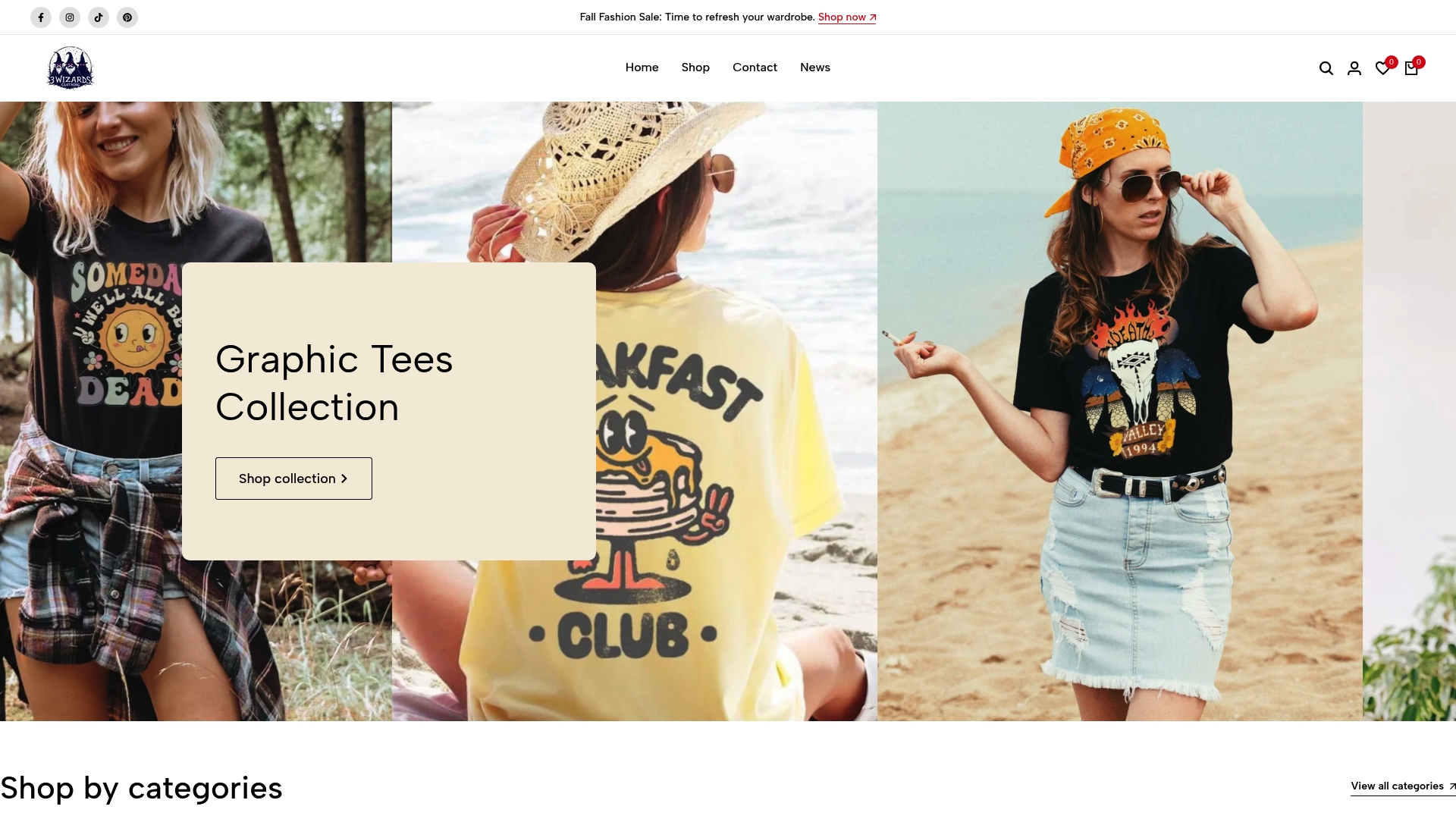
For retailers looking at how a focused apparel store structures its new-arrival cadence, the 3wizardclothing storefront is a working example: themed collections, organized category pages, wishlist functionality, and seasonal promotions that reward return visits. For shoppers, the next step is simple: browse the latest arrivals and add anything worth watching to your wishlist before your size sells out. Sign up for email previews to get early access to seasonal drops before they go public.
Sources
- Shopify New Arrivals Strategy: Launch Products That Sell
- Clothing stores revenue in the US (Statista forecast)
- The Newness Effect: Why We Crave Fresh Styles - The Daily Guardian
- Shopping New Arrivals Without Panic Buying
- New mover marketing benefits local business (Welcome Wagon)
- Customer acquisition vs. retention (Invesp CRO)
Recommended
- Online apparel shopping: benefits, pitfalls, and smart tips – 3 Wizard Clothing
- Why Buy Seasonal Collections: The Shopper’s Real Guide – 3 Wizard Clothing
- How to Shop Trending Clothes: A Smart Style Guide – 3 Wizard Clothing
- Shop Trendy Graphic Clothing: 68% More Style Satisfaction – 3 Wizard Clothing


