

This seasonal clothing checklist gives you a ready-to-use list of must-have items and practical counts for spring, summer, fall, and winter so you can pack, rotate, or refresh a U.S. wardrobe fast. Each season covers tops, bottoms, outerwear, shoes, and accessories, with quantity guidance and layering rules built in. It works across typical U.S. climate zones, with swap notes for northern cold and southern mild winters throughout.
What’s inside this seasonal attire guide:
- Per-season item lists (tops, bottoms, outerwear, shoes, accessories)
- Quantity guidance for minimal (15–20 items) and fuller (25–35 items) wardrobes
- Layering formulas tied to real U.S. temperature bands
- Fabric and care recommendations (machine-washable vs. dry-clean)
- Closet-swap steps, rotation dates, and storage tips
- The 3-3-3 packing rule and 70/30 wardrobe rule explained
Table of Contents
- Your spring clothing checklist: essentials, fabrics, and quantities
- Your summer outfit guide: breathable fabrics, sun protection, and care
- Your fall fashion checklist: layering, texture, and outerwear
- Your winter checklist: insulating layers, outerwear, and weatherproofing
- How to swap, store, and rotate your seasonal wardrobe
- Build a seasonal capsule with fabric ratios, layering math, and stylist guidance
- The 3-3-3 packing rule and 70/30 wardrobe rule explained
- Key takeaways
- Why the checklist matters more than the haul
- Seasonal graphic tees and cozy layers at 3wizardclothing
Your spring clothing checklist: essentials, fabrics, and quantities
Spring is the trickiest season to dress for because a 7 AM commute can feel like February and a 3 PM errand run can feel like June. A spring capsule with a minimal number of pieces handles that swing without overfilling a closet.
Tops: Pack 4–5 lightweight cotton or jersey tees, 2 midweight knit tops or long-sleeve shirts, and 1 linen button-down. The knits do double duty: worn alone on a 60°F afternoon, layered under a jacket at 45°F.
Bottoms: 2 pairs of medium-weight denim, 1 pair of chinos or trousers, and 1 casual skirt or shorts for warmer days in the South or Southwest. Denim is the workhorse here because it pairs with everything and handles temperature swings without looking out of place.
Outerwear: A water-resistant shell or light rain jacket is non-negotiable in spring. Add a midweight zip fleece or denim jacket for layering underneath. If you’re in the Pacific Northwest or upper Midwest, keep a midweight wool or ponte blazer in rotation through May.
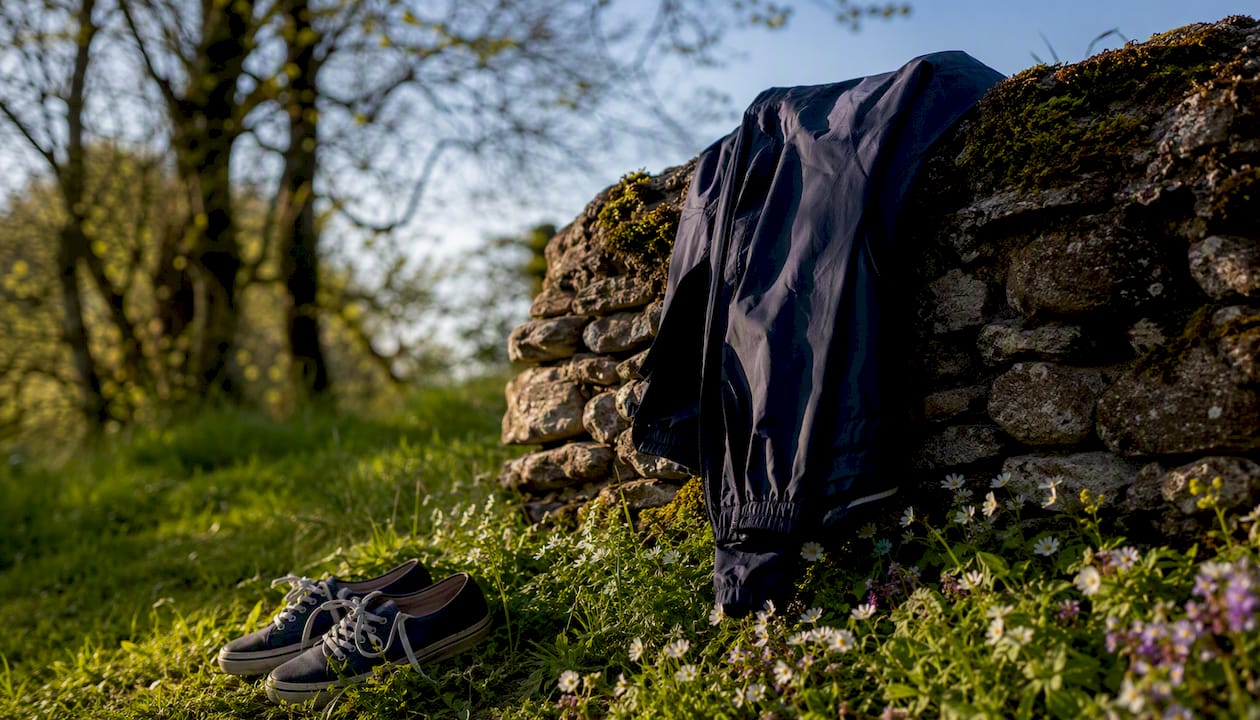
Shoes: 1 pair of white or neutral sneakers, 1 pair of ankle boots or low-top leather shoes, and 1 pair of casual loafers or slip-ons. Skip sandals until overnight lows stay above 55°F consistently.
Accessories: A lightweight scarf (cotton or modal), a baseball cap or bucket hat for sun, and a crossbody bag or tote. Southern readers can swap the scarf for a packable umbrella.
Quantity guidance: A minimal spring capsule sits at 15–20 pieces. A fuller wardrobe for someone with varied social, work, and outdoor commitments runs 30–40 pieces, which aligns with the 30–40 piece seasonal capsule range that frameworks like Project 333 (33 items) are built around.
Example outfit: Morning chill at 48°F — merino crewneck over a cotton tee, medium-wash denim, ankle boots, and the water-resistant shell. By 2 PM at 65°F, the shell comes off and the crewneck ties around the waist. Same three pieces, two completely different feels.
Your summer outfit guide: breathable fabrics, sun protection, and care
Summer dressing is mostly about fabric choice. Get that right and the rest follows. A summer capsule with a limited number of pieces covers casual, social, and light outdoor use without the closet feeling cluttered.
Core summer checklist:
- 4–5 breathable cotton or linen tees (light colors absorb less heat)
- 1–2 linen shirts or linen-blend button-downs
- 2 pairs of shorts (one casual, one slightly dressier)
- 1–2 sundresses or lightweight trousers
- 1 UV-protective or lightweight long-sleeve layer for sun exposure or heavily air-conditioned offices
- 1 pair of casual sandals or slides
- 1 pair of clean white sneakers
- 1 wide-brim sun hat or baseball cap
- 1 lightweight crossbody or tote bag
Fabric notes: Linen breathes better than cotton in humid heat but wrinkles fast. Cotton jersey is easier to care for and holds its shape through repeated washing. Lightweight merino (150–160 gsm) is worth adding for cool evenings or mountain summers because it regulates temperature in both directions. Wash linen in cold water on a gentle cycle and reshape while damp to avoid shrinkage. Cotton tees can handle warm water but tumble dry on low to keep them from shrinking down a size.
Care tip: Machine-washable fabrics like cotton, jersey, and merino lower long-term ownership costs significantly compared to dry-clean-only pieces. For a summer capsule especially, prioritize washable fabrics so care stays simple.
Quantity swap: If you’re transitioning from spring, swap your midweight knits to a storage bin and pull in the linen pieces. Keep 1–2 midweight layers accessible for air-conditioned spaces or cool coastal evenings — a lightweight cotton cardigan or a jersey zip-up does the job without taking up much room.
Your fall fashion checklist: layering, texture, and outerwear
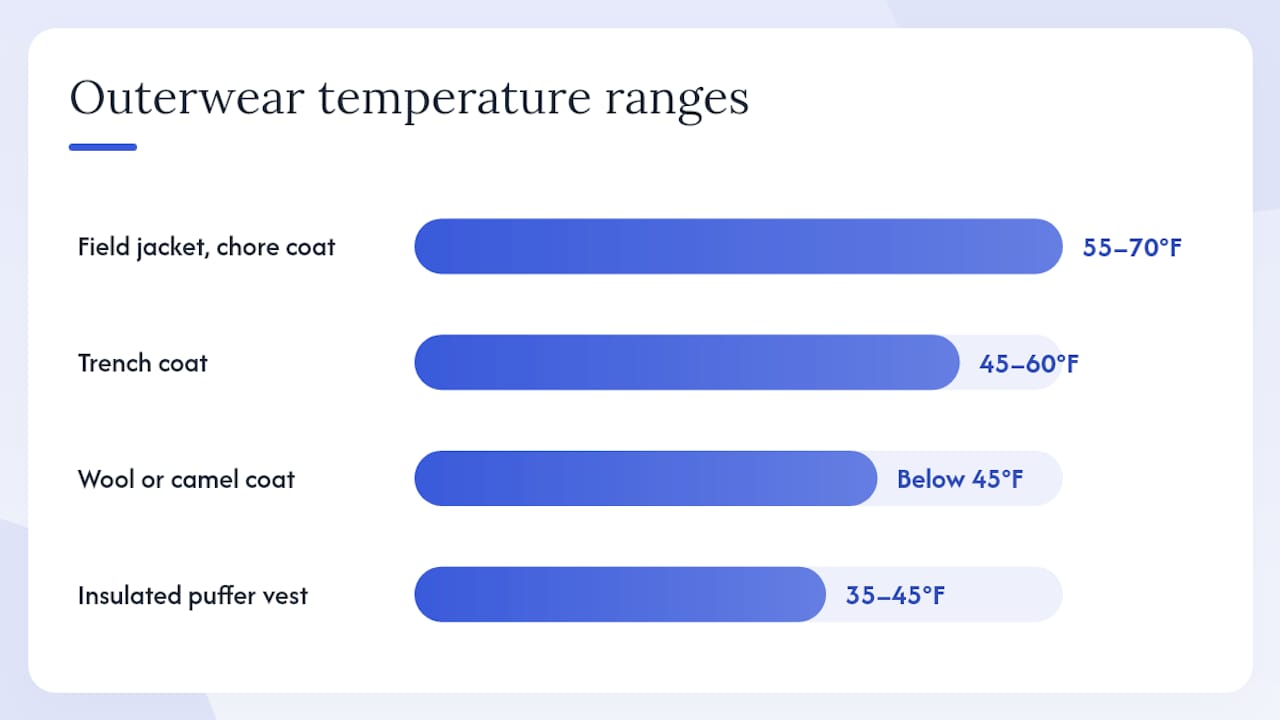
Fall is the season where layering stops being optional. Fall typically brings a 25°F daily temperature swing between morning and afternoon, which means a single outfit needs to work at 45°F and 70°F on the same day. Plan for at least two layering pieces in every fall outfit.
Outerwear by region:
| Outerwear | Best for | When to reach for it |
|---|---|---|
| Field jacket or chore coat | Mild falls, South, Southwest | 55–70°F, light wind |
| Trench coat | Rainy climates, mid-Atlantic, Pacific NW | 45–60°F, wet days |
| Wool or camel coat | Northern states, upper Midwest | Below 45°F, dry cold |
| Insulated puffer vest | Layering over midweights everywhere | 35–45°F, active days |
Tops and midlayers: 3–4 midweight knit tops, 2 brushed flannel shirts, and 1–2 merino crewnecks. The flannel shirts work as both a top and an open overshirt, which stretches their versatility across the whole season.
Bottoms: Dark or mid-wash denim, 1 pair of corduroy trousers, and 1 pair of wool-blend trousers for cooler weeks. Corduroy reads autumnal immediately without requiring any other seasonal signaling in the outfit.
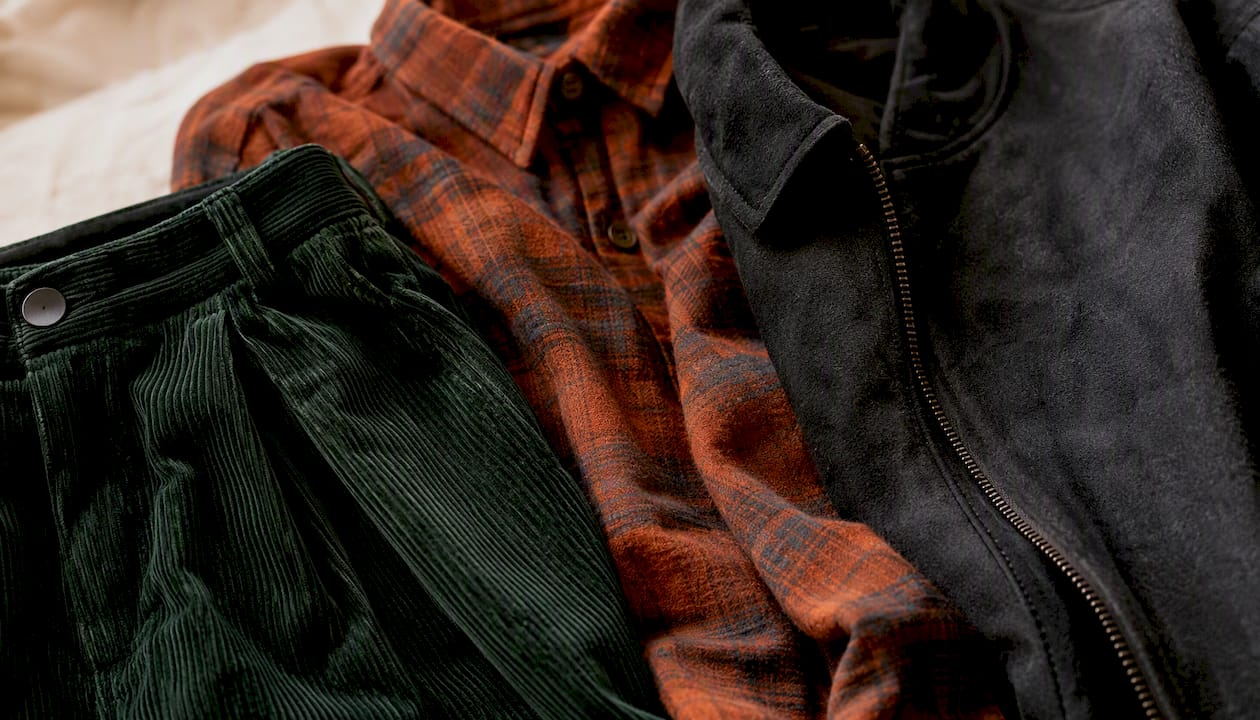
Texture and palette: Fall capsule recommendations consistently point to corduroy, brushed flannel, and suede as the textures that make outfits feel seasonal without relying on trend pieces. An earth-tone palette (camel, rust, olive, chocolate) works the same way. You don’t need to buy new pieces — adding one corduroy trouser or a suede trucker jacket shifts the whole wardrobe’s feel.
Shoes: Leather or Chelsea boots are the fall workhorse. Keep 1 pair of clean sneakers for casual days and add 1 pair of waterproof boots if you’re in a wet climate.
Example outfit: 7 AM at 48°F — merino crewneck over a cotton tee, corduroy trousers, Chelsea boots, and a trench coat. By noon at 68°F, the trench comes off and the crewneck is enough. For more fall styling steps, the principle is always the same: build from a midlayer out, not from a coat in.
Your winter checklist: insulating layers, outerwear, and weatherproofing
Winter dressing works best as a system: base layer + midlayer + outer shell. Get the order right and you stay warm without looking like you’re wearing everything you own.
Base layers: 2–3 thermal or merino wool base-layer tops and 1–2 thermal bottoms. Merino is worth the investment because it’s machine-washable, odor-resistant, and thin enough to layer under anything without adding bulk.
Midlayers: 2 heavyweight knit sweaters or a chunky crewneck, 1 fleece or quilted vest. The vest is underrated for cold-but-not-freezing days because it keeps your core warm while leaving your arms free.
Outerwear: 1 insulated puffer or down coat for serious cold, 1 waterproof shell for wet days. If you’re in the South or Southwest, a heavy wool coat and a water-resistant trench cover most of what winter throws at you. Northern climates (Minnesota, upstate New York, Chicago) need a rated cold-weather coat, ideally waterproof with sealed seams.
Weatherproofing: A waterproof shell with taped seams handles rain and light snow. For heavy snow, insulated waterproof boots with a lug sole matter more than the coat. Packable down jackets are useful as a midlayer under a shell in extreme cold.
Shoes and accessories: 1 pair of insulated waterproof boots, 1 pair of leather dress boots for drier cold days. Add a wool beanie, insulated gloves, and a heavyweight scarf. These three accessories make a significant difference in how long you can stay comfortable outside.
Machine-washable vs. dry-clean: Keep most of your winter capsule machine-washable. Wool coats and structured blazers often require dry cleaning ($8–15 per item per the capsule wardrobe fabric guidance), so limit dry-clean-only pieces to 2–3 investment items and wash everything else at home.
Quantity guidance: A winter capsule typically includes a moderate number of pieces for most climates. Northern climates add several cold-weather pieces (rated puffer, thermal base set, heavy wool accessories) on top of that core.
How to swap, store, and rotate your seasonal wardrobe
Closet swaps feel like a chore until you have a repeatable system. Here’s one that takes under two hours:
- Pull everything out. Remove all off-season items from your main closet and lay them on the bed.
- Audit before you store. Check each piece for damage, fit, and whether you actually wore it last season. If you didn’t wear it once, donate it now rather than storing it for another year.
- Clean before storing. Wash or dry-clean everything before it goes into storage. Storing unwashed clothes attracts moths and sets stains permanently.
- Pack and store properly. Fold knits flat in breathable cotton bins or cedar-lined boxes. Hang structured coats and blazers in garment bags. Add cedar blocks or lavender sachets to deter moths. Never use plastic bins for wool — they trap moisture.
- Bring in the new season. Pull your seasonal pieces from storage, check for anything that needs refreshing, and hang or fold them into your main closet.
- Update your inventory. Take a quick photo of your full seasonal lineup. This takes 90 seconds and saves you from buying duplicates next year.
Rotation dates: Set four rotation dates per year — the first weekend of March, June, September, and December. Put them in your calendar now. These dates prevent the “I have nothing to wear” panic that hits every October when your summer clothes are still front and center.
Pro Tip: Before storing off-season shoes, stuff them with cedar shoe trees or crumpled newspaper to hold their shape. Leather boots especially will crack and lose structure if stored flat without support.
Build a seasonal capsule with fabric ratios, layering math, and stylist guidance
A practical year-round capsule wardrobe uses roughly 70% midweight fabrics, 20% warm-weather fabrics, and 10% cold anchors. That ratio lets you span seasons by swapping weights rather than rebuilding your wardrobe from scratch each time.
Layering math by temperature:
| Temperature | Layering formula |
|---|---|
| Above 80°F | Single breathable layer (linen, lightweight cotton) |
| 65–80°F | Single light layer or tee |
| 55–65°F | Top + light layer (denim jacket, cardigan) |
| — | Top + heavy midlayer (knit, fleece) |
| Below freezing | Base + knit midlayer + insulated coat |
Each piece in a well-built capsule should work in at least three seasons and pair with five or more other items. That’s the year-round capsule rule that keeps a 30-piece wardrobe from feeling limiting.
Stylist principle: “Pair high-quality neutral basics — a white poplin shirt, dark denim — with one or two trend-forward pieces so statement items pop without overwhelming the wardrobe.” The capsule doesn’t have to be boring; it just has to be intentional. (Vogue wardrobe essentials guidance)
Gap assessment: Keep 5–8 year-round anchor pieces (dark jeans, white tee, neutral blazer, merino crewneck) that bridge every season. When a new season arrives, assess what’s missing in weight, not style. If your silhouettes already work, you only need to swap linen for flannel, not rebuild the whole wardrobe. This “swap weights, not styles” principle is what keeps a seasonal wardrobe manageable year after year.
Neutrals + one accent: Build 80–90% of the capsule in neutrals (white, navy, camel, olive, grey, black) and let one accent color (rust, cobalt, forest green) run through 2–3 pieces per season. That accent is usually where a graphic tee or a statement hoodie earns its place.
The 3-3-3 packing rule and 70/30 wardrobe rule explained
3-3-3 packing rule: Pack 3 tops, 3 bottoms, and 3 pairs of shoes for any trip up to a long weekend. Every item must mix and match with every other item, giving you nine outfit combinations from nine pieces.
70/30 wardrobe rule: 70% of your closet should be classic, versatile pieces (neutral tees, dark denim, clean sneakers, a trench coat). The remaining 30% is for statement or trend pieces that reflect your personality.
3-3-3 in practice for a fall long weekend:
- Tops: merino crewneck, flannel shirt, graphic tee
- Bottoms: dark denim, corduroy trousers, chinos
- Shoes: Chelsea boots, white sneakers, loafers
That’s nine combinations, all seasonally appropriate, all fitting in a carry-on. Packing checklists for mixed climates recommend laying everything out first and removing roughly one-third before you pack — the 3-3-3 rule builds that discipline in from the start.
70/30 for seasonal capsule curation: When refreshing for fall or winter, audit your closet against the 70/30 split. If your statement pieces outnumber your classics, the wardrobe will feel chaotic and hard to dress from. The 30% is where seasonal graphic tees, bold hoodies, and themed pieces live — they work because the 70% underneath them is solid.
When to use each rule: Use 3-3-3 for travel and packing decisions. Use 70/30 for closet refresh decisions. They solve different problems, but both push toward the same outcome: a wardrobe you can actually dress from without standing in front of it for 20 minutes.
Key takeaways
A well-built seasonal wardrobe runs 15–35 pieces per season, uses the 70/20/10 fabric weight ratio, and rotates on four fixed dates per year so you’re never caught unprepared.
| Point | Details |
|---|---|
| Capsule size by season | Minimal capsules have 15–20 pieces; fuller wardrobes include 30–40 pieces per season. |
| Layering formula | Match layers to temperature: single breathable layer above 80°F, base + mid + coat below freezing. |
| Swap weights, not styles | Keep silhouettes consistent; shift fabric weight (linen to flannel) when seasons change. |
| Four rotation dates | Schedule swaps on the first weekend of March, June, September, and December every year. |
| 3wizardclothing seasonal picks | Graphic tees, midweight hoodies, and themed seasonal pieces fill the 30% statement slot in any capsule. |
Why the checklist matters more than the haul
Most wardrobe advice pushes you toward buying. This checklist pushes you toward auditing. The single biggest mistake people make with seasonal wardrobes isn’t owning too little — it’s owning too much of the wrong weight. A closet full of heavy wool sweaters doesn’t help you in October when you need a midlayer that works at 55°F and 70°F on the same day.
The 70/20/10 fabric ratio and the “swap weights, not styles” principle solve that problem without requiring a full rebuild every season. Your silhouettes stay consistent. Your anchor pieces (dark jeans, white tee, neutral blazer) never leave the closet. What changes is the fabric weight sitting on top of them.
One thing worth saying plainly: the 30% statement slot in a 70/30 wardrobe is where personality lives. A well-chosen graphic tee or a bold seasonal hoodie does more for an outfit’s character than any neutral piece ever could. That’s not a small thing. It’s the part of getting dressed that’s actually fun. The seasonal fashion trends that stick are the ones that feel like you, not like a mood board.
Seasonal graphic tees and cozy layers at 3wizardclothing
If your capsule is solid on basics but light on personality, 3wizardclothing fills that gap directly. The store carries graphic tees, midweight hoodies, and themed seasonal pieces across men’s, women’s, unisex, and kids’ categories, all designed to slot into the 30% statement portion of any wardrobe without disrupting the classics underneath.
Fall and Halloween collections bring in the textures and tones that make seasonal dressing feel intentional rather than accidental. A well-designed graphic hoodie in a rust or forest colorway does the work of both a midlayer and a statement piece, which is exactly the kind of double-duty thinking a capsule wardrobe rewards. Browse the seasonal collections at 3wizardclothing to find pieces that fit your checklist and your personality at the same time.


