

TL;DR:
- Nerdy collections are intentional, curated sets of pop culture memorabilia reflecting personal passions and identities. They range from franchise completionist sets to aesthetic-based displays and often involve detailed documentation and thoughtful arrangement. The core of collecting lies in meaningful storytelling, deliberate curation, and showcasing with purpose, not just accumulating items.
Nerdy collections are defined as curated, intentional assemblages of pop culture memorabilia, fandom artifacts, and themed objects that reflect a collector’s personal identity and passions. Unlike random accumulation, the best geeky collections follow a deliberate logic: a chosen franchise, character, medium, or aesthetic that gives the whole set meaning. Think action figures lined up by release year, every boxed edition of a beloved video game franchise, or a shelf of hand-picked graphic novels organized by artist. These collections range from a single display shelf to room-sized setups that function as personal pop culture archives. What separates a nerdy collection from a pile of stuff is intentional, meaningful collecting focused on lasting significance.
What are nerdy collections made of?
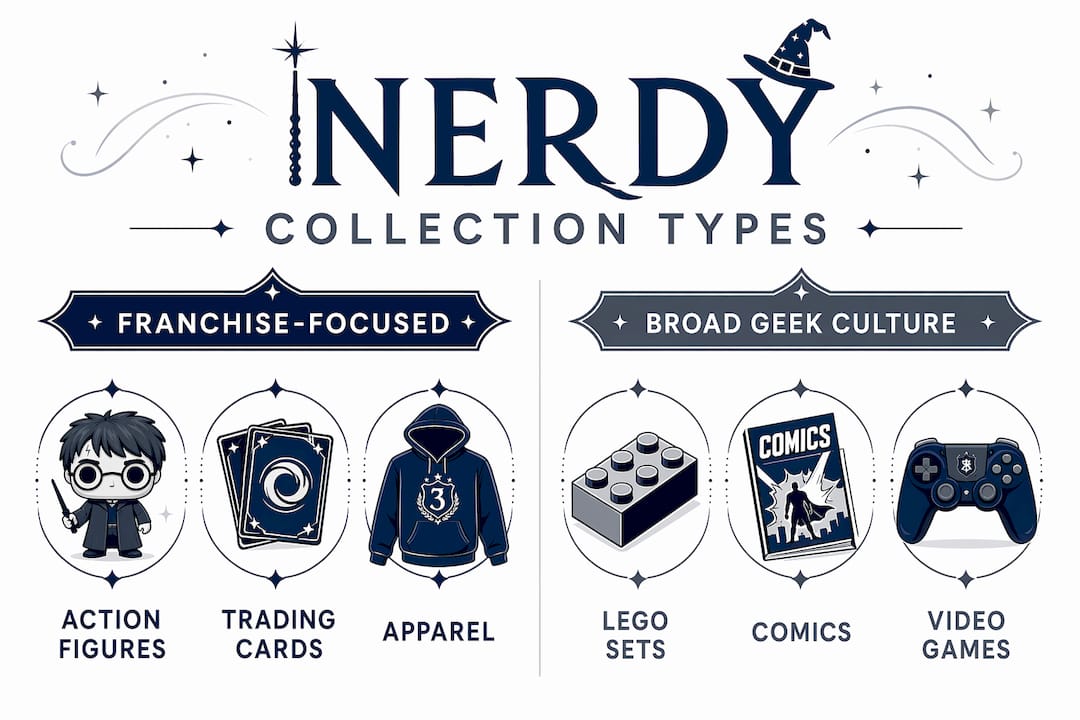
Nerdy collectibles span a wider range of categories than most newcomers expect. The core item types include action figures, statues, and vinyl toys; trading cards and graded comics; boxed video games and limited-edition consoles; movie and TV props or replicas; posters, art prints, and lithographs; tabletop games and miniatures; and themed apparel like graphic tees and hoodies. Each category carries its own collector culture, grading standards, and community.

The scale these collections can reach is striking. Guinness World Records documents a collector with 993 LEGO Star Wars sets, while BBC News profiles a collector who amassed 341 Tomb Raider boxed games as a way to manage a brain disorder. These examples illustrate that popular nerd collections are rarely casual. They are structured pursuits with real emotional stakes.
The distinction between franchise-specific and broader geek culture collections matters for how you build and display them. A franchise-specific collection, say every piece of official Star Wars merchandise from 1977 onward, has a defined universe and clear acquisition targets. A broader geek culture collection might mix Dungeons and Dragons dice sets, retro arcade art, and cyberpunk novels. Neither approach is wrong, but they require different curation strategies.
Here is a quick comparison of common nerdy collection types by focus and typical scope:
| Collection type | Focus | Typical scope |
|---|---|---|
| Franchise completionist | One IP (e.g., Star Wars, Pokémon) | Dozens to thousands of items |
| Medium-specific | Comics, games, or films only | Hundreds of titles or editions |
| Character-driven | One character across all media | Moderate, highly selective |
| Aesthetic-based | Visual style (e.g., retro sci-fi, gothic horror) | Open-ended, cross-franchise |
| Apparel and wearables | Themed graphic tees, hoodies, pins | Compact, wearable display |
Apparel deserves special mention here. Nerdy apparel styles have become a legitimate collectible category in their own right, with limited-run graphic tees tied to specific fandoms holding real cultural value for enthusiasts.
How do collectors curate and manage their collections?
A collectibles collection is defined professionally as a set of objects with shared attributes, managed with documented intent and selective criteria. That definition matters because it separates collecting from hoarding. The moment you apply criteria, you have a collection.
Collectors generally fall into four curation styles:
- Theme-driven completionist. The goal is owning every item within a defined set. A completionist chasing every first-edition X-Men comic from 1963 to 1975 has a clear finish line, which makes acquisitions feel purposeful.
- Condition-grade collector. Quality beats quantity. This collector owns fewer items but prioritizes near-mint or professionally graded pieces. Grading services like CGC for comics or PSA for trading cards are central to this approach.
- Sentimentalist collector. Items are chosen for personal memory and emotional resonance rather than market value or completeness. A childhood action figure in played-with condition belongs here as much as a sealed variant.
- Archival collector. Documentation and preservation are the priority. This collector catalogs everything, stores items in acid-free sleeves or UV-protected cases, and treats the collection as a historical record.
Tracking collections early reduces duplicate purchases and keeps acquisitions intentional. A simple spreadsheet with item name, condition, purchase price, and source is enough to start. Apps like CLZ Comics, Delicious Library, or even a shared Google Sheet work well for ongoing management.
Pro Tip: Before buying anything new, check your catalog first. Duplicate purchases are one of the most common budget leaks in any fandom collectible hobby, and a five-second catalog check prevents them entirely.
Balancing passion with practical limits is the hardest part of managing unique hobby collections. Space and budget are real constraints, and defining set boundaries rather than trying to own everything is the most effective way to avoid collector burnout.
What are the best display techniques for nerdy collections?
Display is where a collection becomes a statement. Collectors are turning spare rooms into micro museums of pop culture, with dedicated themed zones, curated shelving, and deliberate lighting that transforms a hobby into an experience. This trend reflects a broader cultural shift: pop culture fandoms are now mainstream, and collectors feel confident showcasing their passion publicly.
The principles that make a display work:
- Lighting matters more than shelving. Warm, soft accent lighting creates mood and draws the eye to key pieces without the clinical feel of a museum spotlight. LED strip lights behind shelves or under-shelf puck lights are the most popular choices among serious collectors in 2026.
- Storytelling through arrangement. Group items by narrative arc, release era, or character relationship rather than size or color. A shelf that tells a story holds a viewer’s attention longer than one organized by aesthetics alone.
- Rotation keeps displays fresh. The Guinness-documented LEGO Star Wars collector displays only 30 to 40 percent of 993 sets at any given time due to space limits. Rotating items in and out of storage prevents visual fatigue and protects pieces from prolonged light exposure.
- Social media has raised the bar. Social sharing has pushed collectors toward more thoughtful, photogenic setups. Platforms like Instagram and TikTok reward well-lit, well-arranged shelves, which has created a feedback loop of increasingly polished home displays.
- Clean access reduces damage. A calm, clean display with easy access for dusting protects collectibles long-term and keeps the hobby enjoyable rather than stressful.
The micro museum approach works even in small spaces. A single IKEA Detolf cabinet with custom lighting and a themed backdrop can function as a focused display for a character-driven collection without requiring a dedicated room.
How can newcomers start a meaningful nerdy collection?
Starting a collection is easier than sustaining one. The first year is exciting. Year three, when shelf space is gone and the budget is stretched, is where most collectors either find their rhythm or burn out. These steps help you build something lasting.
- Choose one focus before buying anything. Pick a franchise, character, medium, or aesthetic that has held your interest for at least two years. Passing trends make expensive collections you will want to sell in eighteen months.
- Audit your space first. Measure your available display area before acquiring new items. Knowing you have room for exactly forty action figures makes every purchase decision cleaner.
- Set a monthly budget and treat it as a hard limit. Collector burnout is most often a financial stress problem, not a passion problem. A fixed monthly budget, even a modest one, keeps the hobby sustainable indefinitely.
- Start your catalog on day one. Log every item as you acquire it. Documenting collections from the start prevents duplicates and gives you a clear picture of what you own versus what you want.
- Join a community. Reddit communities like r/ActionFigures or r/Funko, Discord servers tied to specific franchises, and local collector meetups all provide motivation, trade opportunities, and honest pricing information.
Pro Tip: The best fandom collectible ideas often come from other collectors, not retail sites. Spend time in collector communities before spending money. You will discover items you never knew existed and avoid overpaying for common pieces.
Psychology Today explains that collecting blends pride, learning, arrangement, and community sharing into a single hobby. That combination is why nerdy collections tend to grow into long-term pursuits rather than passing phases. The social and psychological rewards compound over time.
For collectors interested in how nerdy apparel trends intersect with broader fandom culture, wearable collectibles offer a low-space, high-expression entry point that pairs naturally with any display-based collection.
Key takeaways
Nerdy collections are defined by intentional curation, not volume. The collectors who enjoy the hobby longest are the ones who choose a clear focus, document what they own, and display with purpose.
| Point | Details |
|---|---|
| Definition matters | A nerdy collection is a curated set with shared attributes and selective criteria, not random accumulation. |
| Curation style shapes the collection | Choose completionist, condition-grade, sentimentalist, or archival approaches based on your goals. |
| Display is part of the hobby | Micro museum setups with warm accent lighting and rotation keep collections engaging and protected. |
| Start with a catalog | Logging items from day one prevents duplicates and keeps acquisitions intentional and budget-friendly. |
| Community accelerates growth | Collector communities provide pricing data, trade opportunities, and motivation that retail sites cannot. |
Why collecting is really about telling your story
I have been around pop culture collectors long enough to know that the hobby gets misread constantly. People outside it see shelves of figures or boxes of comics and think “clutter.” What they are actually looking at is autobiography. Every piece in a serious collection represents a decision, a memory, or a moment in someone’s life. The Tomb Raider collector with 341 boxed games is not hoarding. She is building a record of something that matters to her.
The shift I have noticed in the last few years is that collectors are finally getting credit for that. Pop culture fandoms are mainstream now, and the micro museum aesthetic has given collectors a visual language that even non-collectors can respect. A well-lit shelf of Star Wars figures looks like intentional design. It reads as personality, not obsession.
The collectors I have seen struggle are the ones who try to own everything. The ones who thrive pick a lane, document obsessively, and rotate their displays so the collection always feels alive. They also wear their fandom. A graphic tee from a favorite franchise is not a lesser form of collecting. It is the most portable display case you own.
My honest advice: collect slowly, display thoughtfully, and never apologize for what you love. The hobby rewards patience far more than it rewards speed.
— Josh
Wear your fandom as loud as you display it
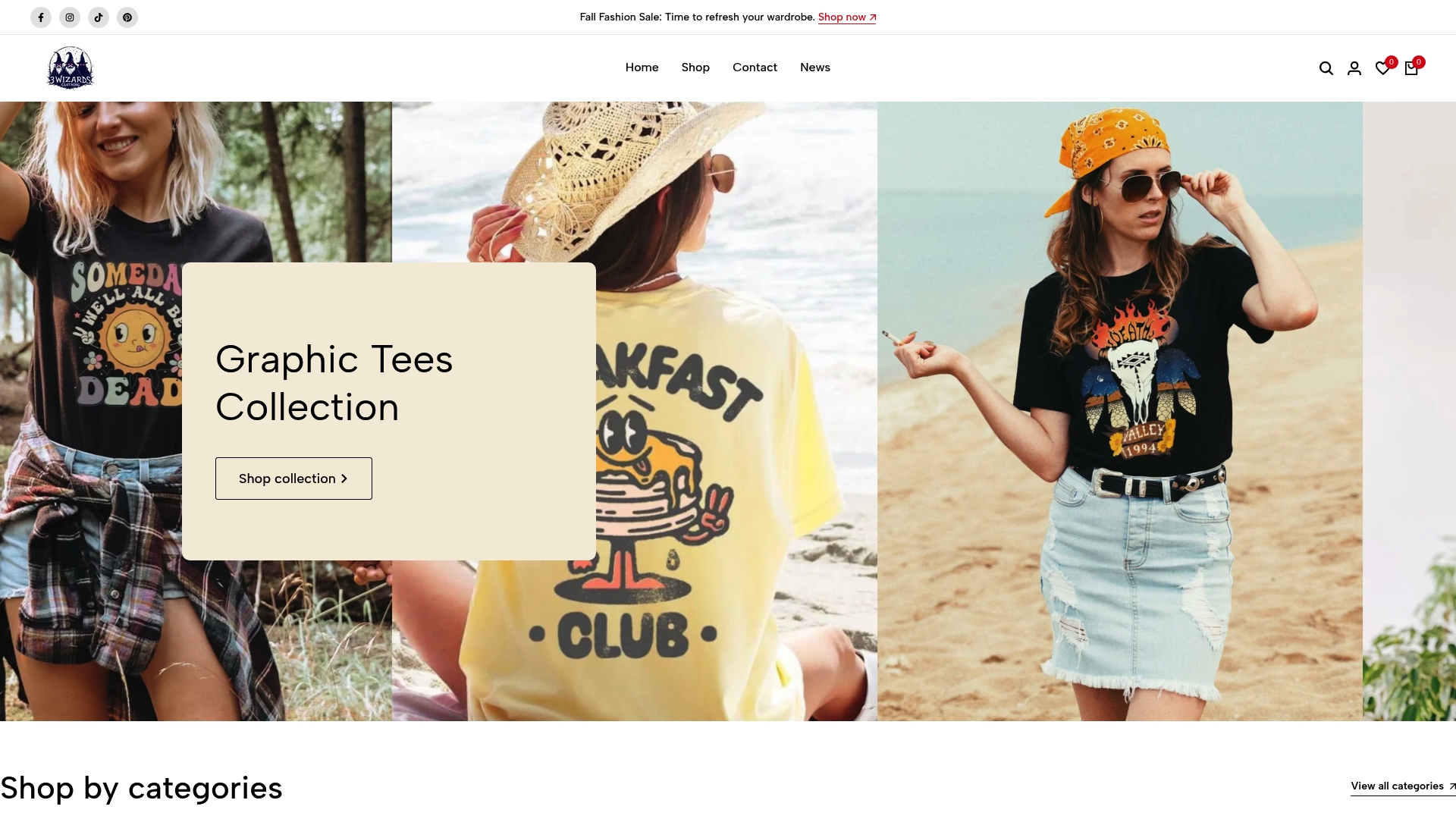
Your collection tells a story on your shelves. Your wardrobe can tell the same story everywhere else. At 3wizardclothing, the graphic apparel is designed for exactly the kind of pop culture enthusiast who takes their fandoms seriously. From seasonal designs to minimalist fandom tees built for collectors who express identity through what they wear, the catalog covers the full range of nerdy and themed styles. If you want something that captures the spirit of your collection in wearable form, the cozy graphic tee collection at 3wizardclothing is a strong place to start.
FAQ
What exactly qualifies as a nerdy collection?
A nerdy collection is a curated set of pop culture or fandom-related objects chosen with intentional criteria, such as a specific franchise, character, or medium. The defining feature is selective acquisition rather than random accumulation.
How many items do you need to have a real collection?
There is no minimum number. A collection is defined by its criteria and intent, not its size. Three carefully chosen, documented items with a shared theme constitute a collection more legitimately than fifty random purchases.
What are the most popular nerd collections right now?
Action figures, trading cards, graded comics, LEGO sets, and limited-edition video games rank among the most active collector categories in 2026. Franchise-specific collections tied to Star Wars, Pokémon, and Marvel remain the largest communities.
How do I avoid spending too much on collectibles?
Set a fixed monthly budget before you start acquiring, and maintain a catalog of what you already own. Defined collection boundaries prevent the impulse buying that drives most overspending in the hobby.
Can apparel be part of a nerdy collection?
Apparel is a fully legitimate collectible category. Limited-run graphic tees, franchise-licensed hoodies, and themed pins are collected, traded, and displayed by serious pop culture enthusiasts alongside figures and comics.


