

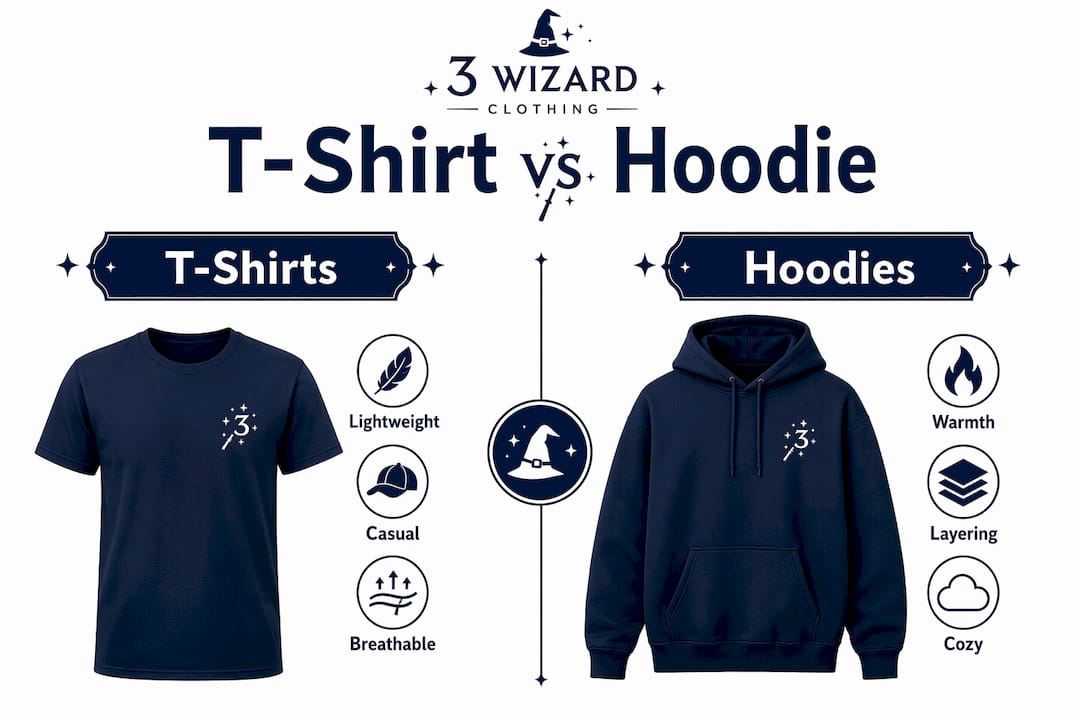
The core difference between a t-shirt and a hoodie comes down to construction, fabric weight, and purpose. A t-shirt is a lightweight, short-sleeved garment built for breathability, typically cut from cotton jersey with a crew or V-neck neckline. A hoodie is a heavier hooded sweatshirt, usually featuring drawstrings and a front kangaroo pocket, designed for warmth and layering across cooler seasons.
At a glance, here is how they split:
- Construction: Hoodies have an attached hood, drawstrings, and a kangaroo pocket; t-shirts have neither.
- Fabric weight: Hoodies run heavier for insulation; t-shirts stay light for airflow.
- Usage: T-shirts suit warm weather and high-intensity activity; hoodies work best in cool conditions or casual settings.
- Style role: T-shirts are a blank canvas for self-expression; hoodies carry a comfort-first, streetwear identity.
Table of Contents
- What are the physical and structural differences between a t-shirt and a hoodie?
- How do fabric weight and thermal properties affect when you wear each?
- What stylistic and psychological roles do t-shirts and hoodies play?
- 3wizardclothing has both, and they are built to say something
- Key Takeaways
What are the physical and structural differences between a t-shirt and a hoodie?
The most obvious gap is the hood itself. A hoodie’s attached hood, usually adjustable with drawstrings, adds material around the neck and shoulders that a t-shirt simply does not have. That extra structure changes how the garment sits on the body and how it layers with other pieces.
T-shirts keep things minimal. Short sleeves, a single-layer body, and either a crew or V-neck opening give them a clean, flat profile. That flat surface, by the way, is exactly why direct-to-garment printing works so well on tees. Hoodies present more obstacles: the kangaroo pocket, drawstring cords, and heavier fabric all complicate print placement.
Fit and layering behave differently too. A hoodie needs enough room in the body to sit over a base layer without pulling at the shoulders. When you layer a tee underneath, the goal is to let roughly 2 to 5 cm of the t-shirt hem show below the hoodie, creating a clean, deliberate second layer rather than a sloppy stack.
- Hood and drawstrings: Exclusive to hoodies; adds neck coverage and adjustable fit.
- Kangaroo pocket: Standard on pullover hoodies; absent on t-shirts.
- Sleeve length: T-shirts are short-sleeved; hoodies have full-length sleeves with ribbed cuffs.
- Neckline: T-shirts offer crew or V-neck options; hoodies open at the hood.
- Fabric layers: Hoodies often use brushed interior fabric for added softness and heat retention.
How do fabric weight and thermal properties affect when you wear each?
Hoodies typically weigh enough to provide significant insulation, considerably more than t-shirts, which helps retain warmth. T-shirts run considerably lighter, prioritizing airflow and moisture regulation over warmth. That weight difference is the single biggest factor in deciding which garment fits a given situation.
Sports fitness professionals note that hoodies function as environmental control for pre-exercise warmth, while t-shirts allow operational comfort and mobility during active exercise. In gym warm-ups, a hoodie helps retain body heat to reduce muscle stiffness and injury risk, but should come off once your core temperature rises to preserve range of motion and prevent overheating.
- Hot weather or intense cardio: T-shirts win. Lighter fabric lets sweat evaporate faster and keeps you cooler.
- Cold mornings or outdoor sessions: Hoodies hold heat around the neck, torso, and core where you lose it fastest.
- Transitional seasons: Hoodies layer easily over a tee, then come off as the day warms up.
- Moisture management: Performance t-shirts in polyester blends wick sweat away from skin; cotton hoodies absorb it, so fabric choice matters in the gym.
Pro Tip: If you work out in a hoodie, choose one with a polyester blend rather than pure cotton. Cotton absorbs sweat and gets heavy fast, while a poly blend keeps the fabric light and dry through your warm-up.
What stylistic and psychological roles do t-shirts and hoodies play?
T-shirts are the foundation of casual dressing. Their flat, lightweight body makes them the go-to canvas for self-expression, whether that means a graphic print, a band logo, or a plain white tee under a blazer. Fashion experts describe t-shirts as foundational breathability layers that communicate personality without demanding attention.
Hoodies carry a different kind of weight. Research on psychological comfort objects shows that hoodies function as protective garments offering both physical warmth and a sense of security in public settings. That is why so many people reach for one when they want to feel settled, focused, or low-key. The hood itself acts almost like a personal boundary.
From a streetwear perspective, hoodies have evolved from athlete-centric sweatshirts into year-round fashion staples with higher retail value and longer wear cycles than t-shirts. A well-made graphic hoodie gets worn across fall, winter, and cool spring evenings, while a t-shirt tends to peak in summer or as a layering piece.
- T-shirts: Breathable base layer, expressive graphic surface, casual to smart-casual range.
- Hoodies: Comfort-first identity, streetwear credibility, versatile across seasons and settings.
- Psychological function: Hoodies provide a sense of enclosure and calm; t-shirts signal openness and ease.
- Retail longevity: Hoodies command higher prices and stay in rotation longer than seasonal tees.
Stat to know: Hoodies have gained status as versatile streetwear staples across seasons, enabling higher retail prices and greater longevity compared to t-shirts, which tend to be more seasonal and lower priced.
3wizardclothing has both, and they are built to say something

If you came here trying to figure out which one belongs in your wardrobe, the honest answer is probably both. 3wizardclothing carries graphic tees and hoodies designed for people who want their clothes to actually reflect their personality, not just fill a drawer. The designs lean bold, playful, and a little edgy, covering everything from Halloween collections to nerdy themes and seasonal drops.
What sets 3wizardclothing apart from generic apparel options is the focus on expressive design across both garment types. You are not choosing between a plain hoodie and a plain tee. You are choosing which piece carries the graphic that fits your mood. Browse the full graphic hoodie collection or pick up a tee, and find the one that actually looks like you.
Key Takeaways
T-shirts and hoodies serve different physical and stylistic purposes, and knowing the difference helps you dress for comfort, function, and expression at the same time.
| Point | Details |
|---|---|
| Construction gap | Hoodies add a hood, kangaroo pocket, and drawstrings; t-shirts keep a minimal, short-sleeved profile. |
| Fabric weight | Hoodies run heavier for insulation; t-shirts stay light for airflow and moisture control. |
| Best use context | T-shirts suit warm weather and intense workouts; hoodies excel in cool conditions and casual layering. |
| Psychological role | Hoodies act as comfort and security garments; t-shirts serve as breathable canvases for self-expression. |
| 3wizardclothing | Offers graphic tees and hoodies with bold, personality-driven designs across seasonal and themed collections. |


