

TL;DR:
- Proper care of graphic apparel involves washing inside out in cold water to prevent print damage. Air drying away from sunlight and avoiding high heat or direct contact with prints significantly prolongs their lifespan. Understanding print types and tailoring care routines accordingly can maintain the vibrancy and integrity of graphics over time.
Graphic apparel care is the practice of using specific washing, drying, ironing, and storage techniques to protect printed designs and extend the life of your garments. Most people treat graphic tees like any other shirt, and that single mistake is why prints crack, fade, and peel after just a few months. The good news is that following a proper graphic apparel care guide takes almost no extra effort. Heat, friction, and harsh chemicals are the three main forces that accelerate graphic deterioration by weakening ink bonds and adhesives. Once you understand what damages prints, every care decision becomes obvious.
What are the best washing practices for graphic apparel?
Washing is where most print damage starts, and it is also where the easiest fixes live. The single most effective step you can take is turning your garment inside out before it touches water. Inside-out washing reduces abrasion damage to prints by 62%, because it shifts friction away from the printed surface and onto the fabric’s interior. That one habit alone extends print life significantly.
Water temperature matters just as much as technique. Cold water, specifically below 86°F (30°C), is the correct choice for every graphic tee, hoodie, or tank top you own. Cold water preserves 40% more color intensity after 50 wash cycles compared to hot water. Hot water softens adhesives, causes fabric to shrink, and breaks down dye bonds faster than almost any other single factor.
Your detergent choice also plays a real role. Bleach and fabric softeners damage print bonds and accelerate color fading, so both should be completely avoided. Stick to mild, fragrance-free detergents. Brands like Woolite or Seventh Generation Free and Clear are solid choices that clean effectively without attacking ink layers.
Sorting your laundry is another step most people skip. Separating laundry by fabric weight and color reduces pilling, fading, and print damage during washing. Washing a lightweight graphic tee alongside heavy denim creates friction that grinds against the print surface throughout the entire cycle. Keep graphic apparel with similar lightweight fabrics.
Here is a step-by-step washing routine that protects your prints every time:
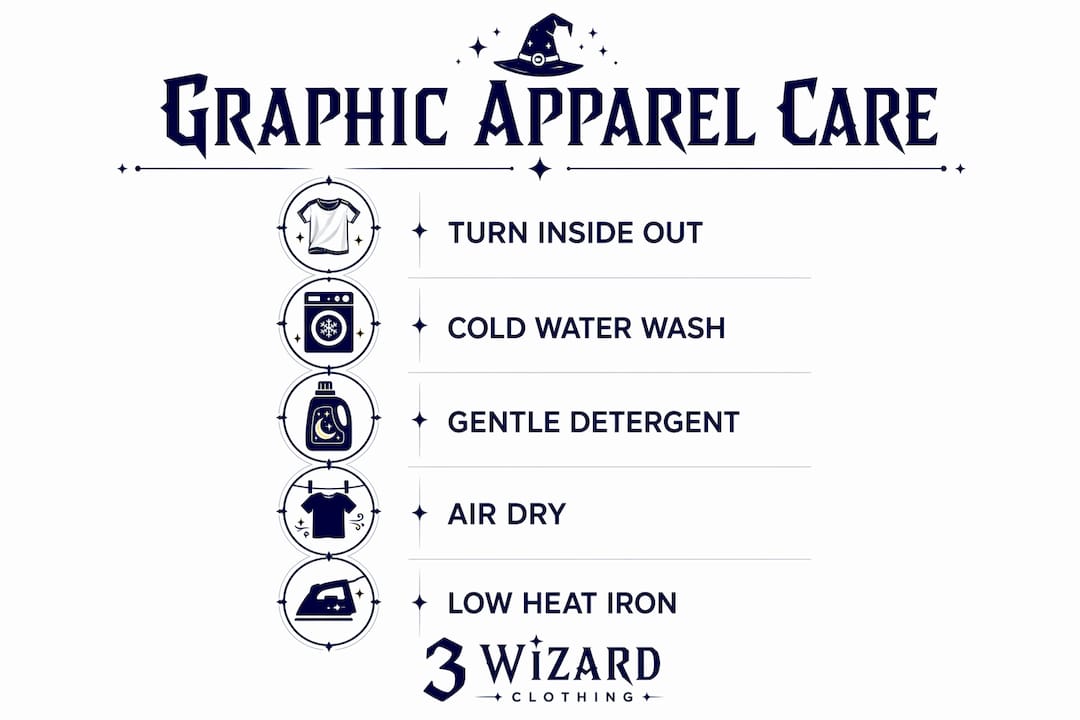
- Turn the garment completely inside out.
- Sort it with other lightweight fabrics of similar colors.
- Set the machine to a gentle or delicate cycle.
- Use cold water only (below 86°F).
- Add a small amount of mild detergent. Skip bleach and fabric softener entirely.
- For especially delicate prints, hand wash in a basin of cold water with a drop of mild detergent.
- Rinse thoroughly and remove promptly to avoid dye transfer.
Pro Tip: If you have a graphic tee with a particularly detailed or raised print, hand washing in cold water is always the safest option. It takes two extra minutes and can add years to the print’s life.
How should you dry and iron graphic apparel safely?
Drying is the second place where prints take serious damage, and the fix is straightforward. Air drying preserves print and fabric quality up to three times longer than machine drying on high heat. Hang your garment inside out on a plastic or padded hanger, away from direct sunlight. UV exposure fades colors even without heat, so a shaded indoor spot is ideal.
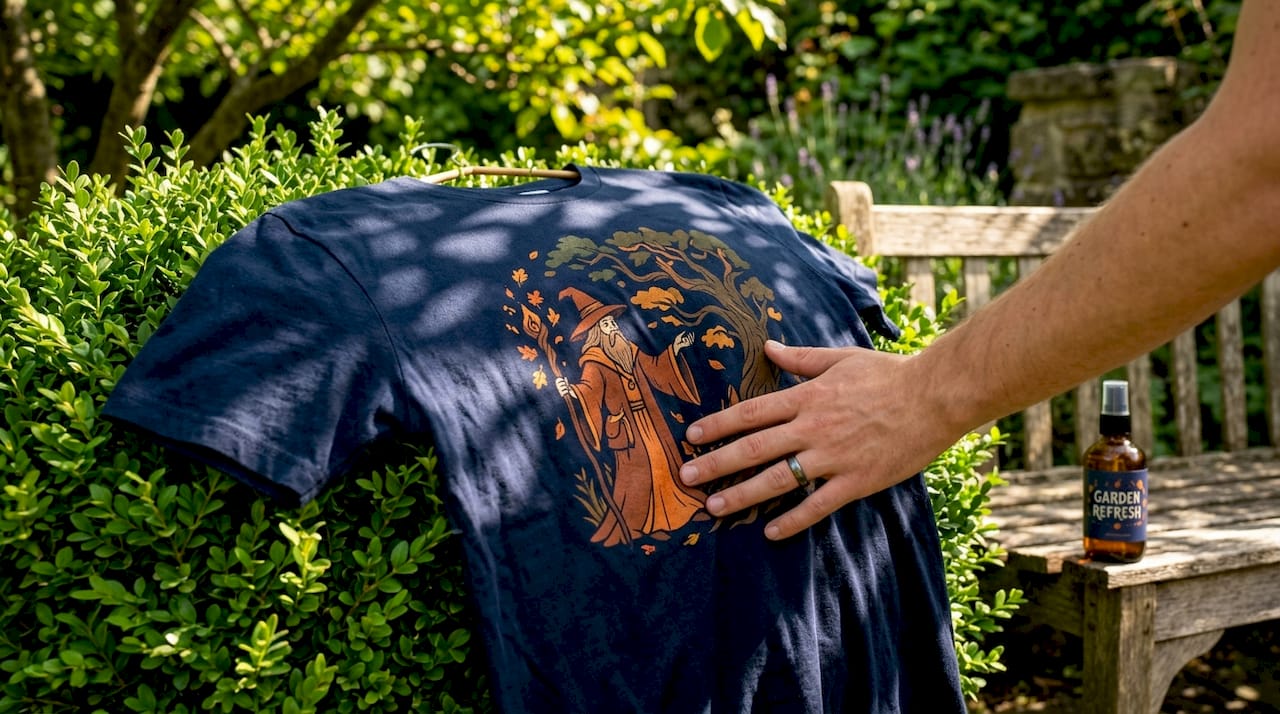
If you must use a machine dryer, select the lowest heat setting available or use the air fluff option, which tumbles without heat. High heat in a dryer does two things at once: it shrinks the fabric and softens the adhesive or ink layer, which then cracks as the garment cools and stiffens. Even one high-heat drying cycle can visibly damage a sublimated or vinyl print.
Ironing graphic apparel requires one firm rule. Ironing directly on prints causes ink melting and cracking, and no print type is immune to this. If your garment needs ironing, turn it inside out and use the lowest heat setting. Place a thin cotton cloth between the iron and the fabric for extra protection. Steaming is a better alternative altogether. A handheld garment steamer like the Conair ExtremeSteam or the Rowenta IS6200 refreshes fabric and removes wrinkles without direct contact with the print surface.
- Air dry inside out, away from direct sunlight.
- Use the dryer only on the lowest heat or air fluff setting.
- Never iron directly on a printed surface.
- Turn garments inside out before ironing and use a cloth barrier.
- Use a garment steamer as a safer alternative to ironing.
Pro Tip: Reshape your graphic tee by hand while it is still damp and lay it flat on a clean towel to dry. This prevents hanger stretch marks and keeps the fabric from pulling around the print.
What print types need different care?
Not all graphic prints are created equal, and screen printing tends to be more durable through repeated washes compared to direct-to-garment (DTG) printing and heat transfers. Understanding your print type helps you apply the right level of care.
Screen-printed apparel uses thick layers of plastisol or water-based ink pressed directly into the fabric. These prints handle cold, gentle washing well, but they still crack under high heat and bleach exposure. The ink sits on top of the fabric rather than bonding into fibers, so abrasion from rough washing cycles is the main threat.
Sublimated designs, common on polyester athletic wear and themed apparel, work differently. The dye bonds directly into the polyester fibers at a molecular level. Dry cleaning chemicals like perchloroethylene break down sublimated inks and fabric fibers, so dry cleaning is never appropriate for these garments. Sublimated apparel should be washed inside out in cold water with mild detergent and air-dried to maintain design vibrancy and fabric strength.
Heat-applied vinyl prints, the kind you see on custom team shirts and novelty tees, use a heat-activated adhesive to bond a cut vinyl layer to the fabric. This adhesive is the vulnerability. High heat in washing or drying can reactivate and then weaken the bond, causing edges to peel. Gentle cold washing and air drying are non-negotiable for vinyl.
| Print type | Wash method | Water temp | Dryer safe? | Dry clean? |
|---|---|---|---|---|
| Screen print | Gentle cycle, inside out | Cold (below 86°F) | Low heat only | No |
| Sublimation | Gentle cycle, inside out | Cold (below 86°F) | Air fluff only | No |
| Heat-applied vinyl | Gentle cycle, inside out | Cold (below 86°F) | No | No |
| DTG (direct-to-garment) | Gentle cycle, inside out | Cold (below 86°F) | Low heat only | No |
The pattern is consistent across all print types. Cold water, gentle cycles, inside-out washing, and low or no heat drying protect every method. The differences are mainly in how much margin each print type gives you before damage becomes visible.
How to handle stains, storage, and mistakes to avoid
Stain treatment on graphic apparel requires patience over aggression. Immediate stain treatment with mild detergent and gentle handling prevents damage to both the print and the fabric. Blot the stain rather than rubbing it. Rubbing forces the stain deeper and abrades the print surface at the same time. Apply a small amount of mild liquid detergent directly to the stain, let it sit for five minutes, then rinse with cold water.
Avoid soaking graphic apparel for extended periods. Long soaks loosen dyes and can soften adhesive layers on vinyl and screen prints, which leads to peeling at the edges. If a stain needs more attention, repeat short treatment cycles rather than leaving the garment submerged.
Storage affects print longevity more than most people realize. Fold graphic tees with the print facing inward, or roll them loosely to avoid hard creases directly across the design. If you hang them, use padded hangers and store in a cool, dry location away from sunlight. UV exposure through a window fades prints over weeks and months even without washing. For seasonal pieces, store in a breathable cotton bag rather than plastic, which traps moisture and can cause mildew.
Here are the most common mistakes that shorten print life, and what to do instead:
- Washing in hot water. Switch to cold water below 86°F on every wash.
- Using bleach or fabric softener. Replace with a mild detergent like Woolite or Seventh Generation.
- Tumble drying on high heat. Air dry or use the lowest dryer setting.
- Ironing directly on the print. Always turn inside out and use a cloth barrier or steamer.
- Scrubbing stains aggressively. Blot gently and treat with mild detergent.
- Storing in direct sunlight or plastic bags. Use breathable storage in a cool, shaded space.
For more detailed guidance on maintaining printed clothing, the step-by-step care guide at 3wizardclothing covers laundering routines specific to graphic tees in practical detail.
Key takeaways
Preserving graphic apparel requires cold water washing, inside-out technique, gentle detergents, and air drying as the foundation of every care routine.
| Point | Details |
|---|---|
| Turn garments inside out | Reduces print abrasion by 62% and is the single most impactful washing habit. |
| Use cold water only | Washing below 86°F preserves significantly more color intensity over repeated cycles. |
| Skip bleach and softeners | Both break down ink bonds and adhesive layers, accelerating fading and peeling. |
| Air dry away from sunlight | Air drying preserves print quality up to three times longer than high-heat machine drying. |
| Match care to print type | Screen print, sublimation, and vinyl each have specific vulnerabilities that require tailored handling. |
What I’ve learned from years of caring for graphic apparel
The conventional advice on graphic apparel maintenance tips tends to focus on what not to do, and that framing misses the bigger point. The real insight is that preserving vibrant prints hinges more on avoiding heat and friction than on finding special detergents or additives. You do not need a cabinet full of specialty products. You need two habits: cold water and inside-out washing.
I have seen people spend money on print-specific detergents while still tossing their graphic tees into a hot dryer. The detergent does almost nothing if the heat is undoing it. Flip the priority. Get the temperature and the drying method right first, and then worry about detergent.
The other thing I would push back on is the idea that all graphic prints need the same level of caution. Screen-printed apparel is genuinely tough. A well-made screen-printed tee from a quality source can handle dozens of cold, gentle washes without visible degradation. Vinyl and DTG prints are where you need to be more careful, especially in the first ten washes when the adhesive is still settling. Treat new graphic apparel with extra care in the first month, and you set it up for a much longer life.
My honest recommendation: build the inside-out, cold water routine into muscle memory. Check out the graphic tee care tips at 3wizardclothing for a quick reference you can bookmark. Once these habits are automatic, maintaining printed clothing stops feeling like a chore and becomes just part of how you do laundry.
— Josh
Great graphic apparel deserves great care
If you are going to put the effort into caring for your graphic tees properly, start with something worth protecting.

The Pumpkin Season T-Shirt from 3wizardclothing is a cozy fall graphic tee featuring autumn sweaters, latte, and harvest icons printed on quality fabric built to last. It is exactly the kind of piece that rewards proper care. Wash it inside out in cold water, air dry it away from sunlight, and the design stays sharp season after season. 3wizardclothing designs graphic apparel with durability in mind, so your care routine has a solid foundation to work with. Browse the full collection at 3wizardclothing.com and find your next favorite piece.
FAQ
How do you wash graphic tees without ruining the print?
Turn the garment inside out, wash in cold water below 86°F on a gentle cycle, and use a mild detergent without bleach or fabric softener. This combination reduces friction, prevents dye breakdown, and protects adhesive layers.
Can you put graphic tees in the dryer?
You can use a dryer on the lowest heat setting or air fluff mode, but air drying is always the safer choice. High heat causes ink cracking, fabric shrinkage, and adhesive failure, especially on vinyl and DTG prints.
How do you remove stains from graphic apparel without damaging the print?
Blot the stain immediately with a clean cloth, apply a small amount of mild liquid detergent, and let it sit for five minutes before rinsing with cold water. Avoid scrubbing directly on the print area.
Does the type of print affect how you care for the garment?
Yes. Screen prints handle repeated washing better than vinyl or DTG prints. Sublimated polyester garments should never be dry cleaned, and vinyl prints should never go into a hot dryer, since heat reactivates and weakens the adhesive bond.
How should you store graphic apparel to prevent fading?
Store graphic tees folded with the print facing inward, or rolled loosely, in a cool and dry location away from direct sunlight. UV exposure fades prints over time even without washing, so a shaded drawer or breathable cotton storage bag is ideal.


