

Pick one standout piece, pull a few colors from it, and dress everyone else in solids, textures, and one patterned piece. That single rule covers most of what makes coordinated family outfits look intentional rather than accidental. Anchor outfit method is the term photographers use for it, and it works because you are building a palette from something real instead of guessing.
- What to avoid: exact matching (everyone in the same shirt reads as a costume), neon or overly saturated colors that blow out on camera, and small busy prints that create a moiré effect in photos.
- Shopping tip: Order your anchor piece first, then shop basics around it. Basics ship faster and are easier to return.
Pro Tip: If you are using a graphic tee as your anchor, pull one color from the graphic, one from the background, and one neutral. Three colors, done.
Table of Contents
- What are the best family matching outfit ideas by occasion?
- How do you coordinate colors, patterns, and textures for family photos?
- Photoshoot checklist: what to do (and what to skip)
- Sizing, fit, and fabric tips that keep kids photo-ready
- Where to find coordinated pieces and how to use 3wizardclothing as your anchor
- How Josh built a family look around one themed tee
- Key Takeaways
- Why coordinated family outfits are worth the effort
- Ready-made anchor pieces from 3wizardclothing
- Useful sources and further reading
What are the best family matching outfit ideas by occasion?
The fastest way to plan coordinated family outfits is to match the look to the setting before you touch a single hanger. Photographers recommend establishing the shoot’s vibe first, then choosing a palette that supports that mood. The table below gives you ten ready-to-copy formulas.
| Occasion | Core palette | Anchor piece | Best fabric | Who anchors |
|---|---|---|---|---|
| Classic family photos | Navy, white, tan | Mom’s floral dress | Cotton, linen | Mom |
| Fall harvest session | Rust, cream, olive | Themed graphic tee | Cotton knit | Dad or oldest kid |
| Beach/outdoor | White, sand, sky blue | Kids’ stripe tee | Linen, jersey | Kids |
| Holiday/Christmas | Forest green, burgundy, ivory | Mom’s plaid blouse | Flannel, velvet | Mom |
| Pajama/cozy session | Dusty blue, grey, white | Matching PJ set | Brushed cotton | Any |
| Mommy-and-me | Blush, ivory, camel | Mom’s midi dress | Silk, cotton | Mom |
| Sibling sets | Sage, white, denim | Oldest sibling’s outfit | Chambray, jersey | Oldest sibling |
| Casual birthday | Bright coral, white, gold | Birthday kid’s outfit | Jersey, denim | Birthday kid |
| Reunion/group | Denim, white, tan | Dad’s chambray shirt | Denim, cotton | Dad |
| Formal/holiday dinner | Charcoal, blush, gold | Mom’s gown or blouse | Velvet, satin | Mom |
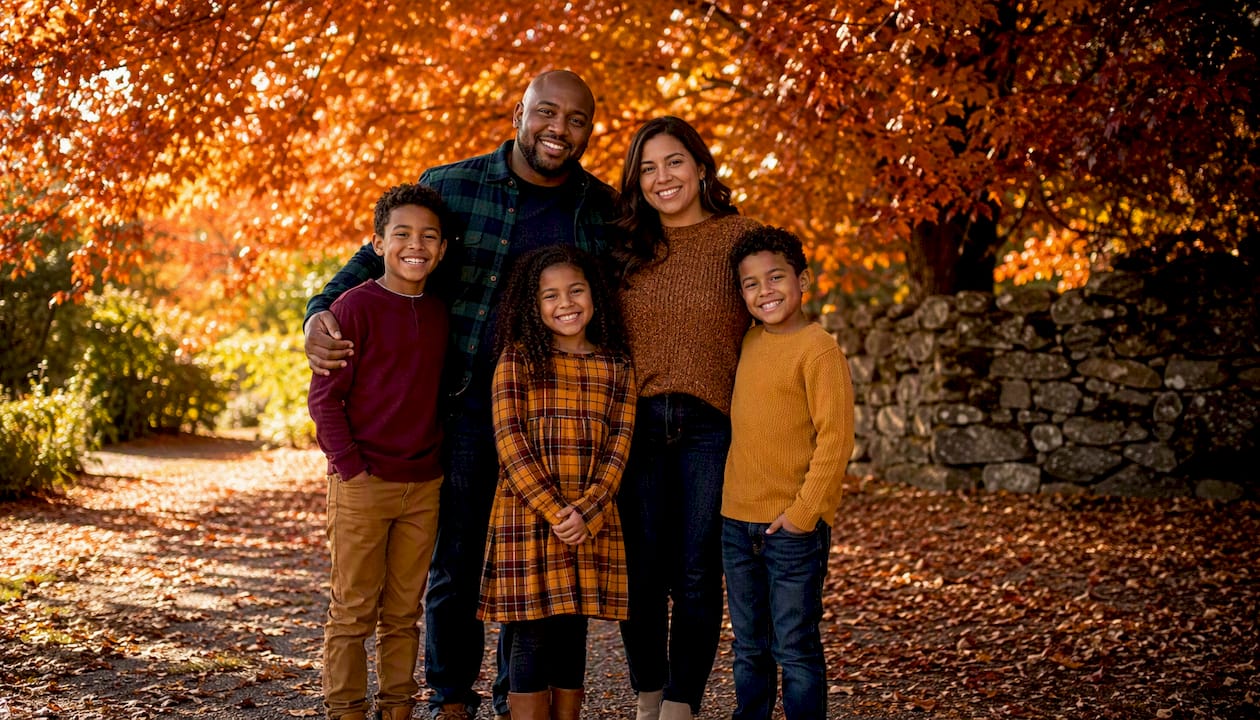
For a fall harvest session, a seasonal graphic tee from 3wizardclothing works perfectly as the anchor. One parent wears the tee; everyone else picks up one color from it in a solid or textured piece. The group looks curated, not costumed.
How do you coordinate colors, patterns, and textures for family photos?
The anchor outfit method works in five steps. Follow them in order and the palette builds itself.
- Pick the anchor. Choose the most complex piece in the group: a floral dress, a plaid shirt, or a themed graphic tee. This piece sets every other decision.
- Extract 3–4 colors. Pull the dominant color, one accent, and one neutral from the anchor. A rust-and-cream graphic tee gives you rust, cream, and a natural olive or tan as your third.
- Assign pattern roles. The anchor gets the pattern. Everyone else wears solids or subtle textures. One large-scale pattern maximum per group photo — two competing prints fight for attention and neither wins.
- Layer textures. Solids in different textures (a linen shirt next to a cotton knit next to a velvet skirt) create visual depth without adding more colors. This is what separates a styled look from a flat one.
- Check scale. Small, tight prints like micro-checks or tiny florals create a moiré shimmer on camera. Stick to larger-scale prints or skip prints entirely for anyone not wearing the anchor.
Example A — dress as anchor: Mom wears a navy floral dress (navy, blush, sage). Dad gets a sage linen shirt. Kids wear navy shorts and a blush top. Neutral sandals across the board.
Example B — graphic tee as anchor: Dad wears a rust harvest graphic tee (rust, cream, olive). Mom wears a cream linen blouse. Kids wear olive joggers and a cream tee. Simple, fast, and photo-ready.
Pro Tip: Step outside in your outfits before the shoot day. Natural light reads color differently than indoor lighting, and a color that looks great under your kitchen lights can go muddy or washed out outdoors.
Modern coordination favors texture mixing over everyone wearing the exact same item. One subtle pattern, a few solids, and varied textures reads as intentional. Everyone in the same shirt reads as a uniform.
Photoshoot checklist: what to do (and what to skip)
Start planning 2–3 weeks before your session. That window gives you time to order, receive, try on, and swap anything that does not work. Last-minute outfit decisions are where most coordination falls apart.
“Doing a full try-on reveals color clashes, overwhelming patterns, or textures that don’t mesh before the shoot day — not during it.” — Rife Ponce Photography, on pre-shoot preparation
The week before:
- Order any pieces you do not already own. Anchor pieces first.
- Do a living-room try-on: lay every outfit flat, photograph the group together, and look at the photo. Clashes you missed in person show up immediately on a screen.
- Check shoes for every family member. Mismatched or scuffed footwear is one of the most common last-minute surprises.
- Steam or lightly iron everything. Wrinkled fabric reflects light unevenly and shows up clearly in high-resolution images — photographers consistently flag this as the top avoidable problem.
The night before:
- Hang all outfits together (including accessories) so nothing gets forgotten.
- Pack a backup outfit for any child under five.
- Confirm shoe comfort for kids — blisters mid-shoot end sessions early.
Common mistakes to skip:
- Matching everyone exactly (too uniform, loses personality)
- Introducing a new pair of shoes on shoot day
- Wearing logos or text on anyone except the designated anchor piece
- Ignoring the background: a busy outdoor setting calls for simpler outfits; a clean studio backdrop can handle more pattern
“Establish the setting first — casual beach versus formal studio — and then choose a palette that suits that vibe.” — Bianca Dottin Photography, on shoot planning
Sizing, fit, and fabric tips that keep kids photo-ready
Kids’ comfort is the single variable that determines whether a shoot runs smoothly or falls apart in the first fifteen minutes. A child who is itchy, stiff, or wearing shoes that pinch will not cooperate, and no amount of coordination fixes that in post.
- Test mobility before the shoot. Have kids run, sit, and squat in their outfits. If anything restricts movement or causes complaints at home, it will cause a meltdown on location.
- Avoid scratchy tags and stiff collars. Cut tags out in advance. Stiff Oxford collars on toddlers are a common regret.
- Fabric by season: linen and cotton for summer and warm-weather shoots; knits, corduroy, and velvet for fall and winter. Velvet photographs beautifully in low light but overheats fast — keep sessions short if you use it.
- Shoes: for beach or grass settings, going barefoot is a natural, accepted look that removes the shoe-coordination problem entirely. For other settings, choose shoes kids have already broken in.
- Pack a shoot bag: safety pins (for loose waistbands), stain-remover wipes, a spare pair of socks per child, a small brush or comb, and at least one backup outfit for babies and toddlers. Spills happen in the ten minutes between leaving the house and arriving on location.
For kids’ graphic tee ideas that hold up to active wear and photograph well, 3wizardclothing’s kids’ category covers seasonal and themed options in soft cotton that works for both comfort and camera.
Where to find coordinated pieces and how to use 3wizardclothing as your anchor
The most practical approach is a retail mix: buy basics (solid tees, linen shirts, neutral trousers) from accessible retailers, and invest in one themed or graphic anchor piece that sets the palette.
| Budget tier | Anchor piece | Basics | Total estimate |
|---|---|---|---|
| Budget | Graphic tee | Target, Old Navy | — |
| Mid-range | Patterned dress or graphic tee | H&M, Nordstrom Rack | — |
| Splurge | Statement dress or custom piece | Nordstrom, boutique | — |
Order the anchor piece first, always. Once it arrives, hold it next to pieces you already own before buying anything new. You will often find that two or three items already in your closet work, which cuts the actual shopping list significantly.
Size charts matter more for kids than adults. Kids’ sizing varies by brand, sometimes by a full size. Order one size up for any child who is between sizes, and keep the packaging until after the try-on. For seasonal graphic wear that doubles as an anchor, 3wizardclothing lists sizing details on each product page. A capsule wardrobe approach to the basics, where you invest in a few neutral pieces that rotate across multiple occasions, keeps the per-shoot cost low over time.
How Josh built a family look around one themed tee
The method works in practice exactly the way it works on paper. Here is the sequence, step by step.
- Chose the anchor. A rust-and-cream harvest graphic tee from 3wizardclothing’s fall collection. The graphic had three colors: rust, cream, and a faded olive accent.
- Extracted the palette. Rust became the accent color. Cream became the base. Olive became the supporting neutral.
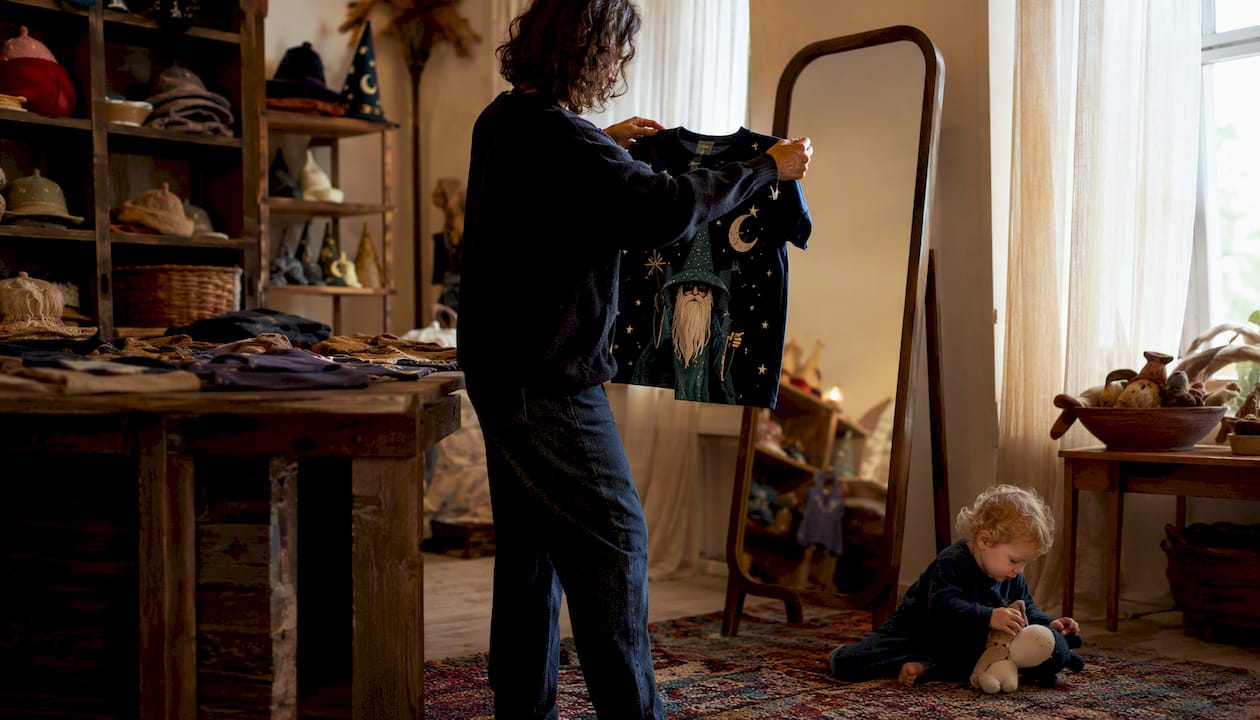
- Assigned outfits. Dad wore the graphic tee. Mom got a cream linen blouse and rust-toned wide-leg trousers. The older kid wore an olive jogger and a cream tee. The toddler wore a rust-and-cream striped romper (the stripe was small-scale, so it read as a solid from camera distance).
- Checked shoes. White sneakers across the board. Simple, neutral, and already owned.
- Did the living-room try-on. Laid everything flat, photographed it. The toddler’s romper stripe was borderline, but at distance it worked. The mom’s trousers were slightly too orange under indoor light, so they swapped to a cream linen pair instead.
- Steamed everything the night before. The graphic tee needed a quick steam to flatten the hem. The linen pieces needed a full press.
The before: five people, five independent outfit choices, no visual connection. The after: one palette, one anchor, and a group that looked like they planned it, because they did. The themed shirt approach removes the guesswork because the anchor makes every other decision obvious.
Key Takeaways
The anchor outfit method, combined with a 3–4 color palette, is the most reliable way to build coordinated family outfits that photograph well without requiring everyone to wear the same thing.
| Point | Details |
|---|---|
| Start with the anchor | Pick one complex piece and extract your palette from it. |
| Limit to 3–4 colors | More colors create visual noise; fewer feel flat. Photographers recommend a palette of three to four colors for most families. |
| One pattern per group | The anchor gets the pattern; everyone else wears solids or textures. |
| Try on two weeks early | A living-room try-on catches clashes before shoot day, not during it. |
| 3wizardclothing as anchor | Seasonal and themed graphic tees from 3wizardclothing work as ready-made anchors for fall, holiday, and casual family sessions. |
Why coordinated family outfits are worth the effort
The conventional wisdom says matching outfits are about aesthetics. That is only half true. What coordinated looks actually do is remove one source of friction from an already logistically complex event. When the palette is set and the anchor is chosen, every subsequent decision has a clear answer. That clarity shows up in the photos as calm, not just color.
The harder part is balancing style with the reality that kids have opinions, comfort thresholds, and a talent for spilling things at the worst possible moment. The families who get the best photos are not the ones who dressed everyone identically. They are the ones who picked a palette, let each person wear something they were comfortable in, and did not try to control every detail.
Themed outfits add something else: a reason to remember the day. A harvest graphic tee from a fall session becomes the shirt a kid asks to wear again because it reminds them of that afternoon. That is a different kind of value than a perfectly pressed coordinated set that no one touches again.
The families who choose themed shirts for sessions tend to report that the photos feel more like them, not just more polished. Both things can be true.
Ready-made anchor pieces from 3wizardclothing
Graphic tees that double as anchor pieces save you the hardest part of outfit coordination: finding a starting point with enough color and personality to build a palette from.
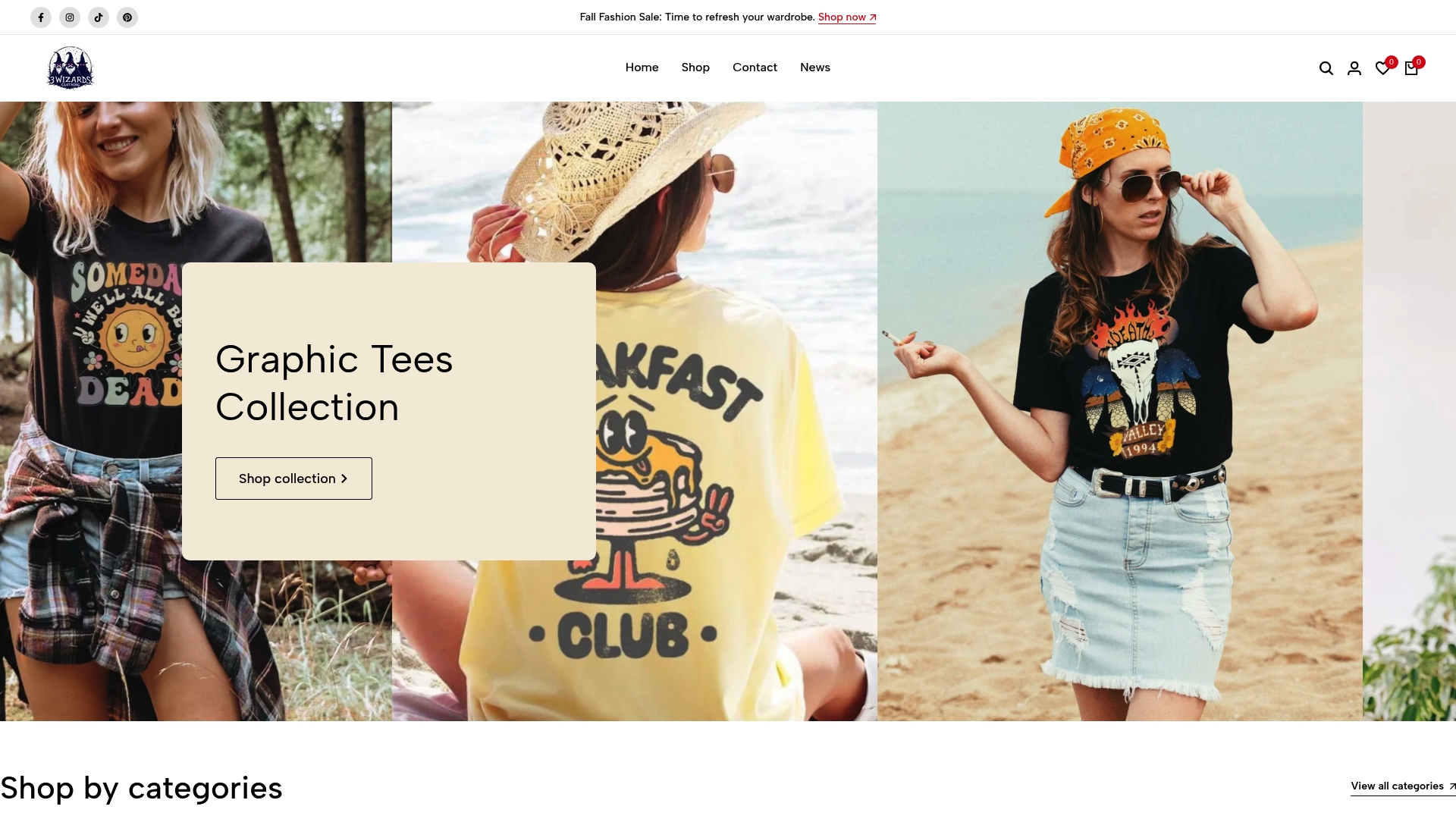
Two 3wizardclothing options that work particularly well for family sessions:
Pumpkin Patch T-Shirt — A fall harvest anchor with warm orange, cream, and earthy green tones. Pair it with cream linen on mom, olive or tan on the kids, and denim or brown on dad. Ideal for October outdoor sessions, apple orchard shoots, or any fall gathering where you want warmth without formality.
Be Grateful and Give Thanks T-Shirt — A Thanksgiving and late-fall anchor in muted, warm tones. Works for indoor holiday sessions, dinner table photos, or any cozy gathering where forest green, burgundy, and ivory are the palette. Pair with velvet or flannel for the rest of the family.
Order the anchor tee at least two weeks before your session. Once it arrives, hold it against pieces you already own before buying anything new. Browse the full family-friendly graphic tee collection at 3wizardclothing to find the right starting point for your next session.
Useful sources and further reading
“Coordinating family outfits feels a lot like getting everyone in the house to agree on one movie — someone wants comfy, someone wants cute, someone wants to wear their baseball jersey.” — Jessica Alexandria, on the real challenge of family outfit coordination
- How to Choose Family Photo Combinations for Coordinated, Natural Portraits — covers the anchor outfit method and palette extraction in depth.
- What to Wear for Family Photos: A Complete Style Guide — a Chicago family photographer’s practical breakdown of patterns, textures, and pre-shoot prep.
- Coordinating Family Outfits — photographer-led advice on setting the shoot vibe before choosing a palette.
- Family Portrait Outfit Ideas: What to Wear — covers ordering timelines, barefoot options, and backup outfit strategy.
- Color Palettes and Outfit Ideas for the Best Matching Family Outfits — explains the 3–4 color palette rule and how graphic tees work as anchors.
- Best Fall T-Shirt Themes for Families and Young Adults — 3wizardclothing’s guide to fall theme and palette ideas for seasonal sessions.
Recommended
- Why families choose themed shirts: Connection, fun, and expression – 3 Wizard Clothing
- Why Families Buy Fun Clothing: Bonding and Joy – 3 Wizard Clothing
- The Role of Family-Friendly Fashion in Modern Family Life – 3 Wizard Clothing
- Creative Halloween Clothing Ideas for Trendy Adults & Families – 3 Wizard Clothing


