

TL;DR:
- Buying exclusive designs signals individuality and creates long-term wardrobe appeal through rarity and quality. Genuine limited-edition apparel often features clear production details and scarcity commitments, preventing marketing from misleading consumers. These pieces are best suited for statement, gift, or collector needs rather than everyday basics.
Shopping exclusive designs pays off when you want clothing that signals who you are, resists mass saturation, and holds collectible appeal over time. Research on consumer exclusivity behavior confirms that genuine limited-run pieces drive stronger purchase intent than generic labels — but only when the exclusivity is real. 3wizardclothing’s themed and seasonal collections are built around exactly that premise.
Three reasons to keep reading:
- Uniqueness and self-expression: exclusive pieces let your wardrobe reflect your values, not the mall’s inventory
- Limited supply and collectability: small runs create genuine scarcity and long-term appeal
- Intentional wardrobe value: fewer, better pieces reduce the churn of fast fashion
Table of Contents
- Why shop exclusive designs — and what you actually get
- How exclusive drops and limited runs actually work
- How do you verify a design is truly exclusive?
- How to shop exclusive drops without missing out
- How to care for exclusive graphic pieces
- When do exclusive designs make sense — and when don’t they?
- Are exclusive designs worth it for graphic casual wear?
- Key Takeaways
- The case for buying with intention, not just impulse
- Where to find exclusive graphic pieces worth buying
- Sources and further reading
Why shop exclusive designs — and what you actually get
Exclusive graphic apparel does something mass-produced tees can’t: it gives you a piece that most people around you will never own. That gap matters more than it sounds. Academic work published in the Future Business Journal shows consumers simultaneously need uniqueness and social belonging — exclusive pieces thread that needle by signaling individuality within a community of people who share the same taste.
The practical value compounds over time. Unique style built from exclusive pieces increases wearer confidence and reduces the waste that comes from chasing fleeting trends. A graphic hoodie you genuinely love and wear for three years costs less per wear than five forgettable fast-fashion shirts you rotate out in a season.
Collectability adds another layer. Limited drops, edition numbers, and artist collaborations create pieces that carry social cachet in niche communities — think Halloween graphic tees released for a single October window, or a nerdy-themed design tied to a specific collaboration. This scarcity is real when the brand commits to not restocking.
One caveat worth stating plainly: scarcity can be manufactured. A product page that says “exclusive” without edition counts, material details, or artist credits is marketing language, not a production commitment. More on how to spot the difference below.
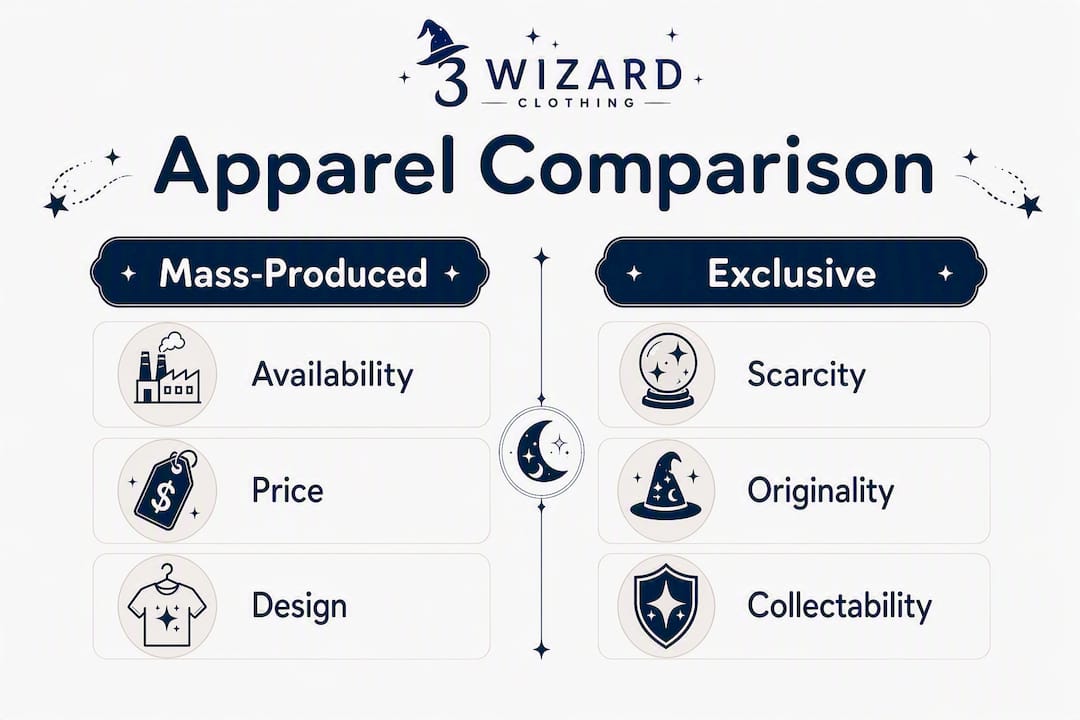
| Factor | Mass-Produced Apparel | Exclusive / Limited-Run Apparel |
|---|---|---|
| Availability | Ongoing, widely restocked | Finite run, rarely or never restocked |
| Design reuse | Common across seasons | Non-reuse is a core exclusivity signal |
| Perceived craftsmanship | Variable, often lower | Higher due to smaller batch oversight |
| Wardrobe longevity | Trend-dependent | Style-driven, longer relevance |
| Collectability | Low | High for numbered or collaboration pieces |
How exclusive drops and limited runs actually work
Exclusive retail assortments function as a destination strategy: they pull shoppers to a specific store or site because the design simply isn’t available anywhere else. That mechanic drives urgency and, frequently, sell-outs. Understanding the production model behind a drop helps you judge whether the exclusivity claim holds up.
The four common release models are one-off drops (a single print run, never repeated), small seasonal waves (a themed collection released once per season, like fall or Halloween), retailer-exclusive assortments (a design available only through one store), and artist or collaboration releases (a piece tied to a specific creator’s artwork). Smaller seasonal waves tend to preserve uniqueness longer because they avoid market saturation.
True exclusivity depends more on production strategy than on the label. The key signals are batch size, whether the artwork is reused across collections, and whether the brand commits to a non-restock policy.
| Stage | What happens | Typical timeline |
|---|---|---|
| Announcement | Brand previews design via email/social | — |
| Drop | Product goes live; stock is finite | Launch day |
| Sell-out | Units sell through; no restock planned | Hours to days |
| Secondary market | Resale listings appear if demand stays high | Days to weeks post sell-out |
| Possible surplus run | Rare; brand may release leftover units | Weeks later, if at all |
For themed graphic apparel like 3wizardclothing’s Halloween and seasonal collections, the seasonal window itself acts as a natural scarcity mechanism — once October passes, the demand context disappears.
How do you verify a design is truly exclusive?
Not every “exclusive” label reflects a real production commitment. Use this checklist on any product page before you buy:
- Edition or stock count listed — a specific number of units signals genuine scarcity; vague “limited quantities” language does not
- Material and print method described — look for fabric weight, screen print vs. direct-to-garment (DTG) details; their absence suggests a generic listing
- Artist or collaboration credit — named creators add accountability and confirm the design isn’t a stock graphic
- Time-bound language with a clear end date — “available through October 31” is a commitment; “while supplies last” is not
- Design non-reuse policy — check whether the same graphic appears in older collections or on other sites
- Customer reviews for that specific style — ratings tied to the actual print quality and fit matter more than store-level averages
- Clear return and shipping policy — a brand confident in its product publishes these prominently
Exclusivity labeling increases consumer scrutiny — which is useful. Use that heightened attention to check the attributes that actually matter: print quality, fabric, and design originality.
Pro Tip: Search the design’s artwork on Google Images before buying. If the same graphic appears on multiple generic print-on-demand sites, the “exclusive” claim is marketing copy, not a production reality.
How to shop exclusive drops without missing out
Price expectations first: limited-run graphic pieces cost more than mass-produced equivalents because small batch printing, artwork licensing, and closer production oversight all add to unit cost. Smaller batches with closer designer involvement produce higher perceived craftsmanship — and that shows up in the price. Screen print runs typically have higher setup costs but lower per-unit cost at volume; DTG printing suits very small runs but costs more per piece.
| Price driver | Why it affects cost |
|---|---|
| Small batch production | Fixed setup costs spread over fewer units |
| Artwork licensing / royalties | Creator fees built into unit price |
| Print method (DTG vs. screen print) | DTG suits micro-runs; screen print suits larger batches |
| Non-restock commitment | No volume discount from repeat production |
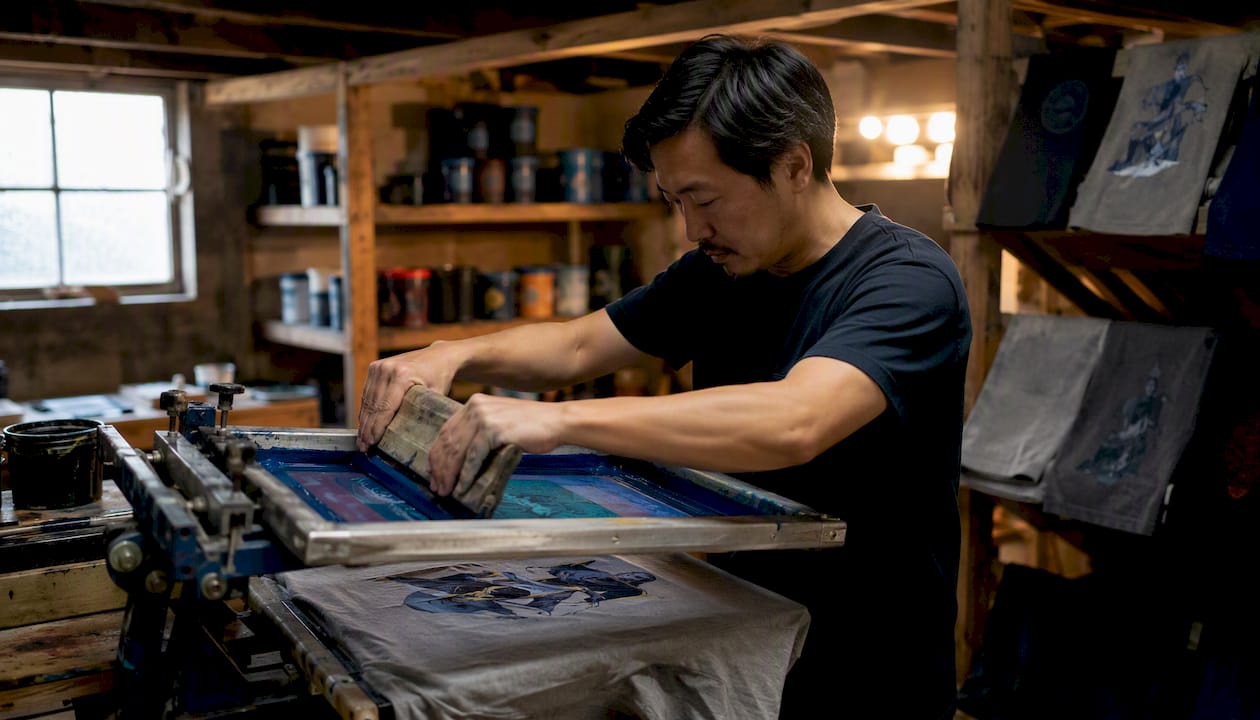
Timing matters as much as price. Sign up for email or SMS drop alerts before a collection launches. On launch day, have your size confirmed, your account logged in, and your payment method saved — fast drops can sell through in under an hour. Use wishlists and quick-view features to pre-stage items. If you miss a drop, check whether the brand posts surplus units weeks later; some do, most don’t.
For returns: always read the policy before you buy a limited item. Many brands restrict returns on final-sale or limited-run pieces. Shipping timelines for small-batch orders can also run longer than standard retail.
Pro Tip: Use the comparison shopping features on product pages to check sizing across styles before a drop goes live — scrambling to size-check during a fast sell-out is how you end up with the wrong fit.
How to care for exclusive graphic pieces
Proper care is the difference between a graphic tee that looks sharp for years and one that cracks and fades after six washes. The print method determines the care approach.
- Wash inside-out in cold water — heat and friction are the primary enemies of both screen print and DTG ink
- Skip the dryer or use low heat — high heat degrades ink adhesion faster than almost anything else
- Hang or lay flat to dry — preserves both print and fabric structure
- Never iron directly on the print — use a pressing cloth or iron inside-out
- Store folded, not on a hanger — heavy graphic tees can stretch at the shoulders over time on hangers
- Avoid bleach and fabric softener — both break down ink and fiber integrity
DTG prints are more sensitive to heat than screen prints because the ink sits on top of the fabric rather than being pressed into it. If your piece is DTG, treat it more gently.
Pro Tip: For limited-run graphic apparel you plan to keep long-term or resell, consider washing it only when necessary and storing it flat in a cool, dry space. Condition matters for resale.
When do exclusive designs make sense — and when don’t they?
| Scenario | Buy exclusive | Skip exclusive |
|---|---|---|
| Statement piece for a specific occasion | ✓ Strong fit | |
| Gift for a collector or niche-interest fan | ✓ Strong fit | |
| Building a capsule wardrobe around a theme | ✓ Good fit | |
| Need everyday basics in multiple colors | ✗ Better served by standard retail | |
| Tight budget, uncertain about fit or style | ✗ Wait for a trusted seller’s sale | |
| Unknown seller with no reviews or policy | ✗ High scam risk — skip |
The self-expression and identity benefits of exclusive pieces are strongest when the design genuinely reflects something about you — a fandom, a seasonal tradition, a sense of humor. Buying an exclusive because it’s scarce, not because you love it, is how you end up with a piece that sits unworn.
Are exclusive designs worth it for graphic casual wear?
For most shoppers of graphic and themed casual apparel, yes — with conditions. Exclusives pay off when the design is genuinely limited, the seller is transparent about materials and print method, and the piece fits your actual style rather than a passing trend.
Exclusive graphic apparel earns its price when the scarcity is real, the design is original, and the brand stands behind its product with clear policies. When those three conditions hold, you get a piece that mass retail simply cannot replicate.
Three reasons the math works in your favor:
- Expression: a piece nobody else owns communicates something mass retail can’t
- Value over time: quality-made exclusives outlast trend cycles and reduce wardrobe churn
- Collectability: limited drops tied to themes or collaborations hold appeal long after the season ends
One caution: manufactured scarcity is common. Always check edition counts, artist credits, and return policies before committing.
Key Takeaways
Exclusive graphic apparel is worth buying when the scarcity is production-backed, the design is original, and the seller publishes transparent material and policy details.
| Point | Details |
|---|---|
| Check edition count first | A specific unit number signals real scarcity; vague “limited” language does not. |
| Verify print method and materials | Screen print vs. DTG affects both price and care; a product page should state which. |
| Care preserves value | Wash inside-out in cold water and skip high heat to protect print integrity long-term. |
| Match the purchase to your style | Exclusives pay off for statement pieces, gifts, and collectors — not everyday basics. |
| 3wizardclothing for themed runs | 3wizardclothing offers seasonal and themed limited collections with product-level detail for shoppers who want genuine exclusivity in graphic casual wear. |
The case for buying with intention, not just impulse
The conventional wisdom around exclusive apparel tends to focus on hype: get it before it’s gone. That framing serves brands more than buyers. The more useful lens is intentionality. A limited-run Halloween graphic tee from a brand that publishes its fabric weight, print method, and return policy is a fundamentally different purchase than a “limited edition” drop from an anonymous seller with no reviews and no stated restock policy.
The psychology research is clear that consumers want both distinction and belonging. Exclusive pieces can deliver both — but only when the design actually connects to something you care about. A piece that signals your taste to people who share it is worth the premium. A piece you bought because the countdown timer made you anxious is not.
Shop the design, not the scarcity.
Where to find exclusive graphic pieces worth buying
3wizardclothing is built for shoppers who want themed and limited graphic apparel without the guesswork of unverified sellers. The collections span Halloween, fall, nerdy, and seasonal themes, with product pages that detail fabric and print method so you can make an informed call before the drop closes.
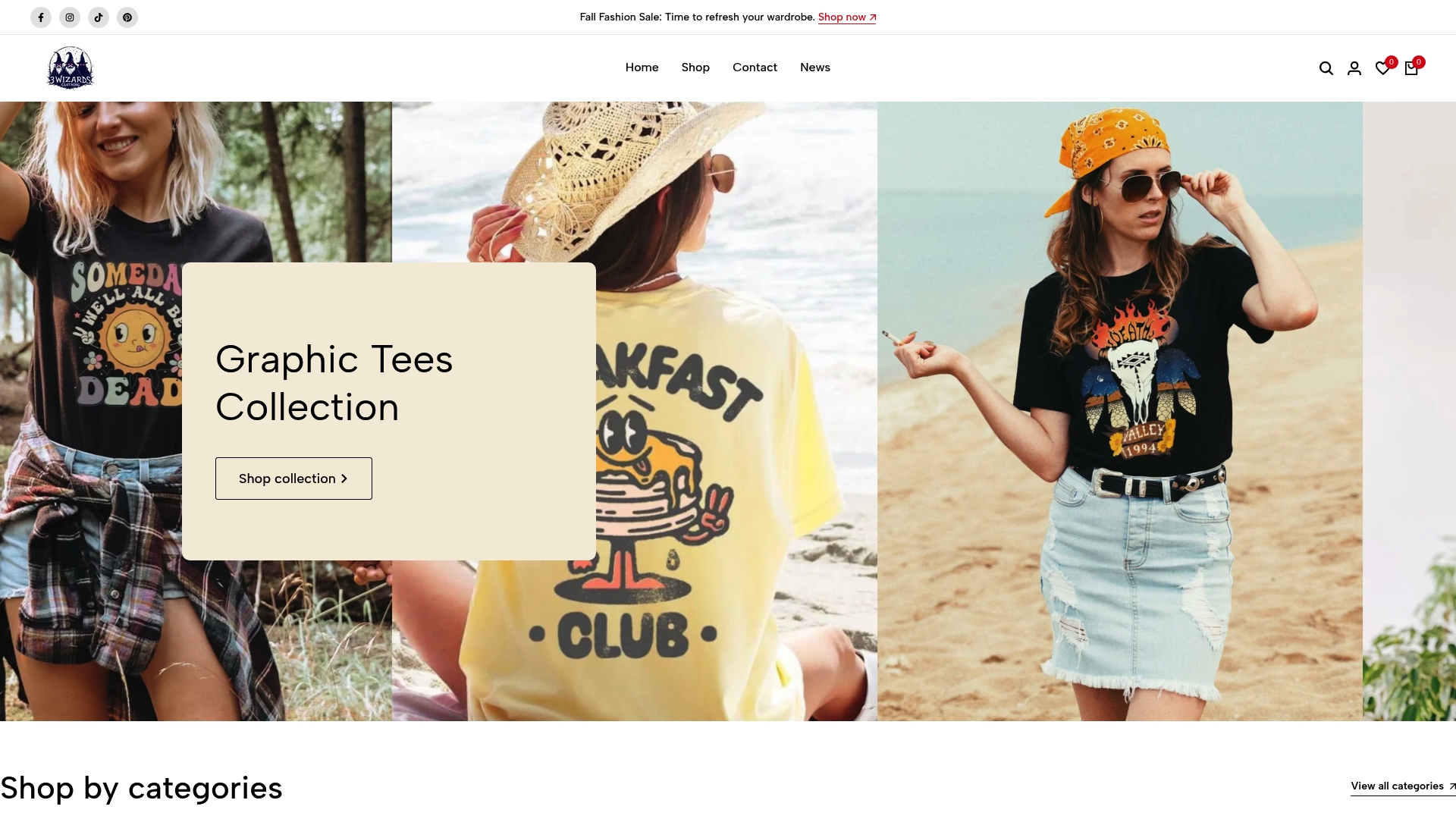
Getting the most from a 3wizardclothing drop is straightforward:
- Sign up for drop alerts so you hear about new collections before they sell through
- Use the wishlist feature to pre-stage pieces ahead of launch day
- Check the size guide before the drop goes live — not during it
- Read the product page for edition details, material specs, and return policy
Browse the current exclusive themed collections and add your picks to your wishlist now.
Sources and further reading
| Source | Why it’s relevant |
|---|---|
| Springer Future Business Journal — Need for Uniqueness & Luxury Fashion | Academic review of the tension between uniqueness and social belonging in exclusive purchase decisions |
| Quantopia — Exclusive Assortment in Retail | Merchandising analysis of how exclusive assortments drive urgency and sell-outs |
| Journal of Marketing Development — AREP Labeling Study | Experimental research on when exclusivity labels help or hurt consumer perception |
| New Waves Kate Shop — Why Boutique Clothing Feels More Exclusive | Practitioner perspective on small-batch production and perceived craftsmanship |
| The Design Agent — Exclusive vs. Non-Exclusive | Production-side explanation of design reuse and what true exclusivity requires |
| Outlandish — Unique Style vs. Trendy | Style-advice perspective linking unique pieces to confidence and intentional wardrobes |
| Vintage Metal Store — Why Limited Run Shirts Are Valuable | Collector-focused analysis of limited-run shirt value and resale appeal |


