

TL;DR:
- Retailers use themed apparel to connect clothing with cultural moments and fandoms, boosting sales and loyalty. They leverage licensed collaborations and narrative collections to create meaningful, collectible products that resonate with passionate communities.
Themed apparel is a strategic merchandising category that retailers use to connect clothing with consumer passions, cultural moments, and fandom identities. The practice goes far beyond printing a logo on a t-shirt. Retailers from Walmart to Target now treat themed clothing as a tool for reaching new customer segments, commanding higher price points, and generating the kind of social buzz that paid advertising rarely delivers. Understanding why retailers offer themed apparel means understanding how modern shoppers decide what to buy and who to buy it from.
Why do retailers offer themed apparel?
Themed apparel works because it turns a commodity into a cultural statement. A plain hoodie competes on price. A hoodie tied to a beloved IP, a seasonal moment, or a fandom identity competes on meaning. Retailers recognize that meaning drives both purchase decisions and brand loyalty in ways that generic product lines cannot.
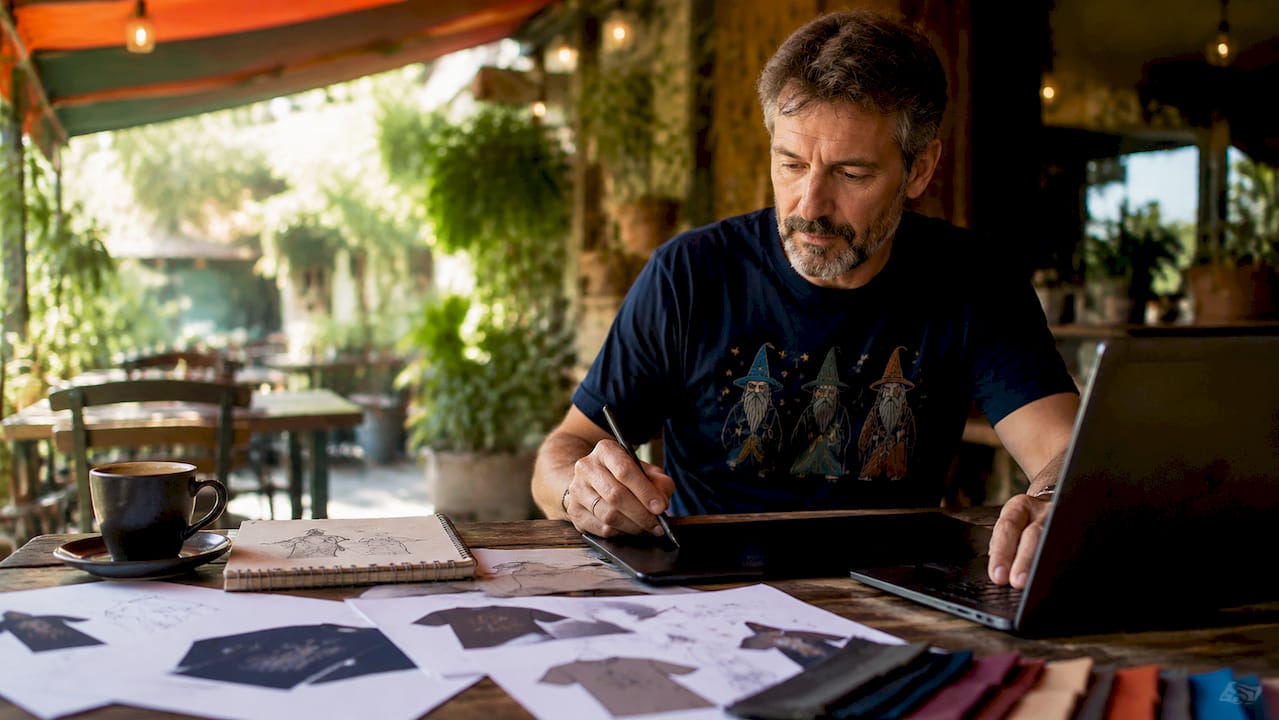
The industry term for this approach is licensed or IP-driven merchandise, though the broader category includes seasonal collections, celebrity collaborations, and narrative-driven drops. All of these share the same core mechanic: clothing becomes a vehicle for identity expression rather than just utility.
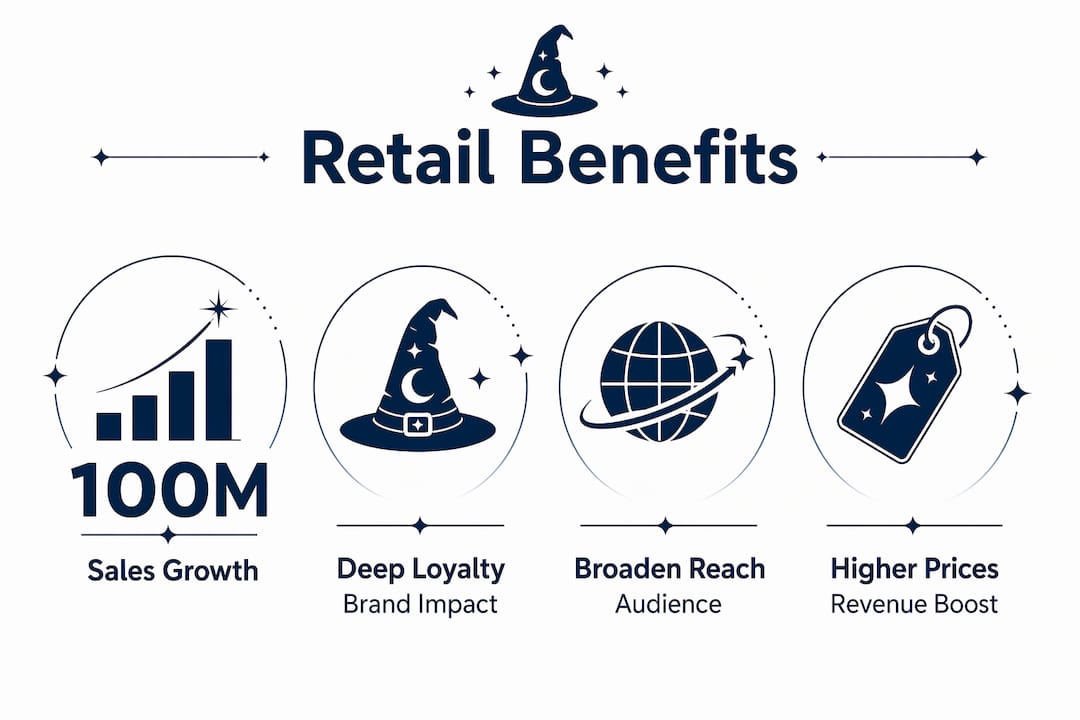
Retailers like Target and Walmart have built entire collaboration pipelines around this insight. The retail benefits of themed clothing show up quickly in sales data, foot traffic, and repeat visits. The strategy works across price tiers, demographics, and retail formats, from mass market to specialty boutique.
How do IP collaborations and fandom targeting boost retailer reach?
IP collaborations give retailers direct access to pre-built audiences. A retailer launching a Disney collection does not need to build awareness from scratch. Disney’s existing fanbase arrives with emotional investment already in place.
The results can be dramatic. A beauty and fashion partner’s e-sports fandom launch generated sales exceeding 100 million won within 11 days. That speed reflects how fandom audiences respond to products that feel made specifically for them. CJ OnStyle’s collaboration with Disney, timed to The Devil Wears Prada 2 film release, combined narrative styling with merchandise to create a full retail experience rather than a simple product drop.
Target has turned IP collaborations into a repeatable growth engine. The retailer’s themed partnerships with Roller Rabbit, Parke, and Pokémon drove $6 million in sales within a single hour on multiple occasions. Lines formed outside stores before opening. That level of consumer urgency does not happen with standard seasonal inventory.
Pro Tip: When evaluating an IP collaboration, look beyond the fandom’s size. A smaller, deeply passionate community often outperforms a large but casual audience in both conversion rate and social sharing.
The most effective fandom-driven collections go beyond surface-level logos. BoxLunch’s approach to licensed product design prioritizes embedding the source material’s spirit into wearable, daily-use garments rather than producing promotional merchandise that consumers wear once. That distinction separates collectible pieces from forgettable ones.
What role does price positioning play in themed apparel strategies?
Themed collections give retailers a credible reason to move shoppers into higher price brackets. Without a compelling narrative or cultural hook, asking a price-sensitive shopper to spend more feels arbitrary. With the right collaboration, it feels justified.
Walmart demonstrated this clearly. Before its celebrity and IP collaborations, 60% of shoppers limited their apparel spending to $15 or less. The retailer introduced themed collections priced between $16 and $54, using collaborations with Megan Thee Stallion and The Devil Wears Prada franchise to reposition its fashion credibility. That shift moved real spending behavior, not just brand perception.
Three pricing mechanics make themed apparel collections work:
- Anchor pricing. A collaboration with a recognized IP justifies a price point that generic product cannot. Shoppers accept $40 for a Pokémon hoodie more readily than $40 for an unbranded equivalent.
- Limited-time urgency. Scarcity removes the option to wait for a sale. When a collection disappears, so does the chance to own it at any price.
- Tiered entry points. Offering items from $16 to $54 within the same collection lets retailers capture both casual buyers and committed fans without alienating either group.
| Pricing approach | Consumer behavior shift | Retailer benefit |
|---|---|---|
| IP-anchored pricing | Willingness to spend above habitual ceiling | Higher average order value |
| Limited-time drops | Urgency replaces price comparison | Faster sell-through, less markdown |
| Tiered collections | Broader audience capture | Increased basket size per visit |
Walmart’s collaboration with Megan Thee Stallion expanded from swimwear into a full lifestyle line, showing how a single celebrity partnership can anchor an entire category repositioning effort.
How do themed collections create cultural fluency and brand loyalty?
Themed apparel does something traditional advertising cannot: it makes the consumer the medium. A person wearing a limited-edition collection becomes a walking signal of cultural awareness. That visibility builds brand equity in ways that a billboard cannot replicate.
Industry experts now describe merch as a strategic engagement platform rather than a sales tactic. The distinction matters. A tactic generates a transaction. A platform generates ongoing relationships. Retailers who treat themed apparel as a platform build communities around their brand rather than just catalogs.
The data on consumer motivation supports this view:
- 80% of consumers identify fandoms as a source of joy in their lives.
- 42% of consumers say fandoms give them a sense of belonging.
- Limited-edition drops from brands like McDonald’s, whose Grinch socks made the retailer a top sock seller for a full week, generate social media momentum that paid campaigns rarely match.
Gen Z and Millennial shoppers respond most strongly to this mechanic. Both groups treat clothing as identity communication. A themed drop that aligns with their cultural references signals that a retailer understands them. That signal builds trust faster than any loyalty points program.
“Limited-time themed collaborations are compelling enough to create physical store lines before opening and generate sustained shopper excitement throughout the year.” — Target CEO Michael Fiddelke
Retailers who align their themed apparel for families with trending cultural moments capture this excitement across multiple demographics at once.
How is narrative-driven apparel reshaping fashion retail?
The newest frontier in themed apparel is collections that tell a story across multiple pieces. Anime-inspired streetwear collections use garment design to communicate story arcs, character development, and world-building. Each piece functions as a chapter. Owning the full set means owning the narrative.
This approach changes how consumers relate to clothing. A single graphic tee is a purchase. A narrative collection is an investment. Narrative-driven drops show stable or increased resale values compared to typical apparel depreciation. That resale stability attracts a different kind of buyer: one who thinks about long-term value rather than seasonal trends.
Pro Tip: Narrative collections work best when the story is legible to someone unfamiliar with the source material. If the design only makes sense to hardcore fans, the commercial ceiling drops significantly.
| Collection type | Consumer holding period | Resale value trend |
|---|---|---|
| Standard seasonal apparel | 1–2 seasons | Depreciates quickly |
| Logo-based licensed merch | 1–3 seasons | Moderate depreciation |
| Narrative-driven themed drops | Multi-year | Stable or appreciating |
Cultural authenticity separates narrative collections that build lasting loyalty from those that feel like cash grabs. Effective themed apparel embeds the source material’s spirit into wearable design rather than applying surface decoration. Shoppers who care deeply about the source material will reject anything that feels disrespectful to it. Retailers who get this right earn a level of brand affinity that generic product lines cannot generate.
The consumer motivations behind themed clothing consistently point to expression, community, and celebration. Narrative collections satisfy all three simultaneously.
Key Takeaways
Retailers offer themed apparel because it converts cultural relevance into measurable sales growth, deeper brand loyalty, and access to consumer segments that standard product lines cannot reach.
| Point | Details |
|---|---|
| IP collaborations accelerate reach | Partnering with established fandoms delivers pre-built audiences and rapid early sales. |
| Price positioning shifts spending | Themed collections justify higher price points and move shoppers past habitual spending ceilings. |
| Cultural fluency builds loyalty | Themed drops signal brand relevance to Gen Z and Millennials, creating community beyond transactions. |
| Narrative collections hold value | Story-driven apparel shows stable resale value and longer consumer holding periods than standard seasonal lines. |
| Authenticity determines success | Collections that embed source material’s spirit outperform surface-level logo applications in both sales and loyalty. |
The real reason themed apparel keeps winning
I have watched retailers chase trends for years, and most of them get themed apparel wrong in the same way. They treat it as a decoration decision rather than a relationship decision. They pick a popular IP, slap it on existing product, and wonder why the results are mediocre.
The retailers who consistently win with themed apparel think about it differently. They ask: what does this community actually care about, and how do we make something worthy of that care? Target’s Pokémon collaboration worked not because Pokémon is popular, but because the product felt like it was made by people who understood what Pokémon means to its fans.
The shift toward narrative-driven collections is the most interesting development I see heading into the next few years. Shoppers are getting more sophisticated. They can tell the difference between a brand that studied the source material and one that just licensed the logo. That sophistication will keep raising the bar for what counts as a credible themed collection.
My honest prediction: retailers who invest in cultural research before design will separate themselves from those who rely on IP name recognition alone. The fandom audience is loyal, but it is also unforgiving. Get the story right, and they will buy everything you make. Get it wrong, and they will tell everyone.
— Josh
Explore themed apparel collections at 3wizardclothing
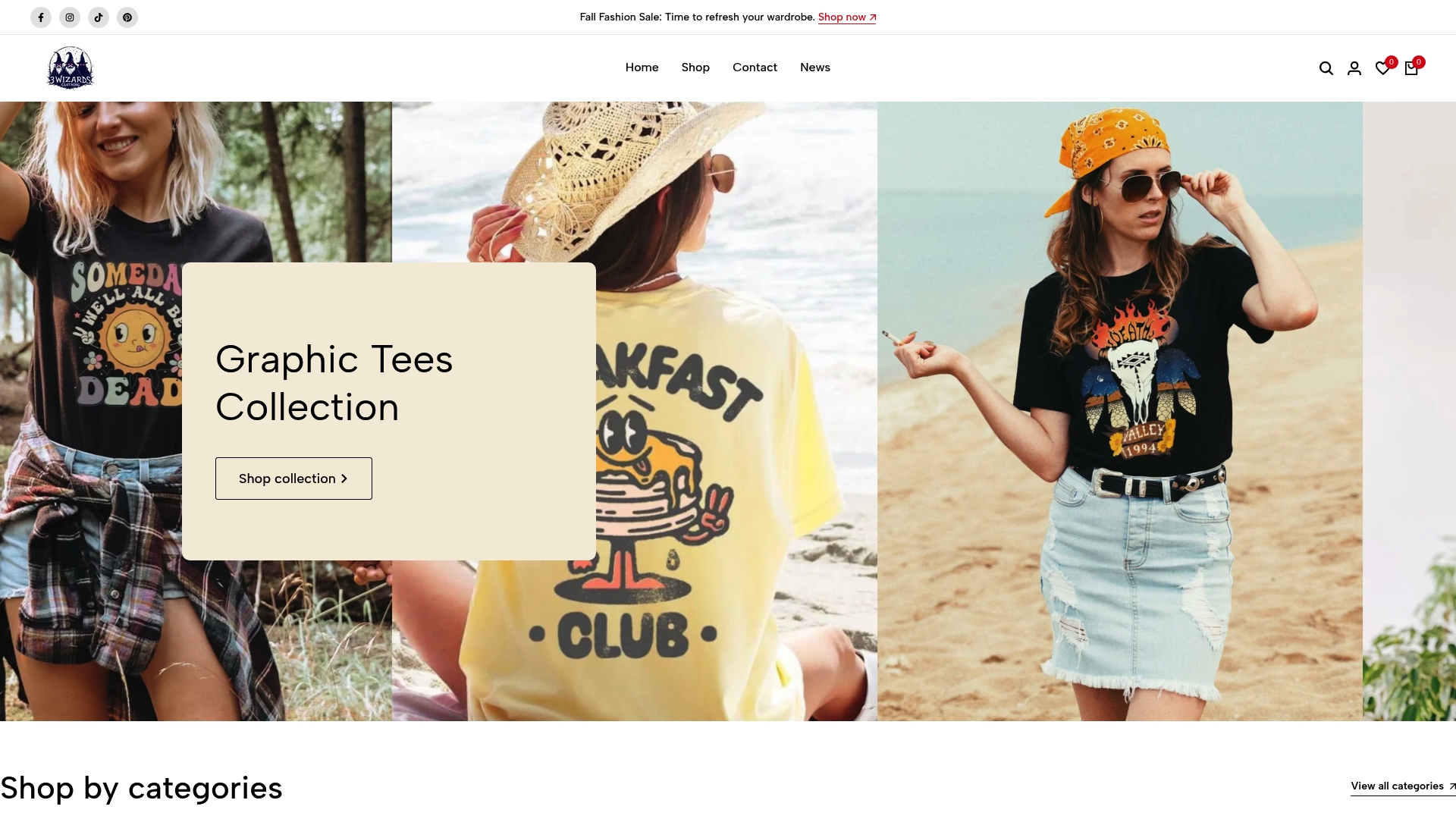
3wizardclothing builds themed apparel collections that go beyond seasonal decoration. From Halloween drops to nerdy graphic tees and fandom-inspired hoodies, every collection is designed to connect with the people who actually care about the theme. Retailers and shoppers looking for apparel that carries real cultural weight will find it across the men’s, women’s, and kids’ categories on the site. Browse the full range of graphic and themed collections at 3wizardclothing, or explore the team apparel design tips that apply directly to building a themed line that resonates.
FAQ
Why do retailers use IP collaborations for themed apparel?
IP collaborations give retailers instant access to passionate, pre-built audiences. A targeted e-sports fandom launch generated over 100 million won in sales within 11 days, showing how quickly fandom-driven themed apparel converts.
What makes limited-edition themed drops so effective?
Scarcity removes the option to wait, which eliminates price comparison behavior. Target’s themed drops generated $6 million in sales within a single hour and created lines outside stores before opening.
How does themed apparel shift consumer spending habits?
Themed collections provide a cultural justification for higher price points. Walmart used celebrity and IP collaborations to move shoppers who previously spent $15 or less into a $16 to $54 price range.
What is narrative-driven themed apparel?
Narrative-driven apparel uses garment design to tell a story across multiple pieces, creating collectible sets rather than individual items. These collections show stable or appreciating resale values compared to standard seasonal apparel.
Which consumer groups respond most to themed apparel?
Gen Z and Millennial shoppers respond most strongly to themed drops. Research shows 80% of consumers identify fandoms as a source of joy, and 42% say fandom communities give them a sense of belonging.
Recommended
- Guide to themed apparel for families and trendsetters – 3 Wizard Clothing
- Role of themed clothing: a guide for families and trendsetters – 3 Wizard Clothing
- Creative t-shirt trends in 2026: top styles & tips – 3 Wizard Clothing
- What Is Themed Apparel? Trends, Quality, and How to Choose – 3 Wizard Clothing


