

You might assume that any cotton graphic tee is automatically eco-friendly, but the reality is more complex. A typical cotton T-shirt generates about 1.37 kg CO2e before it even reaches store shelves, with over 60% of emissions coming from fabric production alone. So what does it really mean for graphic clothing to be sustainable? It’s not just about the fiber, it’s about the entire lifecycle, from materials and printing methods to how long you wear it. This guide breaks down the key factors that make graphic apparel genuinely sustainable, helping you spot real eco-credentials and avoid greenwashing.
Table of Contents
- Understanding sustainable graphic clothing
- What makes graphic tees sustainable?
- The environmental footprint of graphic clothing
- Printing methods: DTG vs. screen printing
- Longevity and caring for your sustainable graphic tees
- Ready to build a sustainable graphic wardrobe?
- Frequently asked questions
Key Takeaways
| Point | Details |
|---|---|
| Definition clarified | Sustainable graphic clothing uses eco-friendly materials, fair processes, and thoughtful printing for lower impact. |
| Certifications matter | Trusted third-party labels help navigate greenwashing, but demand transparency and harmonized scores. |
| Lifecycle impact counts | Most emissions come from fabric production and dyeing, so fiber choices and longevity are crucial. |
| Print methods differ | DTG and screen printing each have environmental pros and cons; prefer eco-inks and lasting designs. |
| Care extends impact | Proper maintenance and repair maximize the sustainability of each tee by lengthening its wear. |
Understanding sustainable graphic clothing
Sustainable graphic clothing refers to apparel featuring printed designs that minimize environmental harm and support fair social standards throughout production. It’s a holistic concept that goes beyond simply choosing organic cotton. True sustainability considers material sourcing, manufacturing processes, product longevity, and even the message conveyed through the design itself.
Three core dimensions define sustainable graphic clothing. First, material choice matters tremendously. Organic fibers, recycled content, and responsible blends form the foundation. Second, production methods must reduce water use, chemical discharge, and energy consumption. Third, the garment should be built to last, because durability directly impacts lifetime environmental cost.
Leading sustainability frameworks help measure these factors objectively. Tools like LCA (PEFCR apparel), multicriteria indexes, and Higg Index evaluate environmental, social, and durability performance across the supply chain. These systems provide standardized benchmarks that allow meaningful comparisons between products.
Key criteria for sustainable graphic clothing include:
- Material transparency: Clear disclosure of fiber content and sourcing practices
- Low-impact production: Reduced water, energy, and chemical use during manufacturing
- Fair labor standards: Safe working conditions and living wages throughout the supply chain
- Design longevity: Timeless graphics and quality construction that encourage extended wear
- End-of-life planning: Recyclability or biodegradability considerations
When you choose graphic tee design that aligns with these principles, you’re supporting a system that values both planet and people. The expression through graphic clothing becomes more meaningful when the garment itself reflects your environmental values.
What makes graphic tees sustainable?
Identifying truly sustainable graphic tees requires looking beyond marketing buzzwords. The foundation starts with fiber choice. Organic cotton eliminates synthetic pesticides and fertilizers, while recycled polyester diverts plastic waste from landfills. Blends combining these materials often provide the best balance of environmental benefit and garment durability.
Certifications offer helpful guidance, but they’re not foolproof. GOTS (Global Organic Textile Standard) verifies organic fiber content and processing standards. Fair Trade certification ensures ethical labor practices. Oeko-Tex confirms the absence of harmful chemicals. However, greenwashing is common, with 300+ certifications but no harmonized standard yet, making it easy for brands to cherry-pick credentials that sound impressive without delivering comprehensive sustainability.
Emerging tools are helping combat this confusion. Harmonized scoring systems and digital product passports provide transparent lifecycle data, allowing shoppers to compare environmental footprints directly. These innovations make it harder for brands to hide behind vague eco-claims.
Printing and finishing processes significantly affect sustainability too. Water-based inks contain fewer volatile organic compounds than plastisol alternatives. Low-impact dyes reduce chemical discharge. Energy-efficient curing methods lower carbon emissions. The industry benchmarks for these processes continue evolving as technology improves.
Comparison of sustainable fiber options:
| Fiber Type | Environmental Benefit | Durability | Best Use Case |
|---|---|---|---|
| Organic cotton | No synthetic pesticides, better soil health | Good | Soft, breathable everyday tees |
| Recycled polyester | Diverts plastic waste, lower energy than virgin | Excellent | Performance blends, moisture-wicking |
| Hemp | Low water use, minimal inputs | Very good | Structured, textured designs |
| Tencel/Lyocell | Closed-loop processing, renewable source | Good | Drapey, premium feel |
| Blends (80/20 organic/recycled) | Balanced impact and longevity | Excellent | High-wear graphic tees |
Pro Tip: Don’t assume a single certification tells the whole story. Look for brands that combine multiple verified standards and provide detailed supply chain information. Transparency is often the best indicator of genuine commitment.
Understanding why graphic tees are popular helps you recognize which designs will stay relevant longer, reducing the temptation to replace them frequently.
The environmental footprint of graphic clothing
The lifecycle of a graphic tee creates environmental impact at every stage. Fabric production is responsible for 60%+ of total emissions, with additional hotspots in spinning, dyeing, and finishing. Transportation, retail, and end-of-life disposal add further burden.

Carbon emissions represent just one dimension of impact. Water consumption is staggering, particularly for conventional cotton cultivation. A single cotton tee can require 2,700 liters of water from field to finished product. Chemical discharge from dyeing and finishing pollutes waterways, affecting ecosystems and communities downstream.
Recycled blends offer measurable improvements. Studies show recycled polyester blends can achieve 30-74% lower Higg Index scores compared to virgin materials. This reduction comes from avoiding extraction and initial processing of raw materials, which are among the most energy-intensive steps.
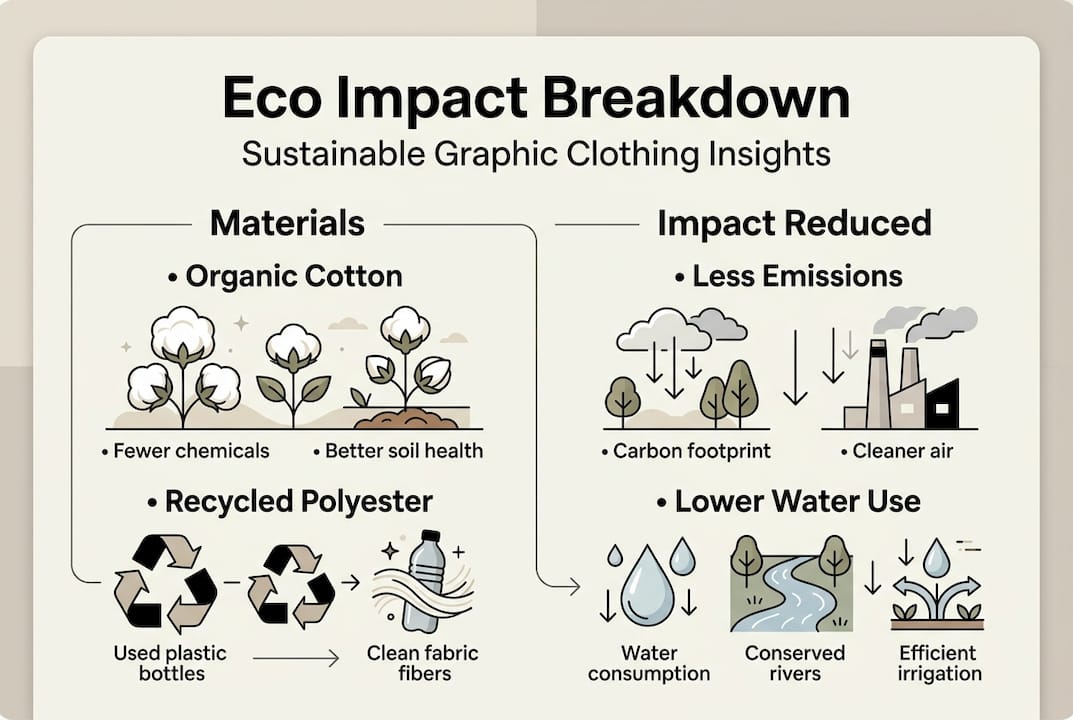
Lifecycle emissions breakdown for a typical cotton graphic tee:
| Lifecycle Stage | CO2e Contribution | Key Impact Factors |
|---|---|---|
| Fiber production | 45-50% | Cultivation, irrigation, pesticides |
| Fabric manufacturing | 15-20% | Spinning, weaving, energy use |
| Dyeing and finishing | 10-15% | Chemical use, water heating, discharge |
| Printing | 5-8% | Ink production, curing energy |
| Transportation | 8-12% | Shipping distance, mode of transport |
| Retail and use | 5-10% | Washing, drying, ironing |
| End of life | 2-5% | Disposal method, recycling rate |
Short product lifespans dramatically worsen these numbers. When a graphic tee lasts only one season before being discarded, its annual environmental cost skyrockets. Doubling garment life effectively cuts the yearly impact in half.
Key factors affecting total footprint:
- Material sourcing: Organic and recycled fibers reduce initial impact
- Production efficiency: Modern facilities with renewable energy lower emissions
- Print durability: Long-lasting graphics prevent premature replacement
- Consumer behavior: Washing frequency and temperature affect use-phase impact
- Disposal pathway: Recycling or composting beats landfill
When you consider gifting graphic tees sustainably, choosing quality over quantity becomes even more important. The same principle applies to youth style and sustainability, where durable designs can grow with changing tastes.
Printing methods: DTG vs. screen printing
The printing technique used on your graphic tee significantly influences its environmental profile and longevity. Two dominant methods, direct-to-garment (DTG) and screen printing, each have distinct sustainability characteristics.
DTG printing uses specialized inkjet technology to apply water-based inks directly onto fabric. DTG is efficient for small runs, making it ideal for custom designs, limited editions, or on-demand production. This approach eliminates setup waste and reduces inventory risk. When paired with eco-friendly inks on organic fabrics, DTG represents one of the most sustainable printing options available.
Screen printing involves creating stencils (screens) for each color, then pushing ink through the mesh onto fabric. While setup requires more resources, screen printing becomes highly efficient for large production runs. Traditional plastisol inks contain PVC and phthalates, but water-based alternatives offer a cleaner option. Screen-printed graphics typically show superior durability, withstanding more wash cycles without fading or cracking.
Printing method comparison:
| Factor | DTG Printing | Screen Printing |
|---|---|---|
| Best for | Small batches, complex designs | Large runs, simple graphics |
| Setup waste | Minimal | Higher (screens, setup ink) |
| Ink options | Water-based standard | Water-based or plastisol |
| Energy use | Moderate (per unit) | Lower (at scale) |
| Print durability | Good (20-30 washes) | Excellent (50+ washes) |
| Color complexity | Unlimited | Cost increases with colors |
| Fabric compatibility | Works best on cotton | Versatile across fabrics |
Both methods have evolved significantly. Modern DTG machines use less energy and produce less waste than earlier generations. Screen printing facilities increasingly adopt water-based inks and closed-loop water systems. Digital product passports are emerging as tools to document these production choices, giving consumers unprecedented visibility into manufacturing decisions.
Print durability matters more than many shoppers realize. A graphic that fades after ten washes forces replacement, multiplying the environmental cost. Choosing printing methods known for longevity reduces total lifecycle impact.
Pro Tip: Ask brands about their printing process and ink types. Companies committed to sustainability will readily share this information. If details are vague or unavailable, that’s often a red flag.
Proper care for printed tees extends the life of any printing method, but starting with durable prints gives you a significant advantage.
Longevity and caring for your sustainable graphic tees
Buying sustainable graphic clothing is only the first step. How you care for and wear these garments determines their true environmental impact. Durability is a critical factor for lower lifetime impact, making maintenance practices essential to maximizing sustainability.
Extending garment life requires intentional habits:
-
Wash less frequently: Spot-clean minor marks instead of washing after every wear. Most graphic tees can be worn 2-3 times between washes unless visibly soiled or sweaty.
-
Use cold water: Hot water fades prints faster and consumes more energy. Cold water cleans effectively for most situations and preserves both fabric and graphics.
-
Turn inside out: This simple step protects printed designs from abrasion during washing, significantly extending their vibrancy.
-
Air dry when possible: Dryer heat degrades both fabric and prints. Line drying or flat drying preserves garment shape and graphic integrity while eliminating energy use.
-
Store properly: Fold graphic tees rather than hanging them to prevent shoulder stretching. Keep them away from direct sunlight, which can fade colors over time.
-
Repair minor damage: Small holes or loose seams are easily fixed. Learning basic mending skills or visiting a tailor costs far less environmentally than buying replacements.
Mindful wearing habits matter too. Rotating your wardrobe prevents excessive wear on favorite pieces. Choosing appropriate garments for activities reduces unnecessary damage. A beloved graphic tee worn carefully for five years has one-fifth the annual environmental cost of a similar tee replaced yearly.
Seek out brands that support longevity. Companies offering repair services, care instructions, or take-back programs demonstrate commitment beyond the initial sale. These services help you maximize the value and minimize the impact of every purchase.
Pro Tip: Create a “favorites” rotation of 5-7 graphic tees rather than wearing the same one repeatedly. This approach extends the life of each piece while keeping your style fresh.
The graphic tee buying guide can help you select pieces built to last, making your care efforts even more effective.
Ready to build a sustainable graphic wardrobe?
Now that you understand what makes graphic clothing truly sustainable, it’s time to put that knowledge into action. At 3 Wizard Clothing, we’re committed to offering graphic apparel that balances style, quality, and environmental responsibility. Our collections feature durable prints on quality fabrics designed to become wardrobe staples, not disposable fashion.
Whether you’re drawn to humorous designs, seasonal themes, or expressive graphics that reflect your values, choosing pieces built to last makes every purchase more sustainable. Browse our curated selection of graphic tees, hoodies, and tank tops that combine creative design with construction quality. When you invest in garments you’ll love wearing for years, you’re making a choice that benefits both your style and the planet.
Frequently asked questions
What materials are best for sustainable graphic t-shirts?
Organic cotton, recycled polyester, and blends like 80% organic cotton/20% recycled poly offer the best combination of environmental benefit and durability. These materials reduce resource extraction while providing the strength needed for extended wear.
How can I avoid greenwashing when shopping for graphic clothing?
Look for specific certifications like GOTS or Fair Trade, demand transparent supply chain information, and be skeptical of vague eco-claims. Greenwashing risks with over 300 certifications make detailed disclosure more valuable than generic green marketing.
Is DTG or screen printing more sustainable?
DTG for small runs, screen for larger batches typically offers the best environmental profile. DTG minimizes waste for custom orders, while screen printing with water-based inks becomes efficient at scale and provides superior durability.
Does wearing a tee longer really reduce its environmental impact?
Absolutely. Durability is linked to lower lifetime impact because the original production emissions and resource use get spread across more years of wear. Doubling garment life cuts annual environmental cost in half.
What role does graphic design play in sustainable clothing?
Graphics that promote environmental awareness or reflect personal values encourage longer wear by creating emotional connection. Timeless designs resist trend cycles, reducing replacement frequency and total lifecycle impact.


