

TL;DR:
- Fall-themed apparel features earth-tone palettes, tactile fabrics, and seasonal motifs that embody autumn’s style. It combines functional layering pieces with visually seasonal garments, often emphasizing contrasting textures and versatile, investment-quality outerwear and footwear. Building a capsule wardrobe with 10 to 15 multipurpose items enhances layered, expressive fall outfits rich in texture and seasonal detail.
Fall-themed apparel is clothing designed to embody the colors, textures, and layering needs of the autumn season while staying functional across unpredictable temperatures. In the fashion industry, this category is more formally called seasonal apparel, and it spans everything from chunky knit sweaters and plaid flannels to graphic tees printed with pumpkins, leaves, and harvest motifs. What sets fall-themed apparel apart from other seasonal clothing is the deliberate combination of rich earth-tone palettes, tactile fabrics, and design elements that visually signal the season. Whether you are building a full autumn wardrobe or just adding a few cozy fall apparel pieces, understanding what defines this category makes every purchase more intentional.
What is fall-themed apparel, exactly?
Fall-themed apparel covers two distinct but overlapping categories. The first is climate-functional clothing: pieces engineered for cooler, variable weather through layering, insulation, and breathable fabrics. The second is aesthetic-seasonal clothing: garments that communicate autumn through color, print, or motif, such as a hoodie printed with falling leaves or a tee featuring a pumpkin patch scene.
Most strong fall outfits combine both categories. A graphic tee with a harvest print worn under a wool-blend cardigan is functional and visually seasonal at the same time. This dual purpose is what makes autumn clothing styles so satisfying to build around. You get warmth, versatility, and a clear seasonal identity in a single outfit.
The motifs most associated with fall-inspired clothing include plaid patterns, leaf prints, pumpkins, woodland animals, and harvest imagery. These designs appear across every garment type, from kids’ sweatshirts to women’s graphic tees, and they are a core part of what 3wizardclothing specializes in through its seasonal collections.
Core styles and colors that define fall fashion
The color palette is the fastest way to identify fall-themed apparel. Rich earth tones like burgundy, olive, and chocolate brown function as “advanced neutrals,” meaning they coordinate with nearly everything in a fall wardrobe. These colors appear richer under the softer, cooler daylight of autumn than they would in summer sun, which is why they feel so at home in the season. Bright colors like coral or lime green, by contrast, look flat and out of place against fall’s muted natural backdrop.
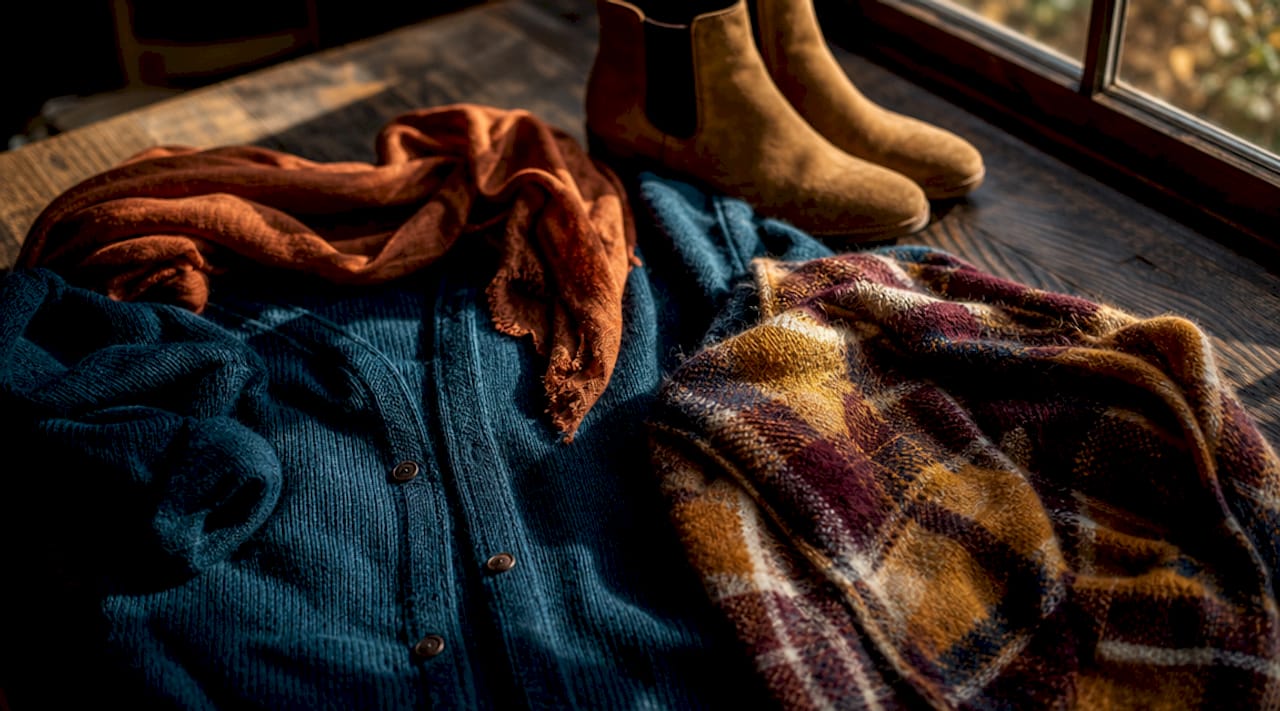
Beyond color, texture is the defining quality of fall fashion essentials. The most visually sophisticated autumn outfits combine contrasting materials rather than relying on a single fabric. Pairing a smooth leather jacket with a chunky wool sweater, or a satin blouse with a tweed skirt, creates depth that an all-cotton look simply cannot achieve. Texture variety is what separates a flat, forgettable outfit from one that reads as intentional and polished.
Key fabrics for autumn wear
- Wool and wool blends: Provide natural insulation and hold structure well. Ideal for sweaters, coats, and cardigans.
- Suede and leather: Add visual weight and a premium feel. Work best as outerwear or footwear.
- Cotton-poly blends: Offer breathability with added warmth. The standard for graphic tees and casual layering pieces.
- Fleece: Delivers warmth without bulk, making it a practical choice for mid-layers and hoodies.
- Knits: Cover everything from lightweight ribbed turtlenecks to heavy cable-knit pullovers, giving you range across temperature drops.
Pro Tip: Start building your fall color palette from the bottom up. Choose boots or shoes in a neutral earth tone first, then build the rest of the outfit around that anchor color. This prevents mismatched palettes and makes getting dressed faster.
How to build a versatile fall wardrobe
A capsule wardrobe approach, recommended by fashion editors at ELLE and Glamour, focuses on 10 to 15 multipurpose essentials that coordinate with each other across work, travel, and casual occasions. The goal is maximum outfit combinations from a minimal number of pieces. For fall, this means choosing items that layer well, hold up across multiple wears, and transition from a Saturday hike to a Tuesday office meeting without much effort.
Here is a practical sequence for assembling your fall wardrobe must-haves:
- Anchor outerwear first. A trench coat or barn jacket sets the tone for every outfit underneath it.
- Add a mid-layer knit. A neutral cardigan or crew-neck sweater works over tees and under coats.
- Choose two bottom options. Straight-leg jeans and one tailored trouser cover most occasions.
- Select versatile tops. Button-down shirts and graphic tees in fall colors form the base of daily outfits.
- Invest in footwear. Ankle boots are the single most versatile fall shoe. They work with denim, skirts, and trousers equally well.
- Add one statement piece. A plaid blazer, a faux-fur vest, or a printed scarf gives the wardrobe personality.
Investment versus accessible pieces
Not every item in your fall wardrobe needs to be expensive. Building a versatile fall wardrobe means balancing investment pieces with accessible ones. Premium leather boots in the $300+ range will outlast three seasons of budget alternatives. A cotton-blend graphic tee at $30 to $50 is a seasonal expression piece that you replace as trends shift. Spend more on items that take physical wear, like boots and outerwear, and less on items that carry visual interest, like printed tees and scarves.
| Piece | Spend level | Why it matters |
|---|---|---|
| Leather or ankle boots | Invest ($200+) | Daily wear demands durability; quality pays off over multiple seasons |
| Outerwear (trench, barn jacket) | Invest ($150+) | Anchors every outfit; visible in all conditions |
| Knitwear (sweaters, cardigans) | Mid-range ($50–$120) | Core layering piece used constantly throughout the season |
| Graphic tees and casual tops | Accessible ($20–$60) | Seasonal expression; replace as motifs and trends evolve |
| Scarves and accessories | Accessible ($15–$50) | High visual impact at low cost; easy to update yearly |
Pro Tip: When shopping for fall capsule pieces, check the family fall checklist from 3wizardclothing to make sure you are covering every member of the household without doubling up on redundant items.
Comparing fabrics and printing techniques for fall apparel
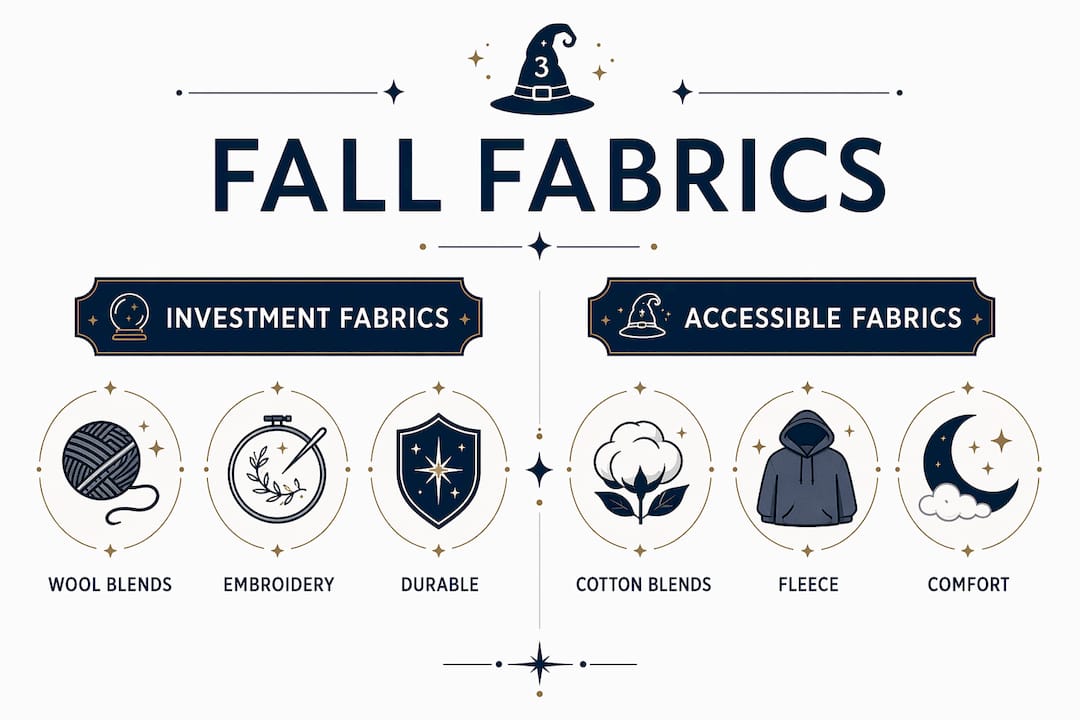
Fabric choice directly affects how a fall garment performs and how well it holds a printed design. Cotton blends like 60/40 cotton-poly offer the best balance of breathability and warmth for transitional weather, and they are the standard substrate for screen-printed graphic apparel. Fleece crew sweatshirts, like the Gildan 64000 series, provide warmth without bulk and accept screen printing cleanly, making them a go-to for seasonal graphic designs.
Wool blends occupy the premium end of the fall fabric spectrum. Embroidery on wool turtlenecks elevates a garment from casual to upscale, and the material’s natural texture adds visual richness that printed cotton cannot replicate. The trade-off is cost and care requirements. Wool pieces need more careful laundering and cost significantly more than cotton alternatives.
Printing method comparison for fall graphic apparel
Matching the printing method to the fabric is what determines whether a fall graphic design looks sharp after 30 washes or fades after five.
- Screen printing: Best on cotton and cotton-poly blends. Produces bold, durable designs at scale. Ideal for fall motif tees and hoodies.
- DTF (Direct-to-Film) printing: Works on mixed fabrics and dark garments. Handles complex, multicolor fall designs without color limitations.
- DTG (Direct-to-Garment) printing: Best for premium cotton with photographic-detail designs. Produces softer hand-feel prints but requires high-quality fabric to perform well.
A common mistake in transitional-season apparel is choosing a fabric that is too heavy for early fall or too light for late October. A mid-weight cotton-poly blend at 5.3 to 6 oz per square yard covers the widest temperature range and works with all three printing methods above.
Styling tips and seasonal apparel trends for 2026
The dominant direction in 2026 fall fashion is maximalist layering blended with preppy classics. This means wearing a button-down shirt under a chunky sweater, adding a structured blazer on top, and finishing with a statement scarf. The look is deliberately layered rather than minimal, and it rewards texture mixing. Fringe, faux fur, and leather details are showing up as accent textures across all price points.
Footwear and outerwear remain the two foundational decisions in any fall outfit. Ankle boots surged in search interest in 2025 and continue to anchor fall looks in 2026 because they sharpen the silhouette of both denim and skirts. Shearling coats add texture and warmth without the stiffness of a structured wool coat. Start your outfit planning with these two pieces before choosing anything else.
For occasion-specific styling, consider the following:
- Casual weekends: Graphic tee with fall motif, straight-leg jeans, ankle boots, and an oversized flannel shirt worn open as a layer. Check out fall graphic tee styling for ideas on making printed pieces the focal point.
- Work settings: Tailored trousers, a ribbed turtleneck, a structured blazer in camel or burgundy, and leather loafers or low-heeled boots.
- Evening events: A satin or velvet top layered under a leather jacket, with dark-wash jeans and heeled ankle boots.
Accessories carry more weight in fall than in any other season. A chunky knit scarf in olive or rust adds color and texture simultaneously. Wide-brim hats in felt or wool extend the season’s visual vocabulary without requiring a full outfit change. For layering graphic apparel specifically, the key is keeping the graphic piece visible as a focal point rather than burying it under too many layers.
Pro Tip: When styling for 2026 trends, pick one maximalist element per outfit and keep everything else simple. One statement texture, like a faux-fur vest or fringe scarf, reads as intentional. Three competing statement pieces read as chaotic.
Key takeaways
Fall-themed apparel succeeds when earth-tone color palettes, mixed textures, and strategic layering work together across a focused set of 10 to 15 versatile pieces.
| Point | Details |
|---|---|
| Color palette is foundational | Burgundy, olive, and chocolate brown coordinate best under autumn’s softer daylight. |
| Texture mixing creates depth | Combine leather, wool, and knits rather than relying on a single fabric for visual interest. |
| Capsule approach saves money | Ten to fifteen multipurpose pieces cover work, casual, and event occasions throughout the season. |
| Invest in footwear and outerwear | These two categories anchor every outfit and justify higher spending for durability. |
| Match fabric to printing method | Screen printing suits cotton blends; DTF handles dark and mixed fabrics for graphic fall designs. |
Why texture is the real secret to fall style
I have spent years watching people build fall wardrobes that look fine in theory but fall flat in practice. The most common reason is a single-fabric wardrobe. Someone buys a great burgundy sweater, dark jeans, and brown boots, all in cotton or denim, and wonders why the outfit feels uninspired. The colors are right. The silhouette is correct. But without contrasting textures, the eye has nowhere to travel.
The deep autumn color palette is genuinely forgiving. Rich earth tones work together almost automatically. But that same forgiving quality means you need texture to create separation and interest. A smooth leather jacket over a cable-knit sweater does more visual work than any color combination can.
My other strong opinion: stop chasing fall trends at the garment level and start chasing them at the accessory level. A $40 scarf in this season’s trending rust or forest green updates a two-year-old outfit instantly. A $300 trendy coat that looks dated in 18 months is a much worse investment. Buy your outerwear in classic silhouettes and neutral earth tones, then use scarves, hats, and graphic tees to carry the seasonal personality. That approach keeps your wardrobe current without requiring a full rebuild every October.
— Josh
Explore fall-themed apparel at 3wizardclothing
Ready to add some autumn personality to your wardrobe without overcomplicating it? 3wizardclothing carries a curated selection of fall-themed graphic tees and seasonal pieces built for exactly this kind of layered, expressive style.
The Hello Autumn Tee features cozy critter and pumpkin patch graphics on a comfortable cotton blend, making it a natural base layer for any casual fall outfit. For a slightly different vibe, the Autumn Vibes Tee delivers the same seasonal energy with a design built for everyday wear. Both pieces are designed to be layered under flannels, cardigans, or open jackets, so they work across the full range of fall temperatures.
FAQ
What is fall-themed apparel?
Fall-themed apparel is clothing designed for the autumn season, combining earth-tone color palettes, tactile fabrics like wool and fleece, and seasonal motifs such as leaves, pumpkins, and plaid patterns. It covers both climate-functional layering pieces and aesthetic-seasonal garments like graphic tees.
What colors are most associated with fall clothing?
Burgundy, olive, and chocolate brown are the core fall colors because they appear richer under autumn’s softer daylight and coordinate easily with each other. These earth tones function as advanced neutrals that form the foundation of most autumn outfits.
How many pieces do you need for a fall capsule wardrobe?
Fashion editors at ELLE and Glamour recommend 10 to 15 multipurpose pieces that coordinate with each other to cover work, casual, and event occasions throughout the season. Prioritize outerwear, knitwear, versatile bottoms, and ankle boots as your core investments.
What fabrics work best for fall apparel?
Cotton-poly blends, wool blends, and fleece are the most practical fabrics for fall because they balance warmth, breathability, and layering capability. Wool blends work best for premium knits and outerwear, while cotton-poly blends are the standard for graphic tees and casual layering pieces.
What are the biggest fall fashion trends for 2026?
The 2026 fall season emphasizes maximalist layering, statement textures like fringe and faux fur, and rich earth-tone palettes paired with preppy classics. Ankle boots and shearling coats anchor most looks, with button-downs layered under chunky sweaters as a signature styling move.


