

Humor in fashion is a multifunctional tool: a creative device, social commentary mechanism, and marketing lever that boosts attention, relatability, and cultural staying power. When it lands, it turns a garment into a conversation. When it misfires, it becomes a case study in brand-safety failures. The distinction usually comes down to craft, timing, and audience fit.
A few things the evidence makes clear:
- WGSN trend forecasting identifies humor as a deliberate engagement strategy during periods of cultural stress, with luxury brands reintroducing light comedy in campaigns to cut through what forecasters call the “attention recession.”
- Harper’s Bazaar reporting on Lyst data shows that meme-ified runway moments can generate 514,000 impressions and a 2,250% spike in page views for a single viral item.
- Scholarly analysis in the European Journal of Humor Research documents humor as a semiotic device in fashion shows, linking performance, spectacle, and audience interpretation across decades.
Humor helps brands when it reflects genuine creative intent and cultural awareness. It hurts them when it reads as a trend-chasing afterthought or stumbles into cultural insensitivity.
Key Takeaways
Humor in fashion works best when it is specific, culturally grounded, and designed with genuine creative intent rather than deployed as a trend-chasing afterthought.
| Point | Details |
|---|---|
| Humor has a long design history | From Schiaparelli’s Surrealism to Moschino’s parody, wit has always been a serious creative tool. |
| Meme culture changed the timing | Gen Z and DTC brands operate on days-not-seasons timelines; runway humor and meme humor follow different rules. |
| Commercial impact is measurable | Viral runway moments can generate 514,000 impressions and a 2,250% spike in page views, per Lyst data. |
| Risks are real and specific | Cultural insensitivity, timing errors, and context collapse are the three most common failure modes. |
| Clear first, witty second | Humor that requires explanation has already failed; legibility is the non-negotiable baseline. |
| Loyalty follows the laugh | Buyers who feel a brand understands their humor return more often and recommend more readily. |
Table of Contents
- The role of humor in fashion: a brief history
- How designers actually build humor into garments and shows
- Why brands deploy humor and when it pays off
- How meme culture and Gen Z brands changed the playbook
- When humor backfires: risks and limits
- How to tell if a humorous idea will actually work
- What research says about humor’s commercial effect
- Where humor in fashion is headed next
- How humor influences buying behavior and brand loyalty
- A perspective on humor and apparel from 3wizardclothing
- Sources
The role of humor in fashion: a brief history
Fashion’s relationship with wit goes back further than slogan tees and Instagram memes. The Surrealists of the 1920s and 1930s were the first to treat clothing as a vehicle for absurdist ideas. Elsa Schiaparelli’s lobster dress, created in collaboration with Salvador Dalí around 1937, placed a painted crustacean across the skirt of a white silk evening gown. It was not a joke exactly. It was a provocation, and the distinction matters: Surrealist humor in fashion was always in service of a larger philosophical disruption.
The postwar decades quieted things down. Couture returned to gravity and aspiration. Then punk arrived in the mid-1970s, and Vivienne Westwood turned clothing into a weapon. Her designs mocked the monarchy, the class system, and the fashion industry itself. The humor was corrosive, not charming, and that was the point.
By the 1980s and 1990s, Franco Moschino had turned parody into a full design philosophy. He printed “WAIST OF MONEY” across belts and sent models down the runway in dresses shaped like fast-food packaging. Jean Paul Gaultier used gender-bending silhouettes and theatrical staging to make audiences laugh and think simultaneously. These were not novelty acts. Both designers built lasting houses on the premise that fashion could be funny without being frivolous.
Key eras at a glance:
- 1930s: Schiaparelli and Dalí introduce Surrealist absurdism into haute couture
- 1970s: Punk and Westwood weaponize irony as political critique
- 1980s–90s: Moschino and Gaultier institutionalize parody and theatrical wit
- 2000s–10s: Ironic streetwear and graphic tees bring humor into mass-market casualwear
- 2020s: Meme culture and Gen Z DTC brands make humor a foundational brand identity tactic
How designers actually build humor into garments and shows
The tactics are more deliberate than they look. A garment that makes you laugh usually does so because a designer made a specific choice at a specific point in the creative process, not because something accidentally went sideways.
Common design tactics:
- Slogan tees and text-based humor: The most direct form. The garment says something, and the wearer becomes the punchline or the punchline-deliverer. Katharine Hamnett’s oversized protest tees in the 1980s established the template.
- Logo play and parody: Moschino’s McDonald’s-inspired pieces, Balenciaga’s trash bag clutch, and Marc Jacobs’s Heaven line all use brand recognition as raw material. The joke only works if the audience knows the original.
- Trompe-l’œil: Loewe has made this its signature move. Jonathan Anderson’s team prints hyper-realistic images of everyday objects onto garments, creating a visual double-take. A 2023 collection featured a knit sweater that appeared to have a cat sitting on the wearer’s chest.
- Exaggerated silhouettes: Oversized sleeves, cartoonishly wide shoulders, and proportions that defy the body’s actual geometry create physical comedy. Comme des Garçons has used this for decades.
- Prop and staging direction: The runway itself becomes a comedy set. Moschino’s 2019 show, styled as a puppet theater, dressed models as marionettes. The humor was architectural, built into the show’s entire logic.
Short case studies:
Loewe, Spring/Summer 2023: Jonathan Anderson sent models down the runway in garments printed with trompe-l’œil images of household objects. The collection generated significant editorial coverage and social sharing because the joke required a second look to land.
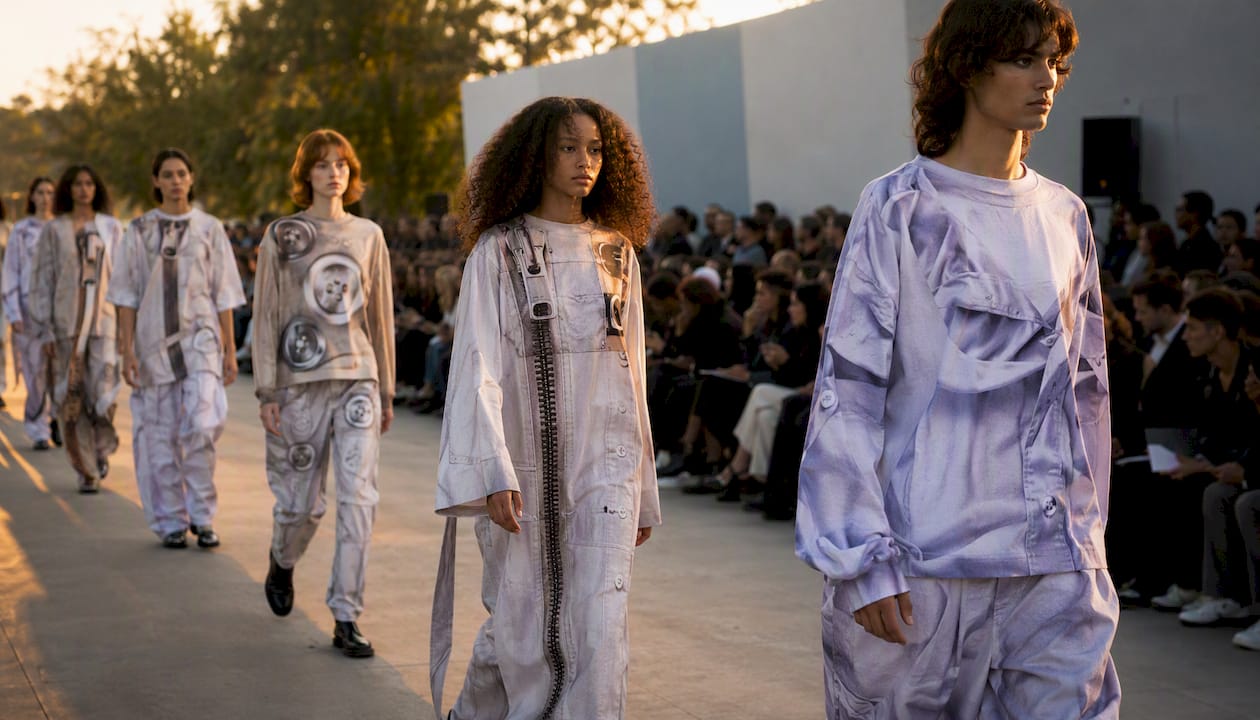
Marc Jacobs, Heaven line: Targeting a Gen Z audience, the Heaven sub-label uses Y2K nostalgia, campy graphics, and deliberately “ugly” aesthetics as humor. The line has become a case study in how a legacy house can speak to a meme-native audience without losing its identity.
Cowboys of Habit: This DTC brand built its entire identity around Western-themed absurdism, using deadpan product descriptions and deliberately over-the-top cowboy imagery to create a community of buyers who share the joke.
Pro Tip: Design intent and accidental meme-ification are two different things. A garment that goes viral because it looks unintentionally funny is not the same as one designed to be funny. The former can embarrass a brand; the latter builds it. Document the creative rationale before launch so the team can respond coherently if the internet decides to weigh in.
Why brands deploy humor and when it pays off
The business case for humor in fashion is stronger than the industry’s historical seriousness would suggest. ELLE’s coverage citing WGSN frames the current moment as a deliberate pivot: luxury brands including Loewe and Marc Jacobs are reintroducing light comedy in campaigns specifically to spark positive emotions and cut through audience fatigue.
The marketing benefits break down into three categories:
- Attention: Humor is a pattern interrupt. In a feed of aspirational imagery, a genuinely funny garment or campaign stops the scroll.
- Virality: A joke is inherently shareable. Meme-focused designs increase shareability and make complex fashion moments relatable to audiences who would otherwise ignore runway coverage.
- Emotional uplift: Positive emotional associations with a brand translate into purchase intent and loyalty. A brand that makes you laugh once has a relationship with you.
The cultural functions run deeper. Humor democratizes luxury by making it legible to people outside the traditional fashion audience. When Balenciaga sells an unusually shaped bag as a joke product, the joke is accessible even to people who will never buy the bag. That accessibility generates cultural currency that money cannot buy directly.
Statistic worth noting: Lyst data cited in Harper’s Bazaar shows a single viral runway moment can produce 514,000 impressions and a 2,250% increase in page views. Those numbers reflect what happens when humor and fashion intersect at exactly the right cultural moment.
Humor also functions as identity signaling. Wearing a garment with a specific joke on it communicates tribal membership. The wearer knows the reference; so does the audience. That shared knowledge creates community, which is something no amount of aspirational photography can manufacture.
How meme culture and Gen Z brands changed the playbook
The runway has always been a controlled environment. A designer decides what is funny, executes it over months, and presents it once to a curated audience. Meme culture operates on the opposite logic: fast, participatory, and impossible to control once it escapes the original context.
Vogue’s reporting on Gen Z designers documents how a new generation of DTC labels uses satire and internet vernacular as foundational brand identity tactics, not as a campaign add-on. These brands are not translating runway humor for a younger audience. They are building from meme logic up.
The audience differences are real:
- Luxury/collector audience: Appreciates wit as craft, rewards conceptual depth, and responds to humor that requires cultural knowledge to decode.
- Meme-native Gen Z audience: Responds to speed, self-awareness, and humor that acknowledges the absurdity of fashion itself. Irony is the baseline, not the exception.
| Where humor appears | Audience | Purpose | Tone and tactic |
|---|---|---|---|
| Runway collections | Luxury clientele, press, collectors | Social commentary, brand positioning | Trompe-l’œil, exaggerated silhouette, parody |
| Brand campaigns | Broad consumer, editorial | Virality, emotional uplift, relatability | Slogan, logo play, self-aware imagery |
| DTC product drops | Gen Z, meme-native consumers | Community building, identity signaling | Satire, internet vernacular, deadpan |
Harper’s Bazaar’s analysis frames meme-ified fashion as an antidote to the industry’s elitism: witty garments make fashion accessible and viral-ready, reaching younger audiences who would otherwise find the whole enterprise alienating.
Pro Tip: Meme formats have a shelf life measured in weeks, not seasons. If a brand is building a campaign around a specific meme format, it should be ready to produce and publish within days of the cultural moment, not months. A meme-inspired collection that arrives six months after the reference peaked reads as out of touch, which is the opposite of the intended effect.
When humor backfires: risks and limits
The same qualities that make humor effective make it dangerous. A joke that lands creates connection; one that misfires creates a news cycle.
Common failure modes:
- Cultural insensitivity: Humor that draws on cultural symbols, stereotypes, or historical trauma without genuine understanding reads as mockery. The fashion industry has a long record of this, particularly in appropriating non-Western aesthetics for comedic effect.
- Timing errors: A campaign planned months in advance can arrive during a news event that makes the joke land completely differently. There is no algorithm for this, only judgment and flexibility.
- Ambiguous parody: When a brand parodies another brand’s logo or aesthetic, the line between commentary and infringement is not always clear. Legal risk is real, and reputational risk is faster.
- Context collapse: A joke designed for one audience reaches another that does not share the reference or the values. Social media makes this nearly inevitable for anything that gains traction.
Cultural critics writing in Dust Magazine have argued that social-media-driven moralizing has made many designers risk-averse, producing a more cautious industry where spontaneous wit is often replaced by pre-approved, committee-reviewed “fun.” The critique is fair: the fear of outrage has made some brands so careful that their humor reads as corporate rather than genuine.
Mitigation checklist before launch:
- Run the concept past people outside the creative team, specifically people from any cultural group the humor references.
- Check the timing against the news calendar and build in a pause-and-reassess step.
- Define the parody target clearly in internal documentation so the team can explain the intent if challenged.
- Establish a tone rubric: what is the brand allowed to laugh at, and what is off-limits?
- Have a response plan ready for the scenario where the joke does not land.
How to tell if a humorous idea will actually work
The internal rubric that experienced design teams use is simple: clear first, witty second. A garment or campaign that requires explanation to be funny has already failed. The humor has to be legible before it can be appreciated.
Evaluation checklist:
- Clarity test: Can someone who has never heard of the brand understand what is funny about this in under three seconds?
- Audience fit: Does this joke reflect the actual values and references of the intended audience, or does it reflect what the creative team thinks that audience finds funny?
- Shareability: Would someone send this to a friend? Why? If the answer requires more than one sentence, the concept may be too complex.
- Ethical check: Does the humor punch down at any group? Does it rely on a stereotype? Would the people being referenced find it funny?
- Brand fit: Is this consistent with what the brand has said and done before, or does it feel like a tonal departure that will confuse existing customers?
Applied example: A brand wants to launch a slogan tee that references a specific internet meme. Clarity test: the meme is widely known, so yes. Audience fit: the brand’s core buyer is 25–35, and the meme peaked with that demographic 18 months ago, so the timing is slightly late but not embarrassing. Shareability: yes, the format is inherently shareable. Ethical check: the meme does not target any group. Brand fit: the brand has used text-based humor before, so this is consistent. Green light, with a note to move quickly before the reference ages further.
For pre-launch validation, social listening tools like Brandwatch or Sprout Social can surface how a reference is currently being used and whether its cultural valence has shifted. A small focus group of actual customers, not industry insiders, is worth more than any amount of internal creative consensus.
For practical guidance on selecting humorous garments that actually work, this buying guide from 3wizardclothing walks through the decision process in concrete terms.
What research says about humor’s commercial effect
The evidence base for humor in fashion is thinner than the cultural conversation suggests, but what exists is consistent.
WGSN’s trend forecasting, as reported by ELLE, identifies humor as a recurring engagement strategy during periods of global stress. The pattern holds across multiple economic downturns and cultural crises: when audiences are exhausted, brands that offer genuine levity gain disproportionate attention. This is not a new observation, but the current moment, with its documented “attention recession,” gives it fresh urgency.
The Lyst data reported in Harper’s Bazaar provides the clearest commercial signal:
A single viral runway moment, when it connects with the right cultural reference at the right time, can generate hundreds of thousands of impressions and a significant increase in page views for the item in question. That is not a rounding error. It is a different order of magnitude from standard editorial coverage.
Scholarly analysis in the European Journal of Humor Research approaches the question from a semiotic angle, documenting how humor functions as a layered communication device in fashion shows. The finding that matters practically: humor in fashion works best when it operates on at least two levels simultaneously, one accessible to a general audience and one legible only to those with deeper cultural knowledge. That layering is what makes a piece feel clever rather than cheap.
The synthesis for practitioners: humor generates outsized engagement relative to its production cost when it is specific, timely, and culturally grounded. Generic wit produces generic results.
Where humor in fashion is headed next
The current trajectory points toward three distinct directions, and they are not mutually exclusive.
- Brand self-parody: Luxury houses are increasingly willing to mock their own mythology. Loewe’s trompe-l’œil pieces and Balenciaga’s deliberately absurd accessories both signal that self-awareness is now a luxury value, not a contradiction of it.
- Platform-native meme formats: As TikTok and Instagram Reels continue to shape cultural timing, brands that can produce humor natively for those platforms, rather than adapting runway concepts for social, will have a structural advantage. Vogue’s coverage of Gen Z meme-lords documents this shift already underway.
- Wearable irony vs. sustainable sincerity: There is a genuine tension emerging between humor as a distancing mechanism and the industry’s growing pressure toward authenticity and sustainability. Brands will need to decide whether their humor is a mask or a genuine expression of values. Audiences, particularly younger ones, are increasingly good at telling the difference.
For designers and marketers watching seasonal fashion trends, the opportunity is in specificity: humor tied to a particular cultural moment, a particular community’s references, or a particular brand’s genuine personality will outperform generic wit every time.
How humor influences buying behavior and brand loyalty
Humor does measurable work at the point of purchase and beyond. A garment that makes a buyer laugh creates an emotional memory attached to the brand, and emotional memories are stickier than rational ones. This is why humorous apparel functions as a thoughtful gift as well as a personal purchase: the joke is the gift, and the garment is the delivery mechanism.
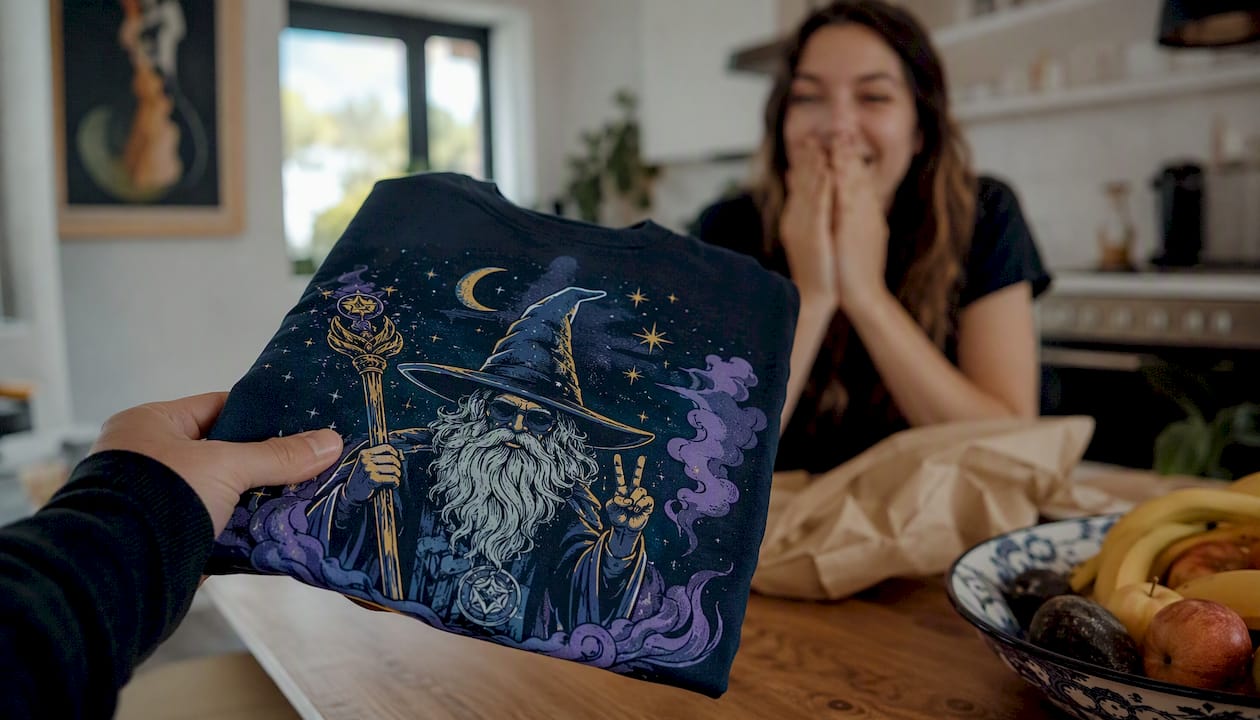
Brand loyalty follows a similar logic. Buyers who feel that a brand “gets” their sense of humor are more likely to return, more likely to recommend the brand, and more likely to forgive occasional missteps. The humor creates a relationship, not just a transaction.
The psychology of wearing humorous clothing also matters here. Research on enclothed cognition suggests that what we wear affects how we feel and how others perceive us. A garment with a specific joke on it signals membership in a community, invites interaction, and can shift the wearer’s own mood. That is a lot of work for a graphic tee.
For brands in the graphic apparel space, the practical implication is that humor is not just a design choice. It is a retention strategy.
A perspective on humor and apparel from 3wizardclothing
At 3wizardclothing, humor is not a marketing tactic bolted onto the product. It is the product. Every graphic tee, hoodie, and themed collection in the catalog starts from the same question: does this make someone smile, and does it say something true about who they are?
That question sounds simple. It is not. The difference between a slogan that lands and one that sits in a clearance bin is usually a matter of specificity. Generic funny does not work. Specific funny, the kind that makes a particular person feel seen, does.
Josh, the editorial voice behind this piece, has spent years watching humor function as both a creative device and a commercial lever across the fashion industry. The brands that get it right are the ones that treat wit as a craft, not a shortcut. For readers who want to see what that looks like in practice, the 3wizardclothing catalog is a good place to start.
Sources
- How fashion became funny: why we love the humble meme
- Meet fashion’s Gen Z meme lords using satire to stand out
- How fashion found its sense of humour
- The use of humour and food in fashion shows
Recommended
- What Is Humor-Based Apparel: Design, Culture, and Trends – 3 Wizard Clothing
- Humor-Themed Clothing: Express Your Style and Personality – 3 Wizard Clothing
- Why Wear Humorous T-Shirts: Self-Expression and Social Impact – 3 Wizard Clothing
- 10 creative ways to style humorous shirts for fashion – 3 Wizard Clothing


