

Fashion works as a non-verbal language: it lets people signal identity, borrow confidence, experiment creatively, and mark belonging, all before they say a word. Clothing choices do this job whether you plan them or not, which is exactly why it pays to plan them.
- Identity signaling: Colors, cuts, and details tell strangers something about you before you speak.
- Confidence effects: What you wear can shift how you act, not just how you look.
- Creative exploration: Getting dressed is one of the few daily rituals where you make dozens of small creative decisions.
- Group affiliation: Style marks who you belong with, and who you don’t.
Pro Tip: Tomorrow, wear one item that makes you feel unmistakably like yourself, then note how you carry yourself differently by noon. That gap between an ordinary outfit and a resonant one is the whole argument for paying attention to what you wear.
Key Takeaways
Fashion functions as a reliable, non-verbal identity tool because clothing choices shape both how others perceive you and how you perceive yourself.
| Point | Details |
|---|---|
| Clothing is a language | Colors, silhouettes, and accessories send social signals whether or not you intend them to. |
| Confidence follows resonance | Clothes that align with your inner identity boost confidence more than clothes chosen for approval. |
| Small experiments work best | Swap days and low-cost trials reveal more about your style than a full wardrobe overhaul. |
| Group signals need balance | Mixing subcultural cues keeps style personal instead of costume-like. |
| Fashion has limits | Clothing can’t substitute for stated values, so pair expression with mindful, sustainable choices. |
Table of Contents
- What Is the Role of Fashion in Self-Expression?
- How Does Clothing Affect Confidence and Self-Perception?
- Steps to Use Fashion as a Tool for Self-Expression
- How Does Fashion Signal Group Belonging and Subcultures?
- Where Fashion Falls Short as Self-Expression
- What Does the Research Say About Fashion and Identity?
- How Fashion as Self-Expression Evolved Across History
- An Editorial Take on Wearing What You Mean
- Frequently Asked Questions About Fashion and Self-Expression
- Sources
What Is the Role of Fashion in Self-Expression?
Clothing operates as a semiotic system, meaning each garment, color, and silhouette functions as a sign that carries meaning before anyone reads it consciously. Scholars who study fashion, identity, and social meaning describe clothing as a code that encodes cultural values, group affiliation, and status, often doing more communicative work than people realize.
A few examples make this concrete. A tailored blazer reads as authority in most Western professional contexts. A bright color palette tends to signal approachability and warmth. A leather jacket still carries a whiff of rebellion, even decades after it left the motorcycle subculture that made it famous. None of these meanings are fixed by law, but they’re consistent enough that people rely on them constantly, often without noticing.
The catch is that signaling can be intentional or accidental. You might throw on sweatpants for comfort and unintentionally signal disengagement at a meeting. Building a small set of consistent “codes,” meaning a repeated color palette, a signature texture, a recurring accessory, gives you more control over what people read.
Pro Tip: Pick two or three colors or textures you keep coming back to, and use them deliberately across your wardrobe. Repetition is what turns a random outfit into a recognizable signal.
How Does Clothing Affect Confidence and Self-Perception?
Psychologists call this “enclothed cognition”: the clothes you wear don’t just change how others see you, they change how you see yourself and how you behave. Wearing a lab coat you believe belongs to a doctor measurably sharpens attention in lab studies, and the same logic scales down to ordinary choices like a sharp shirt before a big meeting.
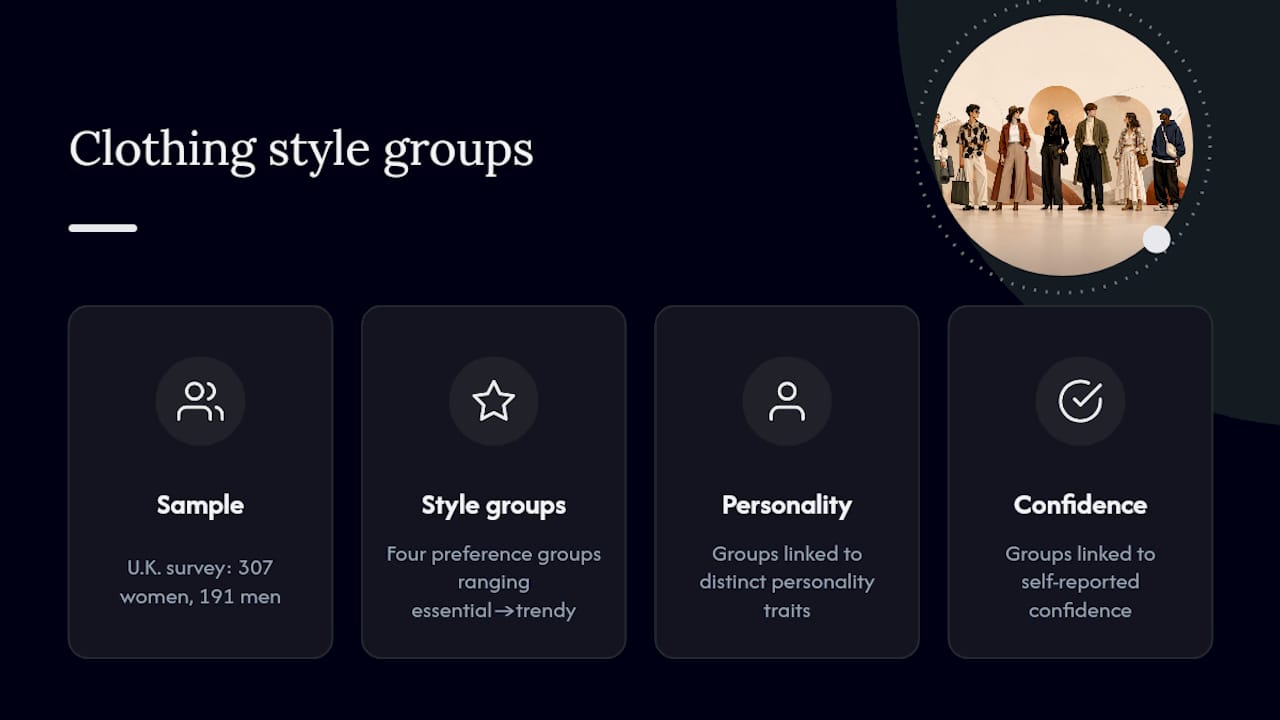
By the numbers: a U.K. survey of 307 women and 191 men found four broad clothing-style preference groups, ranging from essential to trendy, and those preference patterns linked to distinct personality traits and self-reported confidence, according to research summarized by the Harvard Gazette. People aren’t randomly reaching into their closets; their choices track who they are.
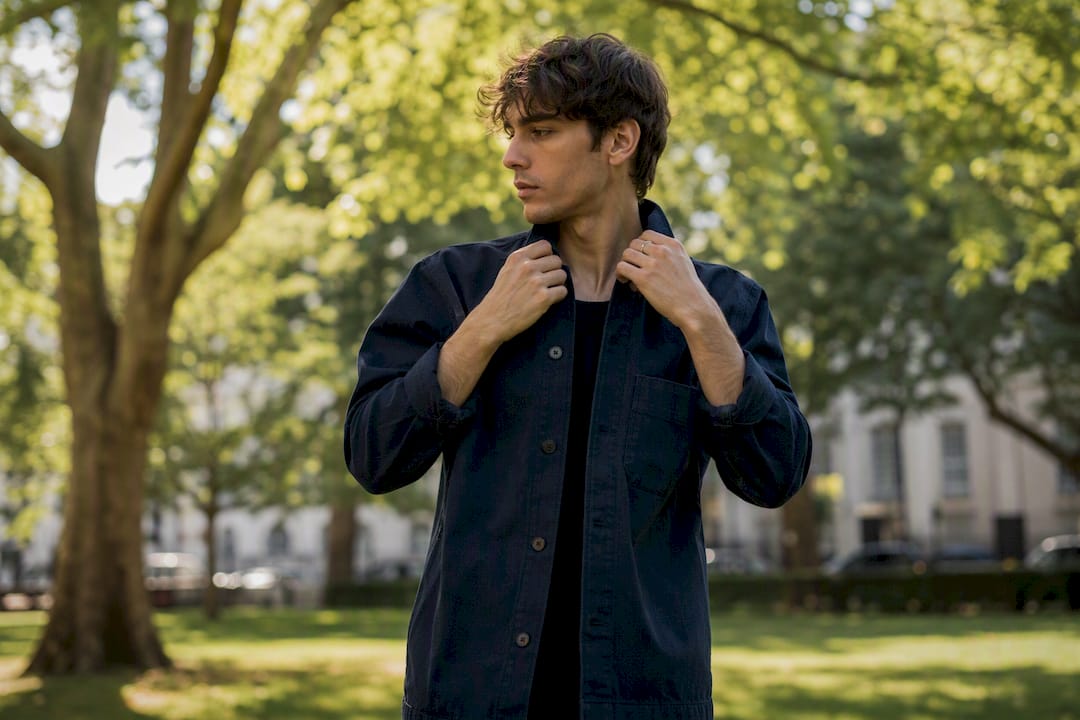
Picture two scenarios. Before a job interview, choosing a structured jacket over a wrinkled shirt can shift your posture and tone before you say a single word. Before a first date, an outfit that actually feels like “you,” rather than something borrowed to impress, tends to translate into more relaxed, natural conversation. The clothes aren’t magic. They’re a lever on how you carry yourself.
Steps to Use Fashion as a Tool for Self-Expression
Building a wardrobe that actually says something about you doesn’t require a closet overhaul. It requires a process.
- Discover your resonance. Notice which existing pieces make you feel most like yourself, not most complimented. That gap matters. Research on personal style and self-concept found that clothing which resonates with someone’s inner identity reliably boosts confidence by narrowing the distance between the true self and the ideal self.
- Curate key pieces. Choose four or five signature items (a jacket, a graphic tee, a specific color) that you can build outfits around.
- Experiment deliberately. Try one new combination a week instead of overhauling everything at once.
- Refine based on feedback from yourself, not others. Keep what feels effortless; drop what feels like a costume.
Color carries its own shorthand, though context and culture shift the meaning:
- Black: authority, sophistication, sometimes minimalism.
- Red: confidence, energy, and in some cultures, celebration or luck.
- Pastels: softness, approachability, playfulness.
- White: varies widely; purity in many Western contexts, mourning in parts of East Asia.
Three quick outfit formulas worth trying: a structured blazer with clean lines for projecting competence, a graphic tee with an unexpected accessory for creative identity (browsing expressive clothing that showcases personality is a fast way to find one), and well-fitted basics with a single statement piece for casual belonging without disappearing into the crowd.
Pro Tip: Run a “swap day” with a friend or try one bold piece for a single low-stakes outing before committing to a whole new direction. Cheap experiments teach you more about your own style than any amount of window shopping.
How Does Fashion Signal Group Belonging and Subcultures?
Clothing doesn’t just express the individual. It marks tribe. A goth’s black layers and a streetwear enthusiast’s logo-heavy fit both say “I belong here” as clearly as a uniform does, just through informal codes instead of official ones.
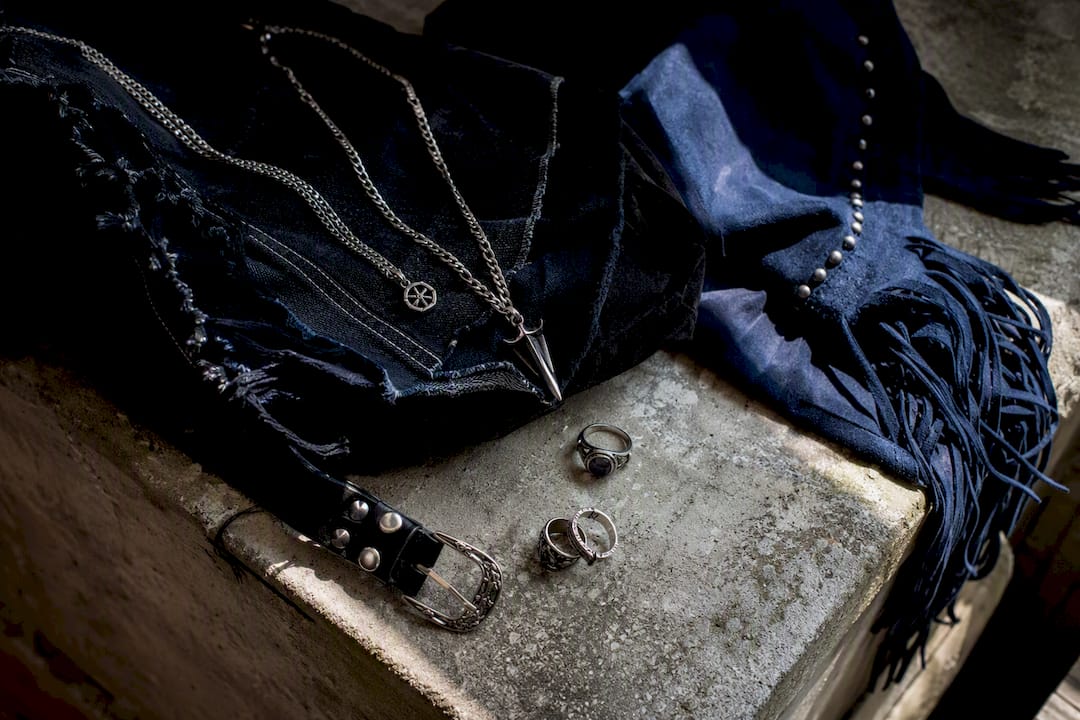
Consider two contrasts. A corporate dress code enforces near-uniform dressing to signal shared professionalism, stripping out most individual variation on purpose. A subculture like alternative or goth style does close to the opposite: it uses distinct, recognizable markers (dark palettes, specific silhouettes, particular hardware) precisely to stand apart from the mainstream while still signaling belonging to a defined group.
Common subcultural markers include distressed denim and band tees for punk, oversized silhouettes and sneakers for streetwear, and structured monochrome pieces for minimalist or “quiet luxury” circles.
Pro Tip: Mix cues from more than one group instead of adopting a subculture wholesale. A streetwear silhouette with one goth accessory reads as personal style, not costume.
Where Fashion Falls Short as Self-Expression
Clothing is a powerful signal, but it’s a poor substitute for stating your actual values. A vintage band shirt doesn’t prove you hold the politics associated with that scene, and trends can be co-opted fast enough that yesterday’s subversive symbol is this season’s fast-fashion print. Critics writing on the politics of self-expression describe fashion as a liminal space between private and public selves, not a complete definition of who someone is.
A few ways to keep expression aligned with values:
- Repair items instead of replacing them at the first flaw.
- Thrift or buy secondhand when building out a new aesthetic direction.
- Choose quality over quantity so pieces last through more than one season.
- Buy mindfully, asking whether a piece reflects you or just a passing trend.
Gender identity and diversity add another layer: clothing choices intersect with how people express gender, and no single outfit can carry that weight alone. Don’t ask clothes to do emotional labor that only self-reflection and honest conversation can actually do.
What Does the Research Say About Fashion and Identity?
A study of consumers aged 18 to 35 in socially restrictive environments found they practice “bricolage,” creatively recombining available pieces to manage public identity while quietly preserving personal expression, based on interviews with 40 participants and open-ended surveys of 150 more, according to research on identity construction in restrictive societies. Separate qualitative work on clothing and self-concept found that resonance between clothing and the self helps people bridge who they are and who they want to become.
By the numbers: one survey-based study found 70% of respondents said they often use clothing to shape who they want to become, according to research on fashion and identity construction, with the remainder split between occasional and rare intentional use.
Worth noting: most of this evidence comes from qualitative interviews and self-report surveys, not controlled experiments, so treat the findings as strong signals about tendencies rather than universal laws. The practical takeaway holds regardless: shape your wardrobe around what resonates with you, not around what you assume others expect.
How Fashion as Self-Expression Evolved Across History
The idea that clothing announces identity isn’t new. It’s ancient, and cultures have used it differently depending on what identity needed announcing.
In feudal Europe, sumptuary laws literally dictated who could wear which fabrics and colors, turning clothing into an enforced class marker rather than a personal choice. Traditional dress across cultures, kente cloth in West Africa, kimono in Japan, huipil in Mesoamerica, carried (and still carries) specific meanings tied to region, status, and life event, functioning less like personal expression and more like shared cultural vocabulary.
The 20th century flipped the script. Mass production and, later, fast fashion made clothing cheaper and more widely available, which shifted fashion from a class signal into a more individual one. The 1960s counterculture used denim and unconventional silhouettes to reject establishment norms. Punk in the 1970s weaponized safety pins and ripped fabric as visual protest. Each subcultural wave borrowed the same underlying idea: clothing as a code, just aimed at a new message.
Digital culture has only accelerated the cycle. Trends now move from niche to mainstream in weeks rather than years, which means the practical skill readers need today isn’t spotting a trend early. It’s knowing which signals are actually yours to keep.
An Editorial Take on Wearing What You Mean
The research keeps pointing at the same overlooked idea: resonance beats approval. Most people build their closets around what will be complimented, not what actually feels true, and that’s backward if the goal is genuine self-expression rather than a performance for an audience.
Try the swap-day experiment from the practical section this week. Notice which piece you reach for without thinking twice.
Frequently Asked Questions About Fashion and Self-Expression
What is the role of fashion in self-expression? Fashion functions as a non-verbal language that lets people signal identity, project confidence, and mark group belonging through color, silhouette, and accessory choices.
How does fashion affect self-image? Clothing shapes self-image through a mechanism psychologists call enclothed cognition, where what you wear measurably shifts your mood, posture, and behavior, not just how others see you.
Can fashion trends help with self-discovery? Trends can offer a low-stakes way to test new aesthetics, but genuine self-discovery tends to come from noticing which specific pieces resonate with your identity rather than from following what’s popular.
Does fashion express personality accurately? Fashion reflects personality tendencies reasonably well, since research on style preferences links certain clothing-style groups to distinct personality traits, but no outfit can capture the full complexity of who someone is.
Is it shallow to care about how clothing makes you feel? No. Treating clothing as a tool for confidence and identity is grounded in real psychological research, not vanity, though it works best alongside self-reflection rather than as a replacement for it.
Sources
- Exploring How Young Consumers Construct Identities in Socially Restrictive Societies: Managing Impressions Through Fashion Clothing
- Personal clothing style and self-concept: Embracing the true, the ideal and the creative self
- Why you wear what you wear (Harvard Gazette summary of research)
- Fashion, identity and social meanings (SDGS Review special issue)
When reviewing any of these, check the sample size and whether the method was qualitative interviews or a broader survey before treating a finding as universal.
Recommended
- Expressive clothing explained: How fashion showcases personality – 3 Wizard Clothing
- Why Wear Expressive Clothing: Identity, Mood, and Style – 3 Wizard Clothing
- What Is Expressive Fashion and Why It Matters – 3 Wizard Clothing
- Why expressive clothing matters: showcase your unique style – 3 Wizard Clothing


