

TL;DR:
- Expressive clothing uses color, texture, and silhouette to convey personality and mood without words.
- A personal style guide helps build intentional wardrobes, reducing impulse purchases and enhancing coherence.
Expressive clothing style is defined as the deliberate use of color, silhouette, texture, and print to communicate your personality and mood without saying a word. This is what fashion insiders call “personal style,” and it goes far beyond just picking something to wear. The right expressive clothing style guide gives you a system, not just inspiration. You learn to filter choices, build a wardrobe that actually works together, and show up every day looking like yourself. This article covers the tools, ratios, and mindset shifts that make that possible.
What is an expressive clothing style guide?
An expressive clothing style guide is a personal framework for making intentional fashion choices that reflect who you are. The industry term for this practice is personal style development, and it draws on tools like mood boards, feeling words, and wardrobe ratios to create consistency. Without a framework, most people end up with a closet full of pieces that don’t connect.
Color selection is one of the most direct tools in this process. Warm colors like red, orange, and yellow project energy and confidence. Cool tones like navy, sage, and lavender signal calm and creativity. Choosing colors with intention means your outfit does communication work before you speak.
Texture and silhouette carry equal weight. A chunky knit reads as cozy and approachable. A structured blazer reads as sharp and decisive. When you understand what each element communicates, you stop dressing by accident and start dressing with purpose.
How do you find your personal style foundation?
The most effective starting point is identifying 1–2 “feeling words” that describe how you want to feel when you get dressed. According to NeedleStyle, this single step reduces impulse spending by 30–40%. That number matters because impulse buys are the main reason wardrobes feel incoherent.
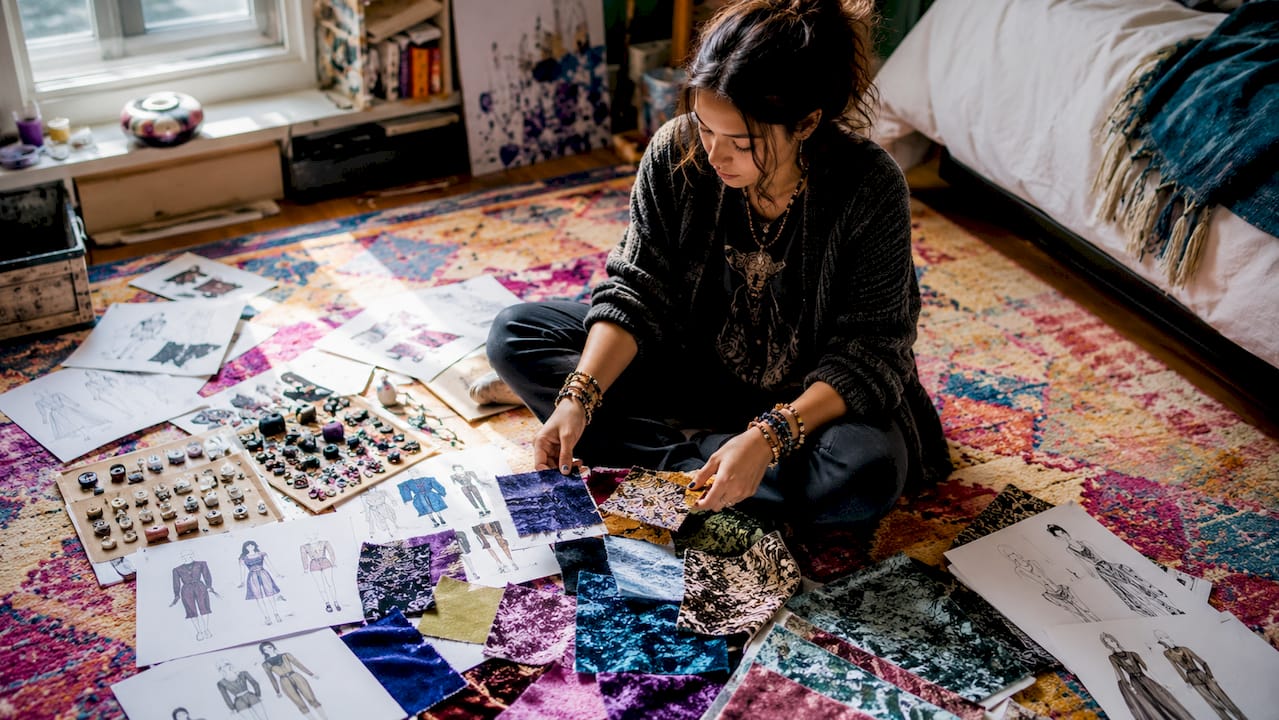
Feeling words act as filters. If your word is “confident,” you ask before every purchase: does this make me feel confident? If the answer is no, you skip it. Examples of strong feeling words include bold, grounded, playful, sharp, and free. Pick words that describe a feeling, not a look.
Once you have your feeling words, build a mood board. The Week recommends dedicating 2–3 hours to curating images before you buy anything new. Pull photos from Pinterest, Instagram, or magazines. Look for patterns in what you save: recurring colors, silhouettes, textures, or styling details.
Here is a simple process to build your first mood board:
- Open Pinterest or a physical folder and save 30–50 images of outfits you genuinely love.
- Lay them all out and look for patterns. What colors appear most? What silhouettes repeat?
- Write down 3 recurring visual themes you notice.
- Cross-reference those themes with your feeling words to confirm alignment.
- Use this visual reference every time you shop or get dressed.
Pro Tip: Save images of outfits you love on real people with your body type. Aspirational images of runway looks often mislead because they don’t reflect how clothes actually fit and move on most bodies.
This process prevents the most common wardrobe problem: accumulating pieces that look great individually but never work together. A mood board gives you a visual filter that works the same way feeling words work as a verbal filter.
Foundation-first vs. 80/20: what wardrobe balance actually looks like
Two popular frameworks guide how to balance basics with bold pieces. Understanding both helps you choose the right ratio for your lifestyle.
| Framework | Ratio | Best For |
|---|---|---|
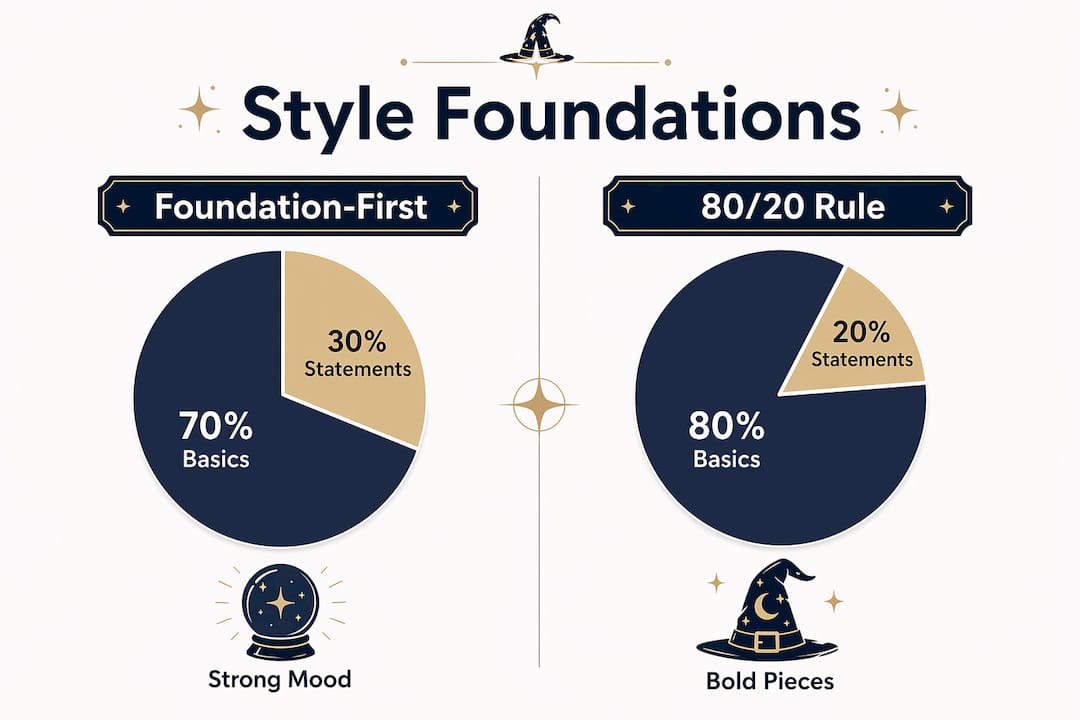
| Foundation-First | 70% basics, 30% statement | Beginners building from scratch |
| 80/20 Rule | 80% versatile basics, 20% high-impact | Established wardrobes needing refinement |
The foundation-first approach, recommended by Playaas Culture, means 70% quality neutral basics and 30% expressive statement items. This ratio gives you a working wardrobe that supports creative expression without requiring a complete overhaul every season.
The 80/20 rule is a refinement of the same idea. It advises 80% versatile basics and 20% statement pieces to enable expression without overwhelming the wardrobe. This approach is especially useful once you already have a base and want to add personality without creating decision fatigue.
Both frameworks share the same logic: basics do the heavy lifting so your statement pieces can shine. Here is what a strong foundation looks like in practice:
- Neutral tops in white, black, gray, and navy
- Well-fitting jeans or trousers in 2–3 washes
- A clean white sneaker and one versatile boot
- A solid-color hoodie or sweatshirt
- One structured layer like a denim jacket or blazer
With that base in place, a graphic tee from 3wizardclothing, a printed skirt, or a bold accessory becomes the focal point of the outfit rather than visual noise.
Pro Tip: Before buying any new statement piece, check that it works with at least three items already in your wardrobe. If it doesn’t pair with anything you own, it will sit unworn no matter how much you love it on the hanger.
How do you add bold fashion choices without losing cohesion?
Bold fashion choices work when they are anchored by a unifying detail. Obvious Magazine confirms that compelling expressive outfits rely on a unifying element such as a repeated color or texture to avoid visual chaos. That single principle separates a maximalist look that reads as artistic from one that reads as confused.
Here are four practical ways to add personality while keeping your look cohesive:
- Repeat one color. If your graphic tee has red in it, add a red accessory or shoe. The repetition ties the outfit together.
- Mix textures within a single palette. Pair a velvet top with denim and leather accessories. The contrast is interesting, but the neutral palette keeps it grounded.
- Choose statement pieces that reflect genuine interests. A band tee, a heritage print, or a graphic that references something you actually care about reads as authentic. Random novelty prints often look like costumes.
- Test new pieces at home first. A 24-hour home trial before wearing something publicly helps you confirm whether a piece feels like you or just looks interesting on a hanger.
The costume trap is real. It happens when you buy something because it looks cool on someone else, then feel uncomfortable wearing it yourself. Authentic self-expression apparel, as explored by Fortis Fidei, works because it reflects the wearer’s actual identity, not a borrowed one. The fix is simple: before buying, ask whether the piece connects to something you genuinely value.
Playaas Culture also recommends starting with one statement item per outfit and building basics around it. This anchors the look and prevents the style noise that comes from stacking too many bold pieces at once.
What are the most common expressive wardrobe mistakes?
Most style mistakes fall into predictable patterns. Recognizing them early saves you money and frustration.
-
Chasing micro-trends instead of your own preferences. Trends cycle fast. A style built on what’s trending right now will feel dated in six months. NeedleStyle’s research shows that reviewing photos from 3–5 years ago uncovers suppressed core preferences more reliably than following current trends. Look at what you wore when you weren’t thinking about trends, and you’ll find your actual aesthetic.
-
Dressing for an idealized body, not your current one. Buying clothes for the body you want instead of the one you have is the biggest obstacle to authentic expression. Fit and flattering clothes build confidence in a way that aspirational sizing never does. Clothes that fit well always look better than clothes that are technically on-trend but don’t fit right.
-
Overhauling everything at once. Beginners often try to rebuild their entire wardrobe in one shopping trip. The 80/20 rule exists precisely to prevent this. Add one or two statement pieces at a time and integrate them with what you already own before buying more.
-
Ignoring lifestyle fit. Your wardrobe has to work for your actual life. A collection of elaborate statement pieces means nothing if you spend most of your time in class, at work, or running errands. Style that works is style you can actually wear.
-
Skipping the trial-and-error phase. Vogue confirms that style development is a continuous process of trial and error, not an overnight victory. Expecting to get it right immediately creates unnecessary pressure. Give yourself permission to experiment, make mistakes, and refine over time.
Key takeaways
An expressive wardrobe works best when feeling words and a mood board guide every purchase, and when bold pieces are anchored by a strong foundation of versatile basics.
| Point | Details |
|---|---|
| Start with feeling words | Identify 1–2 emotional anchors to filter purchases and reduce impulse buys by 30–40%. |
| Build a mood board first | Spend 2–3 hours curating images to spot style patterns before spending money. |
| Use the 80/20 rule | Keep 80% versatile basics and 20% statement pieces to avoid wardrobe fatigue. |
| Anchor bold looks with unity | Repeat a color or texture across the outfit to make expressive choices feel intentional. |
| Dress for your actual body | Clothes that fit your current body always communicate confidence more effectively than aspirational sizing. |
Style is a story you keep rewriting
I’ve watched a lot of people approach personal style like it’s a problem to solve once and move on. That’s the wrong frame entirely. The most interesting dressers I know are still experimenting. They’re still pulling something out of the closet, deciding it no longer fits who they are, and replacing it with something that does.
What I’ve found is that the discomfort of trying something new is actually useful data. If you put on a bold graphic tee and feel self-conscious, that’s worth examining. Sometimes it means the piece isn’t right for you. Sometimes it means you’re not used to taking up space yet, and that’s exactly why you should keep wearing it.
The importance of expressive clothing isn’t just aesthetic. It’s about practicing the habit of showing up as yourself. That takes repetition. The mood board and the feeling words aren’t just shopping tools. They’re a way of getting clear on who you are and what you want to say.
My honest advice: don’t wait until you have the “perfect” wardrobe to start expressing yourself. Start with one piece that feels true to you, wear it until it feels natural, and build from there. Style evolves because you evolve. Let it.
— Josh
Build your expressive wardrobe with 3wizardclothing
If you’re ready to add statement pieces that actually mean something, 3wizardclothing’s Strong and Sassy collection is a strong starting point. These bold graphics and expressive designs are built to anchor an outfit, not just fill a drawer.
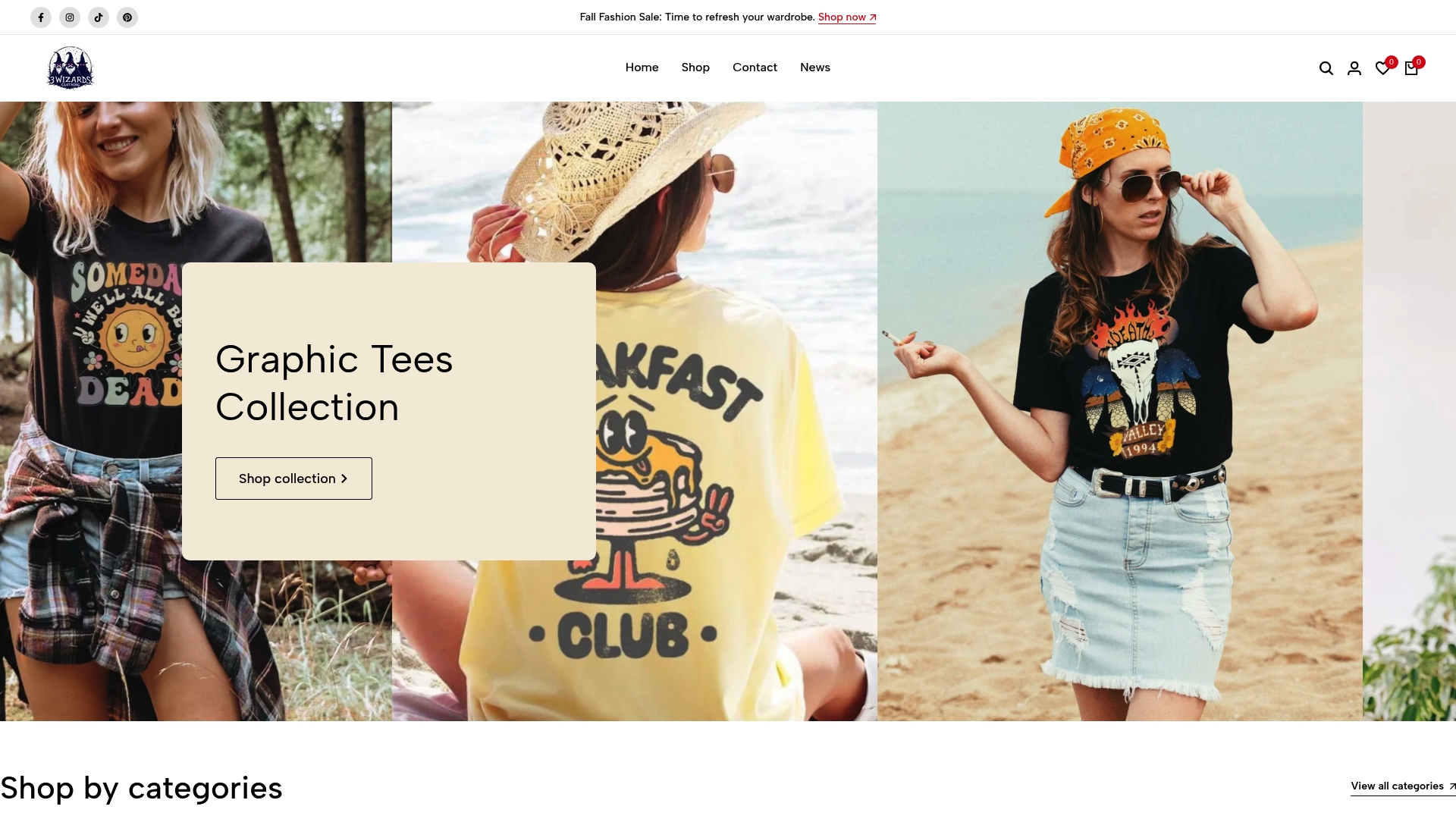
The Strong and Sassy line pairs directly with the foundation-first approach. Grab a graphic tee or hoodie from the collection, build your neutral basics around it, and you have a complete, cohesive look that says something real. 3wizardclothing keeps adding new designs across women’s, men’s, and kids’ categories, so there’s always something worth adding to your rotation. Shop the collection and find the piece that fits your feeling word.
FAQ
What does expressive clothing style mean?
Expressive clothing style is the deliberate use of color, texture, silhouette, and print to communicate personality and mood. It is the practical application of personal style development as a form of non-verbal communication.
How do i start building an expressive wardrobe?
Start by identifying 1–2 feeling words that describe how you want to feel when dressed, then build a mood board to spot visual patterns. Use those two tools to filter every new purchase before you buy.
What is the 80/20 rule in fashion?
The 80/20 rule means keeping 80% versatile basics and 20% statement pieces in your wardrobe. This ratio supports bold expression without creating decision fatigue or wardrobe overwhelm.
How do i mix bold pieces without looking chaotic?
Anchor every bold outfit with a unifying detail such as a repeated color or consistent texture. Starting with one statement item per outfit and building basics around it keeps the look intentional rather than overwhelming.
How do i know if a statement piece is right for me?
Do a 24-hour home trial before wearing it publicly. If the piece still feels like you after a day of wearing it around the house, it belongs in your wardrobe. If it feels like a costume, pass on it.
Recommended
- Expressive clothing explained: How fashion showcases personality – 3 Wizard Clothing
- What is expressive clothing? Define your style with bold fashion – 3 Wizard Clothing
- Trendy Apparel Ideas 2026: Bold Styles Worth Wearing – 3 Wizard Clothing
- Top Expressive T-Shirt Styles, Humor, and Inspiration – 3 Wizard Clothing


