

TL;DR:
- Creating a comprehensive Halloween apparel checklist helps prevent last-minute chaos by including costumes, accessories, safety gear, and event-appropriate clothing. Safety, comfort, and occasion-specific features should guide your choices, with pre-event fit and safety tests crucial for a smooth celebration. Incorporating casual themed apparel like graphic tees and hoodies offers versatile, comfortable options suitable for multiple occasions beyond full costumes.
Planning your Halloween look sounds fun until you’re standing in your closet three days before the event with no clear plan, missing half your accessories, and realizing your cape is a fire hazard. A solid halloween apparel checklist turns that chaos into a clear, room-by-room process that covers costumes, accessories, safety gear, and seasonal event wear. What the industry calls a costume wardrobe plan is simply a structured way to account for every piece before you need it. This guide covers everything from full costume builds to graphic tees for casual fall events, with real criteria to help you choose well and stay safe.
Table of Contents
- Key takeaways
- 1. Your halloween apparel checklist starts with clear criteria
- 2. The core costume categories to include
- 3. Matching your outfit to the occasion
- 4. Safety and comfort checks before Halloween night
- 5. My real talk on Halloween apparel planning
- Level up your look with 3wizardclothing
- FAQ
Key takeaways
| Point | Details |
|---|---|
| Build by category | Organize your checklist into costumes, accessories, makeup, footwear, and safety gear to avoid missing pieces. |
| Comfort drives decisions | Breathable fabrics and proper fit matter as much as how a costume looks, especially for kids. |
| Safety is non-negotiable | Flame retardancy, visibility, and mobility checks should happen before Halloween night, not during it. |
| Match apparel to the occasion | Trick-or-treat gear, party outfits, and themed event wear each have different requirements. |
| Test before the event | A full wear loop walk-through catches fit, mobility, and hazard issues early enough to fix them. |
1. Your halloween apparel checklist starts with clear criteria
Before you buy a single item, you need a filter. Every costume or themed piece should pass a basic set of checks or you’ll end up with something that looks great on a hanger and fails on Halloween night.
Comfort and fit. Breathable, moisture-managing fabrics reduce sweating and chafing during long hours of wear. That matters whether you’re spending three hours trick-or-treating with kids or dancing at an adult costume party. Look at fabric composition, not just the design.
Safety factors. Costumes near open flames from jack-o’-lanterns need real protection. Flame retardancy certification such as NFPA 701 or CPAI-84 is worth verifying before purchase, and it’s worth knowing that flame-retardant protection can wear off after washing. Always re-check after laundering.
Weather fit. October temperatures vary wildly depending on your region. Plan for layering options under or over the costume so cold weather doesn’t force a coat over a carefully assembled look.
Event type. A costume party indoors tolerates elaborate setups that would be impractical for two miles of trick-or-treating. Themed park events or official seasonal celebrations sometimes have event-specific merchandise worth adding to your list.
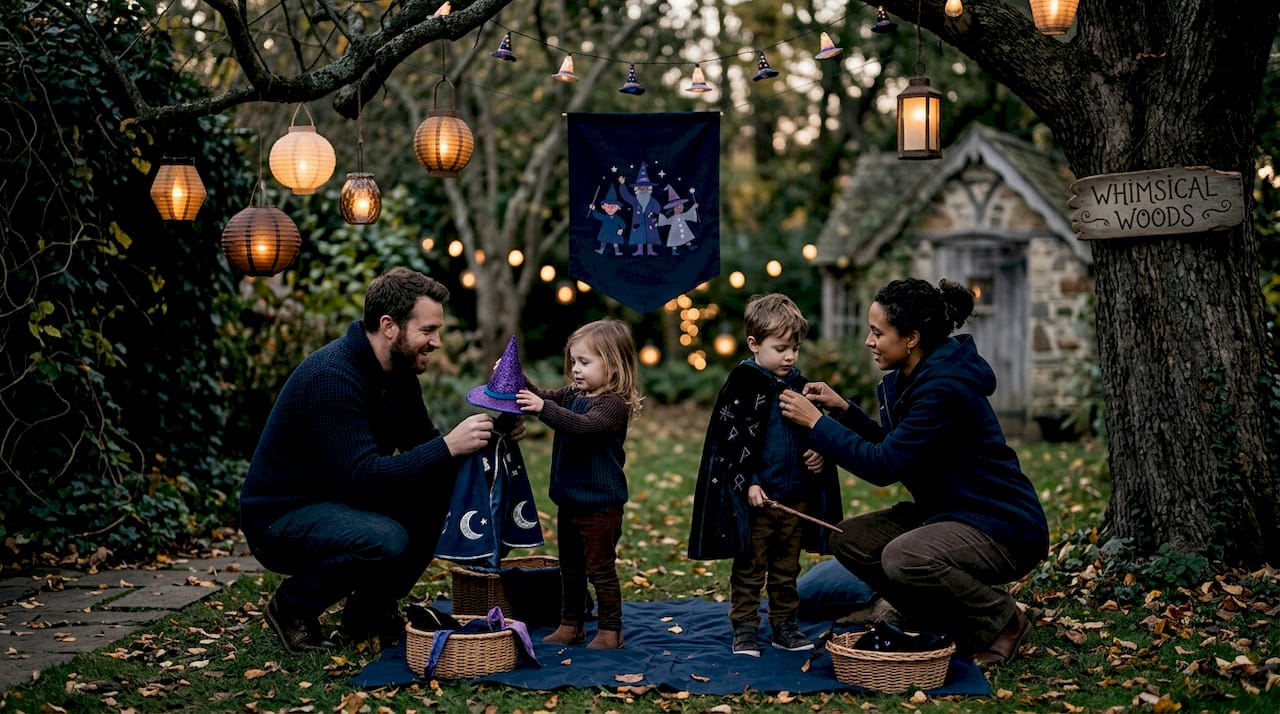
Budget and sourcing. Splitting your checklist into “need to buy,” “already own,” and “can borrow” categories keeps spending realistic. Graphic tees and hoodies with seasonal designs often cover casual Halloween fashion tips at a fraction of full costume pricing.
Pro Tip: Buy or assemble your costume at least two weeks before Halloween. Last-minute shipping delays and sold-out accessories are the two most common reasons people show up with an incomplete look.
2. The core costume categories to include
Think of this section as your spooky apparel list. It covers every category your checklist should include, broken down by type.
Full costumes and themed clothing:
- Complete character costumes (head-to-toe sets)
- Themed graphic tees for low-key Halloween parties or work events
- Halloween hoodies and zip-ups for cooler outdoor nights
- Themed tank tops for indoor events or warmer climates
- Couple or group coordinated outfits for parties
Accessories:
- Hats, headbands with ears or horns, and witch hats
- Capes and cloaks (check hem length carefully to avoid trip hazards)
- Gloves and arm sleeves
- Wings, wands, and props
- Themed bags or treat buckets that double as accessories
Makeup and face paint:
- Foundation or base color matching the character
- Face paint sets with a range of colors
- Special-effects makeup for scars, wounds, or creature features
- Setting spray to extend wear time
- Makeup remover and cleanser for post-event cleanup
For kids especially, always patch-test face paint on a small skin area before full application. Use clean brushes and sponges, and avoid applying anything near the eyes or lips unless the product is specifically formulated for those areas.
Footwear and socks:
- Boots, character shoes, or themed sneakers
- No-slip soles for outdoor and pavement use
- Fun themed socks visible under shorter costume hems
Reflective and safety gear:
- Reflective tape strips applied to costumes or bags
- Glow sticks or LED wristbands for night visibility
- Clip-on lights for younger kids’ costumes
Reflective tape and glow sticks on costumes and treat bags meaningfully reduce the risk of trips, falls, and vehicle accidents after dark. This one addition takes about two minutes and belongs on every outdoor trick-or-treat checklist.
3. Matching your outfit to the occasion
Not all Halloween apparel works the same across every setting. Using this comparison helps you pick the right pieces for each context.
| Occasion | What works best | What to avoid |
|---|---|---|
| Trick-or-treating (kids) | Bright colors, close-fit costumes, reflective details, slip-resistant shoes | Long loose capes, full masks, high heels |
| Adult costume party (indoor) | Full costumes, theatrical makeup, elaborate accessories | Heavy layering, oversized props that limit movement |
| Casual fall event or office | Themed graphic tees, Halloween hoodies, fun socks or accessories | Full face paint, elaborate costumes that restrict movement |
| Themed park or seasonal event | Event merchandise, coordinated family looks, comfortable walking shoes | Costume pieces that cannot be removed if weather changes |
| Outdoor night event (adults) | Layered costumes, reflective accents, warm underlayers | Light-only costumes with no warmth, impractical footwear |
Kids and adults also have fundamentally different needs within each occasion. Comfort and safety are inseparable for children in Halloween apparel. Breathable fabrics, proper fit, and reflective details matter more for a 7-year-old than theatrical impact. Adults have more flexibility, but comfort still wins over a long night.
Pro Tip: For family outings that mix indoor and outdoor stops, dress kids in a base layer they can wear comfortably under their costume. A fitted long-sleeve shirt in a neutral color layers invisibly and adds real warmth without ruining the look.
For a deeper look at stylish family Halloween options, the 3wizardclothing blog breaks down coordinated looks that work from trick-or-treat routes to living room parties.
4. Safety and comfort checks before Halloween night
This section gives you a concrete pre-event checklist covering the issues that cause real problems. Run through it a few days before the event, not the morning of.
Run the wear loop test. Put on the entire costume including accessories, footwear, and props, then walk around your home for at least 10 minutes. Engineering safety around a wear loop catches mobility restrictions, loose parts, and discomfort before they become problems at a busy event.
Check for trip hazards:
- Measure hem lengths while wearing the costume’s actual shoes
- Walk up and down stairs in the full outfit
- Secure or shorten any loose cape edges or trailing fabric
- Tuck or remove accessories that drag or catch underfoot
Long hems, capes, and loose accessories are major causes of trips and falls in costume wearers of all ages. The fix is simple. Check it during the wear loop.
Address mask and face cover safety:
- If a mask is necessary, verify large eye holes and secure but non-choking straps
- Masks can obstruct vision and breathing, especially in young children. Makeup or face paint is frequently the better choice
- Test sight lines by having the wearer navigate a space before the event
Flame safety check:
- Verify certification labels on any fabric costumes, particularly capes and robes
- Keep flame-retardant costumes away from candle flames even when certified. Certification reduces risk. It does not eliminate it
- Look for quick-release closures like Velcro, magnetic clasps, or break-away ties that allow rapid removal in emergencies
Weather and comfort final check:
- Confirm layering options are ready if temperatures drop
- Check that footwear has been worn in enough to avoid blisters
- Pack a small bag with safety pins, fashion tape, and a compact flashlight for field repairs
5. My real talk on Halloween apparel planning
I’ve watched people spend weeks on the perfect costume concept and then scramble through the final 48 hours in a stress spiral because they never tested the actual pieces together. In my experience, the costume that looks best on Halloween night is almost never the most elaborate one. It’s the one the wearer is comfortable in.
The biggest lesson I’ve learned: stop treating the costume as separate from the accessories, shoes, and makeup. They all interact. A cape that looks fine hanging up becomes a trip hazard on a busy sidewalk. A mask that fits in a quiet room becomes a breathing restriction after twenty minutes of activity. I test everything as a complete system now, not piece by piece.
I also think people underestimate how much casual themed apparel has expanded the Halloween wardrobe. A well-designed Halloween hoodie or graphic tee covers office parties, school events, casual hangouts, and trick-or-treat supervision without requiring a full character build. It’s low effort, genuinely comfortable, and gets more wear than a costume you put on once. That’s a real win.
My last piece of honest advice: build your checklist by occasion first. One list for trick-or-treating, a separate list for the party, another for the school or work event. The categories don’t always overlap, and trying to find one outfit that covers all three usually means it’s mediocre at all of them.
— Josh
Level up your look with 3wizardclothing
If your checklist still has gaps after reading through these categories, 3wizardclothing has the kind of seasonal pieces that fill them without requiring a trip to a specialty store.
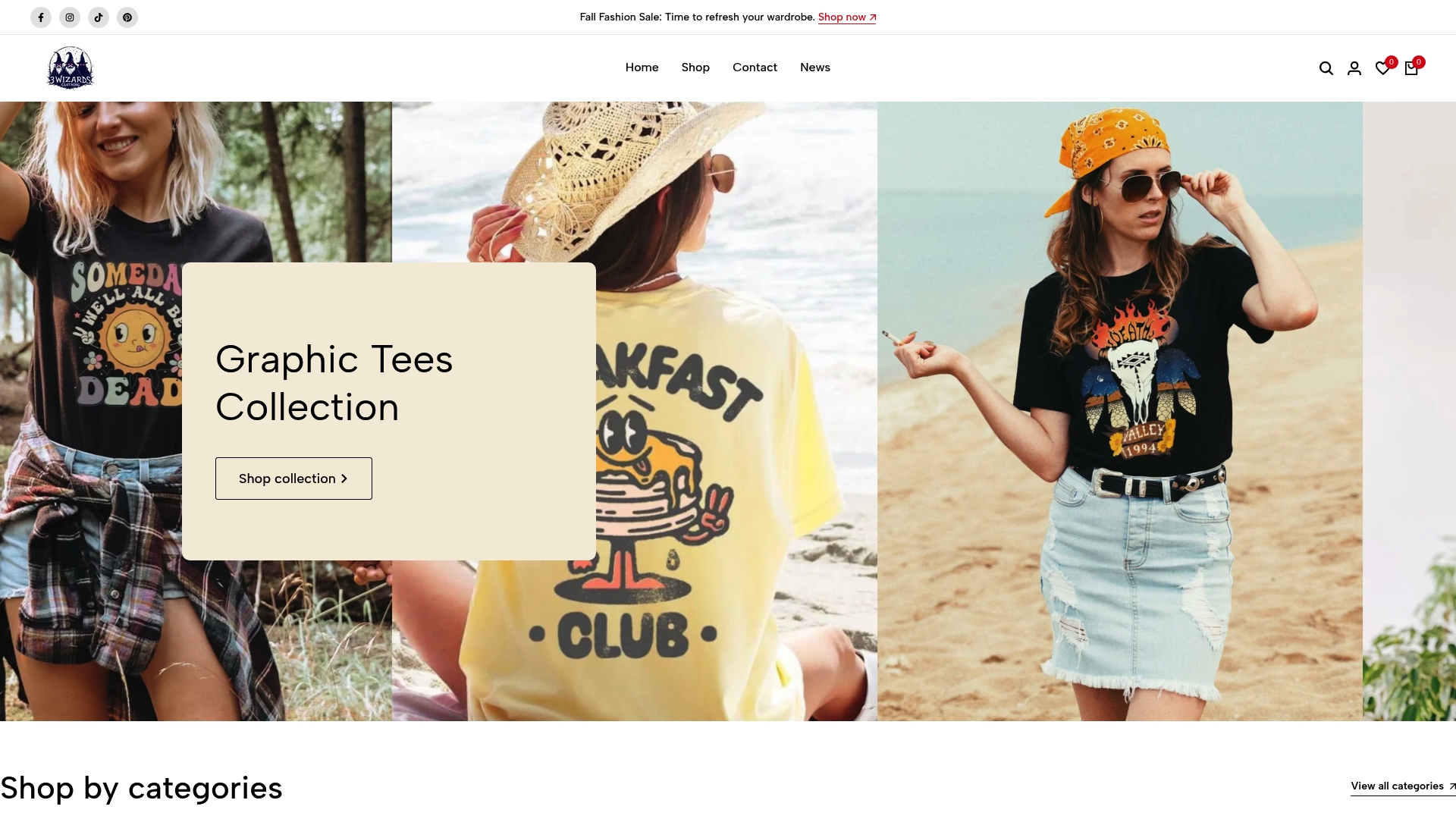
The Pumpkin Season T-Shirt is one of the strongest examples of how a graphic tee pulls weight across multiple occasions. It works for casual fall events, school Halloween activities, and low-key parties where a full costume would feel overdressed. Comfortable, well-designed, and immediately seasonal. For families and adults looking at trending Halloween apparel, 3wizardclothing also carries a full lineup of hoodies, tees, and themed collections built for comfort and actual wearability beyond October 31st.
FAQ
What should a Halloween apparel checklist include?
A thorough checklist covers the costume or themed clothing, accessories, makeup and face paint supplies, appropriate footwear, and any safety items like reflective tape or glow accessories for nighttime visibility.
How do I choose safe fabrics for Halloween costumes?
Look for certified flame-retardant fabrics with NFPA 701 or CPAI-84 labeling, and choose breathable materials like cotton blends that reduce overheating during extended wear.
Are masks safe for kids on Halloween?
Masks with large eye holes and secure straps can work, but face paint is generally safer and more comfortable for young children since masks can obstruct both vision and breathing.
What apparel works best for trick-or-treating?
Close-fitting costumes with no trailing fabric, slip-resistant shoes, and visible reflective details are the best combination for trick-or-treating. Add glow sticks or LED accessories for night visibility.
Can I use regular clothing as part of a Halloween outfit?
Absolutely. Graphic Halloween tees, themed hoodies, and seasonal socks all count as Halloween wardrobe essentials and work perfectly for casual events, school activities, and office parties without the commitment of a full costume.
Recommended
- How to Style Halloween Apparel for Effortless Festive Looks – 3 Wizard Clothing
- How to choose trendy and safe Halloween apparel for all ages – 3 Wizard Clothing
- Best essential Halloween outfits: Trendy picks for 2026 – 3 Wizard Clothing
- Creative Halloween Clothing Ideas for Trendy Adults & Families – 3 Wizard Clothing


