

TL;DR:
- Personalized graphic apparel gifts require careful selection of print methods, designs, and fabrics to ensure durability and impact. Understanding the differences between screen printing, DTF, HTV, and embroidery helps in choosing the right technique for each occasion and order size. Paying attention to high-resolution files, proper proofing, and care instructions extends the longevity of customized clothing, making the gift truly memorable.
Finding a gift that feels truly personal is harder than it sounds. Generic store-bought options get forgotten fast, but knowing how to personalize graphic apparel gifts gives you a serious edge. A custom t-shirt or hoodie designed with someone specific in mind tells them you paid attention. It shows thought, creativity, and care in a way a gift card never could. This guide walks you through the tools, techniques, and step-by-step process to create personalized clothing gifts that people actually wear and remember.
Table of Contents
- Key takeaways
- What you need before personalizing graphic apparel gifts
- Step-by-step guide to creating personalized apparel gifts
- Common mistakes to avoid when personalizing apparel gifts
- What to expect from personalized apparel gifts over time
- My honest take on personalizing apparel gifts
- Find your next personalized gift at 3wizardclothing
- FAQ
Key takeaways
| Point | Details |
|---|---|
| Choose the right print method | Match your printing method to order size and design complexity for the best results and value. |
| File format matters | Use vector files or 300 DPI raster images to avoid blurry or pixelated prints. |
| Proof approval is non-negotiable | Always review and approve a digital proof before production to catch errors early. |
| Care instructions extend gift life | Washing inside out in cold water keeps personalized prints vibrant far longer. |
| Design with the recipient in mind | Starting from the person’s personality and interests produces far more meaningful results. |
What you need before personalizing graphic apparel gifts
Before you design a single pixel, you need to understand the tools and methods available. Each approach has real trade-offs in cost, quality, and durability.
Personalization methods at a glance
There are four main ways to add custom graphics to apparel: screen printing, Direct-to-Film (DTF) printing, heat transfer vinyl (HTV), and embroidery. Screen printing is the classic choice for large, simple designs on bulk orders. DTF printing is preferred for small orders under 24 pieces because it handles photorealistic detail beautifully. HTV works well for names, monograms, and bold single-layer designs. Embroidery adds a premium, textured finish best suited for logos and simple graphics on hats, polos, and heavier garments.
| Method | Best for | Order size | Durability |
|---|---|---|---|
| Screen printing | Simple, bold designs | 24+ pieces | Excellent (50+ washes) |
| DTF | Detailed, full-color, photos | 1 to 24 pieces | Excellent (50+ washes) |
| Heat Transfer Vinyl | Names, text, simple shapes | 1 to 10 pieces | Good (50 to 100+ washes) |
| Embroidery | Logos, structured garments | Any | Outstanding (garment lifetime) |
Apparel and design file basics
Not all fabrics work equally with every method. Cotton and cotton-poly blends hold prints well across most techniques. You can check the best fabric choices before committing to a garment style. Avoid heavily textured or 100% polyester fabrics for HTV unless you confirm compatibility with your printer.
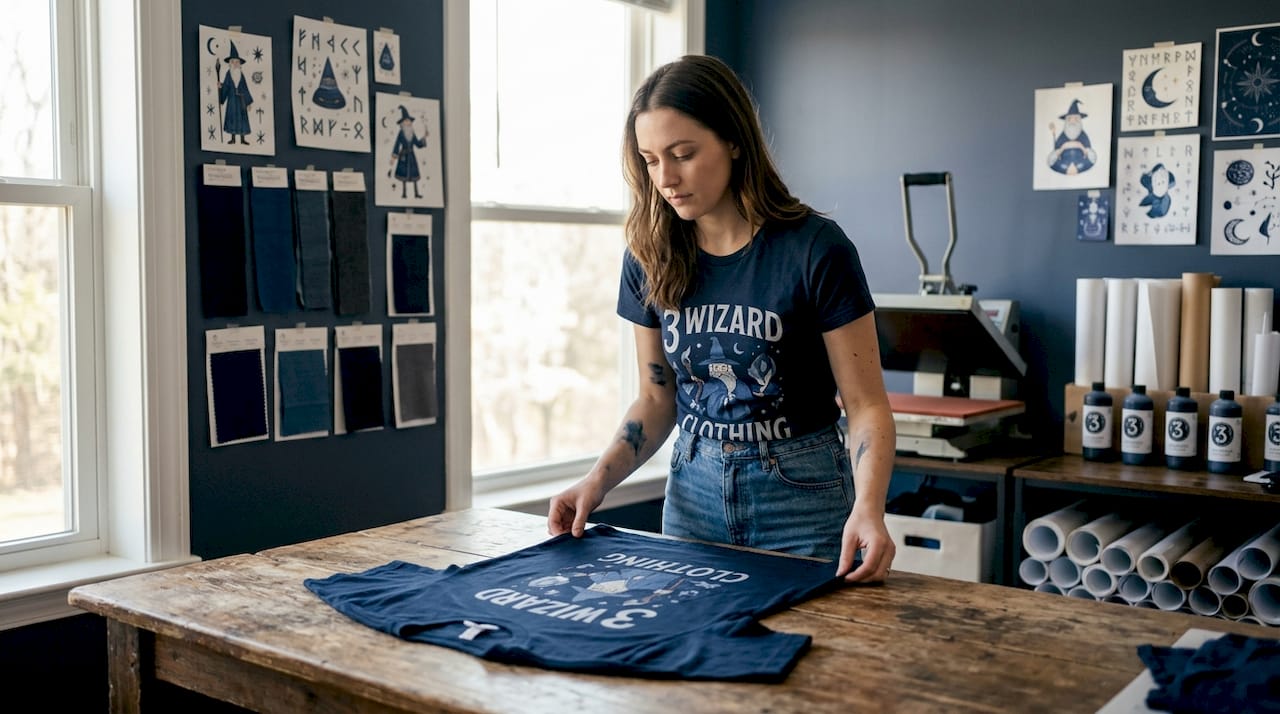
For design files, vector files like .ai, .eps, and .pdf are the gold standard because they scale to any size without losing sharpness. If you are working with a photo or raster graphic, it must be at least 300 DPI to print cleanly. A blurry proof is almost always a file resolution issue caught too late.
Pro Tip: If you are designing your own clothing using free tools like Canva, always export at the highest resolution available and convert text to outlines before sending files to a printer. This prevents font substitution errors.
Step-by-step guide to creating personalized apparel gifts
Getting the process right means thinking in order. Jumping straight to design before choosing garment or printing method is where most gift buyers waste time and money.
-
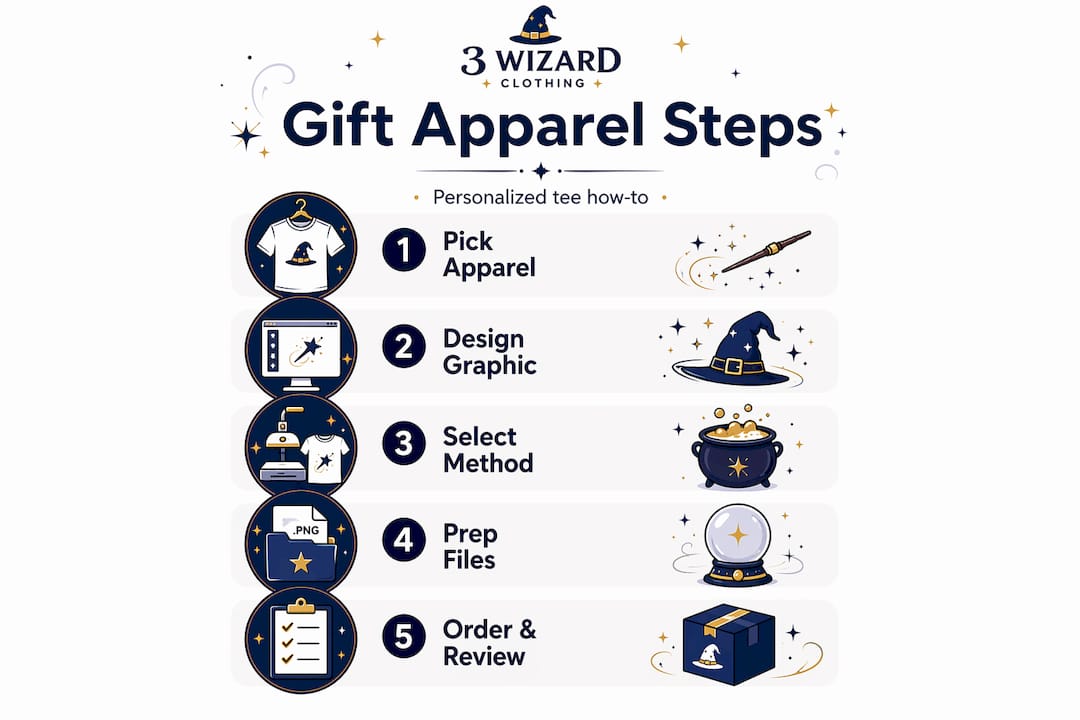
Define the recipient and the occasion. Think about what makes this person laugh, what they love, what they wear every day. A birthday gift for a coffee-obsessed friend calls for something completely different than a holiday hoodie for your dad who coaches youth soccer. The occasion also shapes the urgency of your timeline.
-
Choose the garment first. Pick the style and size before designing. A graphic that looks great centered on a standard t-shirt may need repositioning on a fitted women’s cut or an oversized hoodie. You can browse graphic tee options to find styles that match different recipients and occasions before committing.
-
Create or source your design. Build your artwork in a vector program if you can, or work with a designer. If you are using a photo, make sure it is high resolution. For text-based designs, choose no more than two fonts and make sure they are legible at the print size you plan to use. Bold, clean lettering almost always outperforms decorative scripts on wearable gifts.
-
Select your printing method. The right method depends on your order quantity, design detail, and budget. One or two personalized gifts for friends? DTF or HTV wins. Planning a family reunion batch of 30 matching shirts? Screen printing becomes cost-effective.
-
Submit for proof approval. Never skip this. Proof approval verifies design accuracy before a single shirt gets printed. Check spelling, color, placement, and sizing carefully. Digital proofs can sometimes show colors slightly differently than the final print, so flag anything that looks off and request adjustments.
-
Order with your timeline in mind. Standard custom apparel orders take 7 to 10 business days after proof approval. Rush options exist but add cost. If you are gifting for a specific date, work backward and build in a buffer for shipping delays.
Pro Tip: Place your graphic slightly higher than center on the chest rather than dead center. Prints that sit too low look awkward when the shirt is tucked or when the recipient moves around. This single adjustment makes finished shirts look noticeably more professional.
Following these steps in order takes the guesswork out of the process and dramatically reduces the chance of ending up with a gift that misses the mark.
Common mistakes to avoid when personalizing apparel gifts
Even experienced gift buyers make avoidable errors. Knowing the pitfalls before you start saves both money and disappointment.
The most frequent problem is poor design resolution. Submitting a low-resolution image pulled from a website results in a blurry, pixelated print no matter how good the printer is. Always start with high-quality source files. Linked closely to this, choosing the wrong apparel fabric for your chosen method creates adhesion issues with HTV or dull, faded prints with DTF on certain synthetic blends.
Rushing through proof approval is another costly habit. Proof approval prevents errors in spelling, placement, and color that are impossible to fix after printing. Treat this step like proofreading a tattoo design. You want every detail confirmed before it is permanent.
Here are the most common pitfalls and how to sidestep them:
- Low-res files: Always use vector formats or 300 DPI raster images. Never pull graphics from a website.
- Wrong fabric choice: Check your decorator’s compatibility chart before selecting garment material.
- Skipping the proof: Review every single element on the proof, including text direction, margins, and color codes.
- Overcrowded designs: Simpler designs print more cleanly and hold up better over time. Resist the urge to cram in every element.
- Ignoring care labels: Personalized gifts need specific washing instructions to stay vibrant. Include a care card with every gift.
- Excessive heat application: Applying too much heat damages vinyl, causing brittleness and early cracking. If you are pressing at home, follow the recommended 155°C for 15 seconds with medium pressure.
“The best personalized gift is one that looks as good on the tenth wash as it did on the first. Thoughtful execution at every stage is what gets you there.”
Pro Tip: Ask your printer specifically about ink type and fabric compatibility before placing your order. A five-minute conversation upfront prevents expensive reprints down the line.
What to expect from personalized apparel gifts over time
Understanding how each print method ages helps you set the right expectations and choose wisely for the person you are gifting.
Screen printing and DTF both deliver durable prints lasting 50 or more washes when cared for properly. HTV is close behind at 50 to 100 washes under normal conditions, though specialty finishes like glitter and holographic HTV tend to degrade faster with frequent washing. Embroidery, by contrast, outlasts the garment itself in most cases.
The biggest factor in print longevity is not the method. It is the washing routine. You can read detailed care tips for graphic tees to extend the life of personalized prints significantly. Washing inside out in cold water, tumble drying on low, and avoiding bleach are non-negotiable habits for anyone who wants their custom apparel to stay looking sharp.
| Method | Recommended wash temp | Drying method | Iron safe | Expected wash count |
|---|---|---|---|---|
| Screen print | Cold | Tumble dry low | No direct contact | 50 to 100+ |
| DTF | Cold | Tumble dry low | No direct contact | 50+ |
| HTV | Cold | Tumble dry low | Never directly | 50 to 100+ |
| Embroidery | Cold or warm | Air dry preferred | Yes, avoid embroidery | Lifetime |
Washing inside out in cold water is the single most effective habit for extending print life across all methods. When you give personalized clothing gifts, consider tucking a small handwritten care card into the packaging. It shows extra thoughtfulness and helps the recipient actually preserve the gift.
My honest take on personalizing apparel gifts
I have worked with a lot of gift buyers over the years, and the pattern I see most often is this: people overthink the design and underthink the garment. They spend hours perfecting a graphic and then order it on a cheap shirt that shrinks after two washes. The garment quality matters as much as the print.
What I have also found is that the recipients who treasure personalized apparel gifts the most are not necessarily the ones who got the most elaborate design. They are the ones who got something that clearly reflected who they are. A simple inside joke printed on a solid-weight tee in their favorite color lands harder than a complex full-sleeve graphic that took weeks to produce.
The other misconception I run into constantly is that personalizing apparel is complicated or expensive. It genuinely is not, especially for one or two gifts. DTF printing has made small-batch, high-quality customization accessible to anyone. You do not need a heat press, a design degree, or a minimum order of 50 shirts. You just need a clear idea, a decent file, and a few minutes to review a proof.
My advice? Focus on the person first and the design second. Everything else falls into place when the starting point is genuinely about them.
— Josh
Find your next personalized gift at 3wizardclothing
Ready to put these ideas into practice? 3wizardclothing makes it genuinely easy to find unique apparel gifts that are already designed to delight. The collection spans t-shirts, hoodies, tank tops, and themed seasonal pieces built for people who want something expressive and memorable off the shelf.
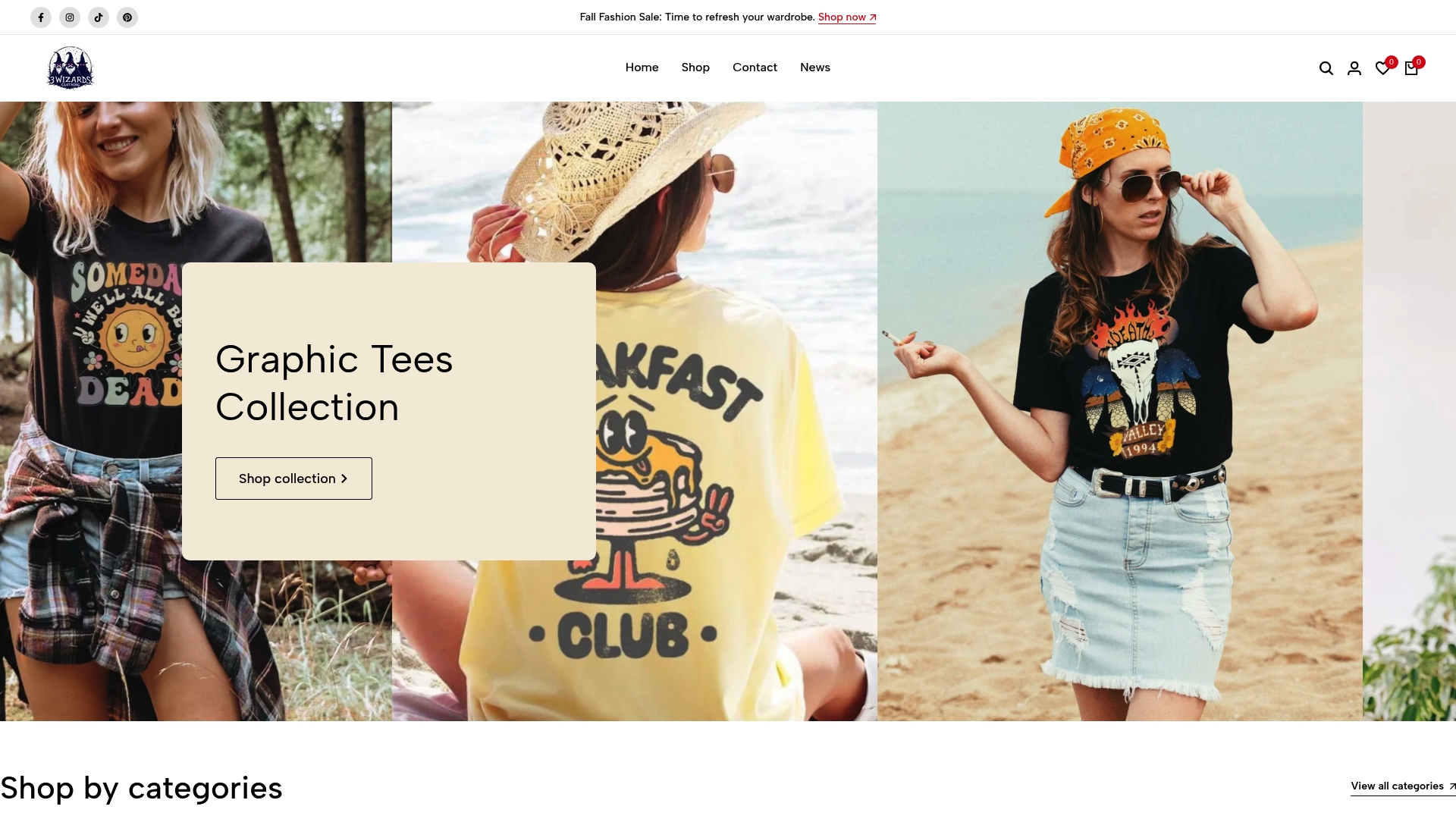
If you are shopping for a fall occasion, the pumpkin season graphic tee from 3wizardclothing is a perfect example of the kind of personality-forward design that makes a gift feel personal without requiring full custom production. Seasonal collections like this one work brilliantly as starting points for apparel gift personalization because the mood and theme are already built in. Browse the full store at 3wizardclothing.com to explore graphic tees, holiday collections, and new arrivals that fit almost every recipient on your list.
FAQ
What is the best printing method for a single personalized gift?
DTF printing is the best choice for one-off personalized clothing gifts because it handles full-color detail beautifully and produces prints that last 50 or more washes without a large minimum order requirement.
What file format should I use to design custom apparel?
Vector files such as .ai, .eps, or .pdf are ideal for graphic tee personalization because they scale without losing quality. If you are using a photo, submit it at a minimum of 300 DPI to prevent pixelation.
How long does it take to receive a custom apparel order?
Most custom apparel orders ship within 7 to 10 business days after proof approval. Rush options are available from most decorators, but plan your timeline carefully to account for shipping on top of production time.
How do I make personalized apparel gifts last longer?
Wash printed garments inside out in cold water and tumble dry on low heat. Avoid bleach entirely and never iron directly on a print. These habits extend print life significantly across all decorating methods.
Do I need special equipment to create custom t-shirts at home?
You need a heat press for HTV at home, set to approximately 155°C for 15 seconds with medium pressure. For DTF and screen printing, most gift buyers use a professional decorator service rather than attempting production at home.


