

TL;DR:
- A clothing collection’s uniqueness depends on consistent brand DNA, thematic storytelling, and deliberate product architecture. Cultural influences and one-of-a-kind production add emotional depth and collectible value that distinguish collections from trends. Collectors value design constraints, artisanal irregularities, and a clear design system that ensures long-lasting originality.
A clothing collection is unique when it expresses a cohesive design language, a clear brand DNA, and a cultural or artisanal story that no other label can replicate. What makes clothing collections unique goes far beyond a striking print or a seasonal color palette. The criteria for unique fashion include design consistency, thematic storytelling, and production choices that together form a recognizable identity. Fashion enthusiasts and collectors who understand these factors can evaluate collections with far greater confidence and build wardrobes that hold real meaning.
What makes clothing collections unique: design cohesion and brand DNA
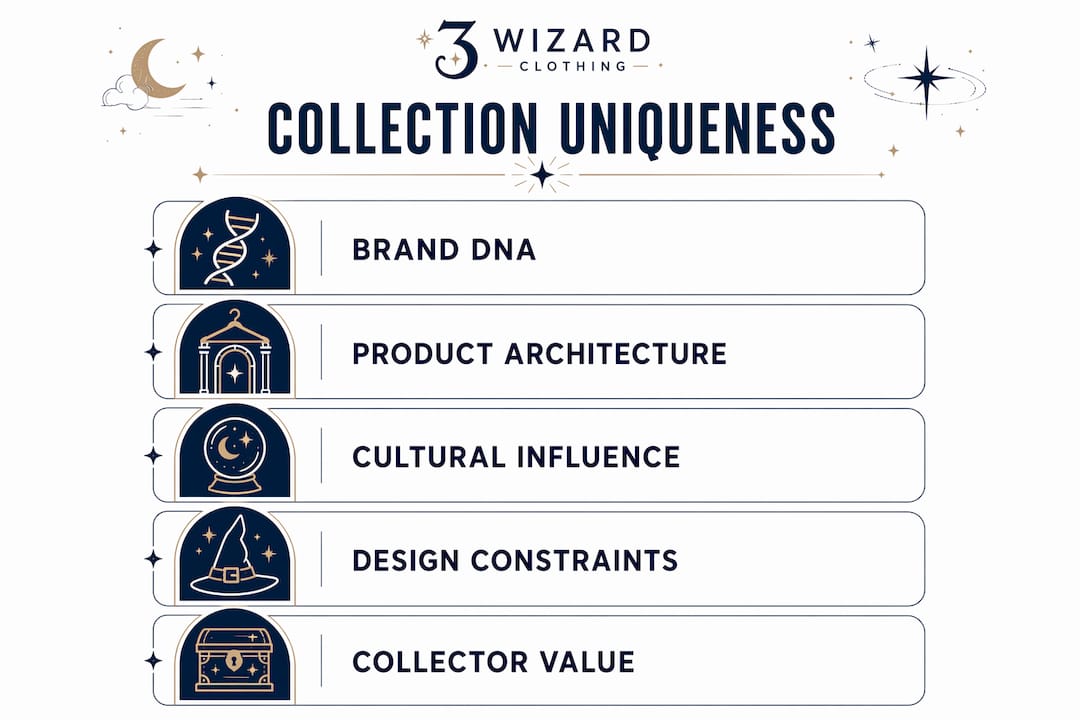
Brand DNA is the irreducible core of a label’s identity. It encompasses purpose, values, signature motifs, color palettes, and silhouette codes. A brand without clear DNA produces collections that feel random. A brand with strong DNA produces collections where every piece reinforces the same belief system.

Design cohesion is what happens when brand DNA is applied consistently across every garment in a collection. Cohesion prevents the dilution that occurs when designers chase unrelated trends or introduce conflicting aesthetics. A collector looking at a rack of pieces from a cohesive collection should be able to identify the brand without seeing a single label.
Strong brand DNA also has a direct commercial effect. Brand DNA reduces customer acquisition costs and allows a label to raise prices over time because customers are buying into a philosophy, not just a product. This is why brands with a coherent identity withstand trend pressure far better than those without one.
The elements that define brand DNA in practice include:
- Signature motifs: Recurring graphic elements, patterns, or symbols that appear across seasons
- Color palette codes: A defined set of colors that anchor every collection to the same visual world
- Silhouette language: Consistent cuts and proportions that make garments instantly recognizable
- Voice and values: The attitude a brand projects, whether irreverent, nostalgic, or celebratory
- Material standards: Fabric choices that reflect the brand’s quality commitment and aesthetic
Pro Tip: Write your brand’s DNA down as a one-page document before designing a single piece. Designers who can reference a written identity brief make faster, more consistent decisions.
Design constraints are not creative limitations. Limiting design choices builds a recognizable brand signature through deep innovation within set boundaries. The most distinctive collections in fashion history came from designers who worked within strict self-imposed rules, not from those who tried everything at once.
How does product architecture shape a collection’s identity?
Product architecture is the structural framework that determines how many core pieces versus seasonal pieces appear in a collection. Core products represent roughly 60–70% of a collection, with seasonal items accounting for 30–40%. This ratio balances brand identity with commercial volume. It means a collection always has a stable foundation that collectors recognize, while seasonal pieces add freshness and reason to return.
Capsule collections are the most focused expression of product architecture. A high-performing capsule typically contains 8 to 15 interchangeable garments that foster a signature aesthetic. Collections with this level of cohesion attract significantly more relevant buyer traffic through AI-powered retail platforms. That matters because AI platforms in 2026 favor tightly defined collections over sprawling, unfocused ones.
Hero pieces function as identity anchors within any collection. A hero piece is the garment that defines the season’s story. Every other piece in the collection should relate back to it in some way, whether through color, theme, or construction detail. When a collection lacks a hero piece, it loses its narrative center and starts to feel like a catalog rather than a statement.
| Architecture element | Role in uniqueness | Typical proportion |
|---|---|---|
| Core pieces | Anchor brand identity across seasons | 60–70% of collection |
| Seasonal pieces | Add freshness and trend relevance | 30–40% of collection |
| Hero pieces | Define the season’s story and visual focus | 1–3 per collection |
| Capsule sets | Deliver maximum cohesion in minimum SKUs | 8–15 garments |
Pro Tip: Tag every SKU with style and occasion metadata from day one. AI-driven discoverability depends on clean, consistent product taxonomy, and collections with proper metadata reach the right buyers faster.
Why do cultural influences make fashion lines special?
Cultural influences give collections an emotional depth that pure design skill cannot manufacture. A garment that references a specific heritage, craft tradition, or community story carries meaning that a trend-driven piece simply does not. This is what sets fashion collections apart at the level of feeling rather than just appearance.
One-of-one production is the most direct expression of cultural and artisanal uniqueness. Luxury handmade garments carry unique piece numbers that are retired on sale, so no exact repeat ever exists. Each piece combines unique construction, print placement, and material combinations. For collectors, this model mirrors fine art collecting. The piece you own is the only one.
Hand-finished details and rare textures add technical individuality that makes garments irreplaceable. This kind of uniqueness also defends against fashion commodification. When a garment cannot be easily duplicated by a mass manufacturer, it holds its value and its meaning. Collectors who understand this look for artisanal irregularities as proof of authenticity, not as flaws.
The elements that signal genuine cultural depth in a collection include:
- Thematic storytelling: A clear narrative thread connecting every piece, whether drawn from folklore, geography, or personal history
- Heritage craft techniques: Hand embroidery, natural dyeing, or regional weaving methods that carry cultural memory
- Rare or locally sourced materials: Fabrics with a specific provenance that cannot be substituted without changing the garment’s meaning
- Piece identifiers: Numbering, signing, or dating that records each garment’s place in the collection’s story
Scarcity and human touch are the two factors collectors value most when evaluating whether a collection has lasting worth. A collection built on tour exclusive merch principles, where pieces are tied to a specific moment or event, demonstrates exactly how scarcity and story combine to create collectible value.
Practical strategies that create distinctive apparel
The most distinctive collections come from designers who make fewer, more intentional decisions. Successful clothing brands focus on strong fitting, well-constructed, high-quality garments aligned with a clear identity. Fabric choice and construction are the two decisions that most directly reinforce brand message. Everything else follows from those two choices.
The practical strategies that consistently produce distinctive apparel are:
- Limit your fabric palette. Working with a defined set of fabrics across a collection forces creative solutions within constraints and builds a consistent tactile identity.
- Sample obsessively. Sampling is critical not just for quality control but to perfect the fabric feel that customers perceive as integral to brand uniqueness. A garment that feels right communicates quality before the customer reads a single label.
- Build a taxonomy system. Coded labels and taxonomy protect brand consistency across designers and collaborations. When every piece is coded by style, occasion, and season, the collection maintains coherence even as the team grows.
- Resist trend-chasing. Brands that chase trends dilute their identity season by season. A collection built on a brand’s own design logic ages better and attracts collectors who value consistency.
- Define your hero piece first. Starting with the collection’s anchor garment and building outward produces a more coherent result than designing pieces independently and assembling them later.
Uniqueness in fashion arises from brand positioning, designer preferences, and consumer perception working together as a three-part framework. No single factor produces distinctiveness on its own. A brand with strong positioning but no design preference produces generic work. A brand with strong design preference but no consumer awareness produces beautiful work that nobody finds. All three must align.
The seasonal wardrobe approach mirrors this framework at the consumer level. Collectors who build their wardrobes around a defined core and rotate seasonal pieces maintain a personal style identity that feels as cohesive as a well-planned collection.
Key Takeaways
A clothing collection achieves lasting uniqueness through brand DNA, deliberate product architecture, cultural storytelling, and production choices that together make it impossible to replicate.
| Point | Details |
|---|---|
| Brand DNA drives everything | Define purpose, motifs, palette, and values before designing a single piece. |
| Product architecture creates stability | A 60–70% core to 30–40% seasonal ratio balances identity with commercial appeal. |
| Cultural storytelling adds depth | Heritage techniques and one-of-one production create emotional and collectible value. |
| Design constraints build signatures | Limiting fabric and design choices produces deeper innovation, not less creativity. |
| Taxonomy protects consistency | Coded labels and metadata keep collections coherent across seasons and collaborators. |
What collectors miss about design constraints
Most collectors I talk to focus on the finished garment. They look at the print, the color, the cut. What they rarely examine is the set of rules the designer imposed before a single sketch was drawn. That is where the real uniqueness lives.
The brands I find most compelling are the ones that have written down what they will not do. A label that refuses to use more than four colors per collection, or that commits to a single silhouette family across every season, produces work that accumulates meaning over time. Each new piece adds to a body of work rather than starting from scratch.
Artisanal irregularities are another thing collectors misread. A slightly uneven stitch or a print that sits two millimeters off-center is not a quality failure. It is proof that a human made the garment. Mass production eliminates those variations. Artisanal production preserves them. When you learn to read those irregularities as signatures rather than defects, your appreciation of a collection changes completely.
The brands that last are the ones that treat their design system as a living document. They update it, but they never abandon it. That continuity is what turns a clothing line into a collectible body of work. Understanding the themed apparel approach that some labels use shows how even seasonal or novelty collections can carry a consistent identity when the underlying design logic is sound.
— Josh
Unique collections worth wearing, from 3wizardclothing
3wizardclothing builds its collections around exactly the principles covered here: a clear brand identity, a defined product architecture, and thematic storytelling that gives each piece a reason to exist.
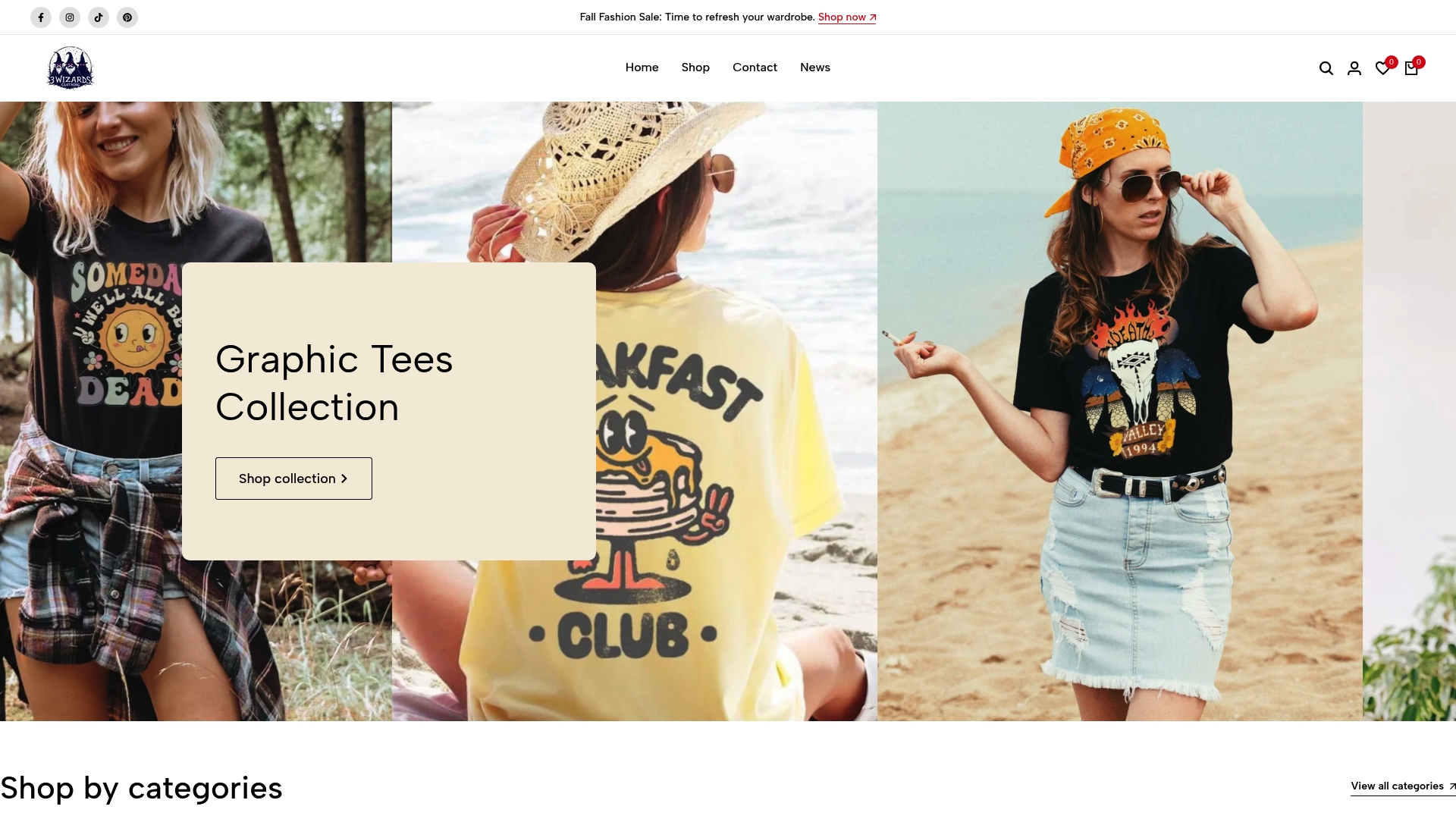
Whether you are drawn to Halloween graphics, fall palettes, or nerdy themes that carry a specific cultural reference, 3wizardclothing organizes its catalog so that every piece connects back to a coherent collection story. The graphic apparel collections at 3wizardclothing reflect a consistent design voice across men’s, women’s, and kids’ categories. New arrivals and seasonal drops follow the same core-to-seasonal ratio that keeps the brand recognizable while giving collectors fresh reasons to return.
FAQ
What is brand DNA in fashion?
Brand DNA is the core set of values, visual codes, and design rules that define a label’s identity. It drives customer loyalty and supports premium pricing by giving customers a belief system to connect with, not just products to buy.
How many pieces should a capsule collection have?
A high-performing capsule collection typically contains 8 to 15 interchangeable garments. That range produces a signature aesthetic while keeping the collection focused enough for AI platforms to match it to relevant buyers.
Why do design constraints make collections more unique?
Limiting fabric choices and design options forces deeper creative solutions within a defined visual world. The result is a recognizable brand signature that accumulates identity across seasons rather than resetting with each new drop.
What makes one-of-one garments collectible?
One-of-one garments carry unique piece identifiers that are retired on sale, so no exact repeat ever exists. The combination of unique construction, print placement, and material choices makes each piece a singular object with lasting value.
How does cultural storytelling affect a collection’s value?
Collections that draw on heritage craft techniques, regional materials, or specific community narratives carry emotional depth that trend-driven pieces cannot replicate. That depth is what collectors and fashion enthusiasts recognize as lasting worth.


