

TL;DR:
- Matching family shirts are a modern tradition driven by social media and cultural shifts.
- They foster a sense of belonging, bonding, and family identity through shared rituals.
- Families prioritize fun and authenticity over perfection, using shirts to express personality and create lasting memories.
Almost 90% of American adults never wore matching family Halloween outfits as kids. That single fact reveals something remarkable: the themed family shirt trend isn’t rooted in nostalgia. It’s a brand-new tradition, invented in real time, driven by social media, a changing culture, and families who want something more meaningful than a generic holiday. This guide breaks down exactly why themed shirts have taken off, what psychology explains their appeal, and how your family can use them to create memories that actually last.
Table of Contents
- The rise of themed shirts for families: A modern phenomenon
- The psychology behind matching shirts: Belonging, bonding, and ritual
- Expressing personality: Themed shirts as family storytelling
- Making it work for everyone: Individuality, inclusivity, and playful compromise
- What most families misunderstand about themed shirts
- Find your perfect family theme with 3 Wizard Clothing
- Frequently asked questions
Key Takeaways
| Point | Details |
|---|---|
| Modern family bonding | Themed shirts help families strengthen connections through shared traditions and playful rituals. |
| Self-expression matters | Personalized shirts let every family member show personality while participating together. |
| Flexibility wins | Families can coordinate without everyone matching exactly, making it fun for all ages. |
| Creativity over competition | Focus on making memories, not outdoing others, when planning themed family outfits. |
The rise of themed shirts for families: A modern phenomenon
If you grew up in the 1980s or 1990s, matching outfits were mostly reserved for awkward school photos or the occasional family reunion T-shirt printed at a county fair booth. The idea that your whole family would wear coordinated Halloween shirts to a neighborhood party, a school event, or a trick-or-treat run simply wasn’t part of the mainstream cultural script. So what changed?
Social media changed everything. Platforms like Instagram, Facebook, and TikTok created a stage where everyday moments could become shareable stories. Families started noticing that group photos with coordinated outfits performed better, got more engagement, and felt more visually satisfying. Brands noticed too, and seasonal themed apparel collections exploded to meet the demand.
The numbers are striking. As one widely shared report confirmed, 87% of US adults did not participate in family Halloween costumes as children, pointing directly to the role of modern marketing and social platforms in building this new tradition from the ground up.
Here is a snapshot of what’s driving the surge:
- Platform visibility: A well-coordinated family photo in matching fall shirts earns far more engagement than a solo photo, creating a feedback loop that encourages more families to try it.
- Retail accessibility: Online stores now make it easy to find themed shirts in every size from toddler to adult, removing the logistical headache that once made matching impractical.
- Shifting family culture: Families today are more intentional about building traditions. Themed shirts offer a low-cost, low-effort way to create a shared experience.
- Influencer modeling: Lifestyle influencers and family content creators have normalized the idea, making it feel fun rather than forced.
“Matching family outfits used to feel like something only done for formal photos. Now it’s something families do just because it’s Tuesday in October and they want to feel like a team.”
This shift is also tied to how families think about identity. Wearing the same theme isn’t about looking identical. It’s about announcing, visually and proudly, that you belong to each other. You can explore more about the emotional and cultural dimensions of this in our look at graphic tees for family fun and what makes them such an effective tool for connection.
The psychology behind matching shirts: Belonging, bonding, and ritual
There’s more going on beneath the surface than just a cute photo opportunity. When families wear coordinated outfits, they’re tapping into something deeply human: the need to belong.
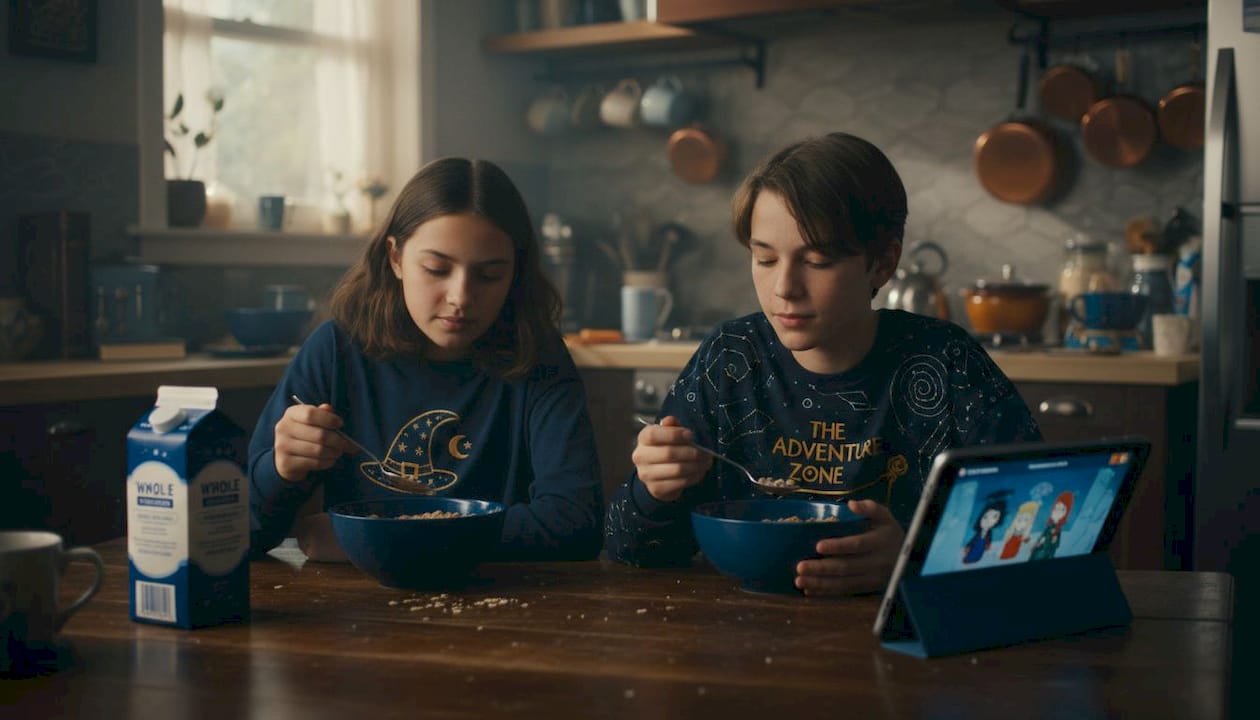
Psychologists have long studied how shared symbols and rituals strengthen group identity. Uniforms do it for sports teams. Matching bridesmaids dresses do it for weddings. Themed family shirts do it for holidays. Research confirms that matching outfits release oxytocin, often called the bonding hormone, and reinforce family identity through repeated seasonal rituals.
| Psychological benefit | How themed shirts deliver it |
|---|---|
| Sense of belonging | Visual signal that everyone is part of the same group |
| Bonding through ritual | Annual traditions (like Halloween shirts) create memory anchors |
| Shared identity | The theme reflects collective personality, not individual choice |
| Emotional safety for kids | Feeling “matched” with parents increases security |
| Joy and playfulness | Humor-forward designs invite laughter and ease |
For children especially, these benefits are concrete and measurable. Kids who feel visually included in family activities report greater confidence in social settings. A child wearing a matching spooky shirt alongside their parents and siblings isn’t just in costume. They’re wearing evidence that they belong somewhere.
Pro Tip: Start a yearly Halloween shirt tradition when your kids are young. Even if the shirts change every year, the ritual of choosing them together becomes the memory that sticks.
The ritual angle is underrated. Families who return to a themed shirt tradition every fall or every Halloween create a time-stamped record of their family’s personality. Pull out the photos from five years ago and you’ll see the kids were three inches shorter and the jokes on the shirts have evolved. That’s not just clothing. That’s storytelling.
“The tradition isn’t the shirt itself. It’s the shared excitement of picking it out, putting it on, and stepping out the door as a unit.”
If you’re curious about how far the role of themed shirts in expression can go beyond the holiday season, the answer might surprise you.
Expressing personality: Themed shirts as family storytelling
Here’s where themed shirts get genuinely creative. The best ones don’t just coordinate colors. They tell a story about who your family actually is.
Think about the difference between a plain orange Halloween shirt and one that puts each family member in a role: the scary one, the funny one, the one who’s “too cool for this” but secretly loves it. That second shirt doesn’t just match. It communicates. It gives strangers at the school carnival a glimpse of your family’s internal humor and dynamic.
This is why the market for novelty and themed apparel has grown so dramatically. Families aren’t just buying shirts. They’re celebrating personality with themed tees and using clothing as a creative medium to tell their collective story in a way that a generic costume never could.
Here’s a comparison of how different shirt approaches deliver different results:
| Shirt approach | What it communicates | Best for |
|---|---|---|
| Identical matching shirts | Unity, symmetry, visual cohesion | Formal photos, organized events |
| Role-based themed shirts | Humor, personality, inside jokes | Halloween, casual gatherings |
| Coordinated colors, varied designs | Individuality within a theme | Teens and mixed-age families |
| Character-based themes | Shared fandoms or interests | Families with strong pop culture bonds |
Social media has amplified this storytelling dimension significantly. According to one report, social media amplifies the trend through Insta-worthy photos and positive feedback loops, though it can sometimes introduce a competitive element that takes the fun out of it.
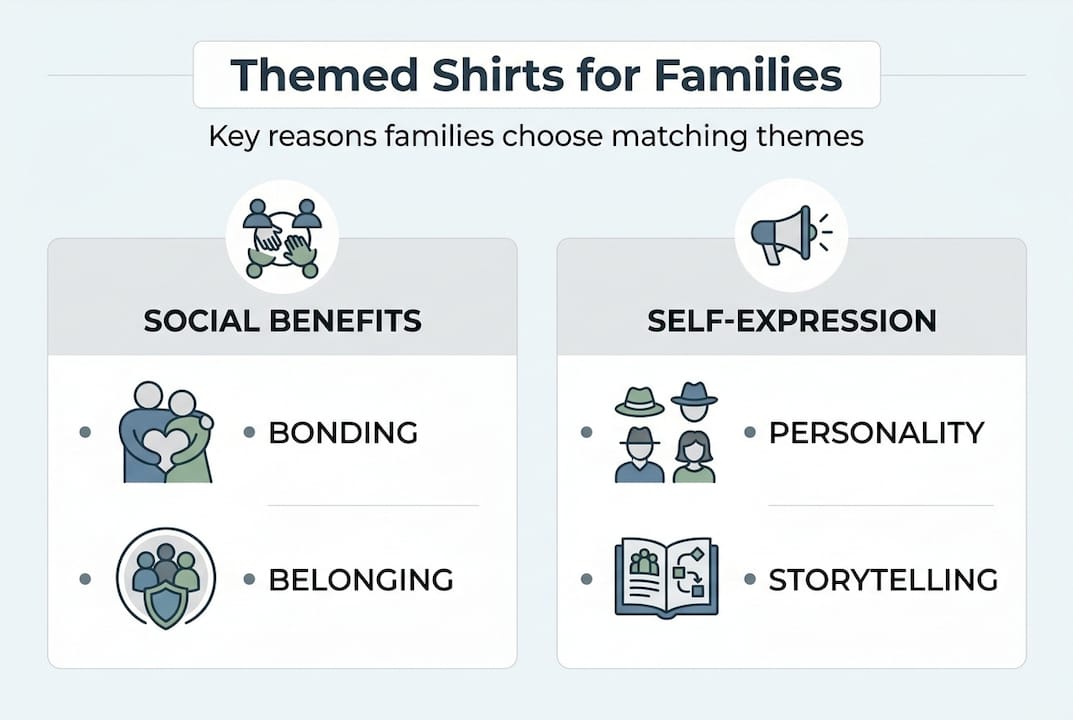
The key is to keep the focus on your family’s story, not the imagined audience. The most memorable themed shirt moments come from designs that reference something real. An inside joke. A show you all binge-watched. A vacation that became family legend. That authenticity shows up in photos far more than the most expensive costume ever could.
Here are some creative directions families take with themed shirts:
- Punny Halloween roles: “Big Witch Energy” for the mom, “Brew Master” for the dad, “Mini Monster” for the toddler.
- Fandom themes: Coordinating around a shared obsession like a beloved movie, game, or sports team.
- Career or personality plays: Each shirt reflects each person’s known trait or running joke within the family.
- Seasonal vibes without strict Halloween themes: Fall-themed shirts featuring cozy imagery work for the whole October season, not just one night.
For even more inspiration on novelty shirt ideas for families, the options are genuinely vast.
Making it work for everyone: Individuality, inclusivity, and playful compromise
Let’s be honest about the real challenge in family themed shirts: not everyone is equally enthusiastic. The five-year-old is doing backflips about the matching ghost shirts. The fourteen-year-old is actively considering faking a stomachache.
This is normal. And it’s solvable.
Child psychiatrists and family therapists have noted that while themed outfits create genuine bonding benefits, the approach needs to prioritize each child’s comfort and preference. Forcing a resistant teen into an identical matching shirt can turn a fun tradition into a source of resentment. The goal is participation, not uniformity.
Here’s a practical approach that works for most families:
- Start with a theme, not a specific shirt. Agreeing on “fall vibes” or “spooky Halloween” gives everyone creative freedom within a shared concept.
- Let each person pick their own version. If the theme is Halloween, one person can pick a witch shirt, another a ghost design, and the teen can choose something subtly seasonal that fits their style.
- Offer customization options. Some stores allow you to personalize shirts with names or choose from a range of designs within one theme. That small flexibility is huge for teens.
- Focus on the activity, not the outfit. When the themed shirt is just one part of a larger fun plan (pumpkin carving, trick-or-treating, a festive dinner), it stops feeling like a costume requirement and starts feeling like an accessory to something everyone already wants to do.
- Let reluctant members opt into a piece, not the full look. A teen who refuses the matching shirt might willingly wear a coordinating hoodie or hat. That still counts.
Pro Tip: Ask your teenager to help choose the theme for the whole family. When they have creative ownership, resistance often disappears entirely.
The key insight here is that coordination beats identical matching when it comes to keeping everyone genuinely happy. The visual cohesion that makes a group photo satisfying doesn’t require that every person wear the exact same design. It just requires a shared color palette, theme, or concept.
If you’re navigating the specific challenge of finding the right fit for younger kids, our guide to buying kids graphic shirts covers sizing, fabric, and design considerations that make the whole process much simpler.
What most families misunderstand about themed shirts
Here’s an opinion most articles won’t give you: the families who enjoy themed shirts the most are not the ones who execute it perfectly. They’re the ones who treat it as a joke they’re all in on together.
There’s a common misconception that themed family outfits are for the highly organized, the Instagram-obsessed, or the families who genuinely have it all together. That’s exactly backwards. The best themed shirt moments happen in the families where someone forgot to order in time and ended up in a slightly different shade of orange. Where the toddler immediately spilled something on their shirt. Where the dog was accidentally included in the theme photo and photobombed the whole thing.
The point was never the perfectly matching outfit. The point was the conversation that happened while choosing the shirts, the argument about whether “Big Witch Energy” was too sassy for the school event, the unanimous vote to include a pun that only made the adults laugh. That’s the memory. The shirt is just the prop.
The families who find themed shirts stressful are usually the ones treating them like a performance for an external audience. When you shift the focus back to internal family fun, the entire experience changes. Even a loosely coordinated look (same colors, totally different designs) creates a sense of shared identity that photographs beautifully and feels completely authentic.
We’d also gently push back on the idea that themed shirts are only for Halloween or major holidays. Families who use them for fall road trips, Thanksgiving dinners, or even just cozy weekends at home discover something interesting: the tradition becomes something everyone looks forward to, regardless of whether there’s an audience for it. Check out our thoughts on thoughtful humorous shirt ideas if you want to take the concept beyond the holiday calendar.
Find your perfect family theme with 3 Wizard Clothing
Ready to find a theme your whole crew can get behind? At 3 Wizard Clothing, we’ve built our entire seasonal collection around the idea that families shouldn’t have to choose between matching and actually liking their shirts.
Whether you’re deep into autumn or gearing up for Halloween night, our Hello Autumn family tee and our fan-favorite Autumn Vibes tee for families give you that coordinated, seasonal look without making anyone feel like they’re wearing a uniform. They’re cozy, clever, and designed for real families who want to look intentional without overthinking it. Browse our full collection of themed family shirts and find the designs that actually sound like your family.
Frequently asked questions
Are themed shirts just a passing trend for families?
Themed shirts have seen a major surge recently because the tradition is genuinely new. Since 87% of US adults didn’t grow up with family Halloween outfits, this is a modern tradition being built in real time, not a recycled fad about to fade.
What do experts say about the impact of themed shirts on kids?
Experts confirm the bonding and identity benefits are real, but psychiatrists advise prioritizing each child’s comfort and preferences so the tradition stays genuinely positive rather than pressured.
How do you handle older children or teens who don’t want to match?
Give them creative control over their version of the theme. Coordination over identical matching is the recommended approach, letting everyone stay within the concept without wearing the exact same design.
Do themed family shirts have to be for special occasions only?
Not at all. Many families wear themed shirts for fall road trips, casual weekends, and group photos year-round, turning them into a flexible, ongoing tradition rather than a once-a-year event.


